
7.3L PowerStroke Common Problems: The 1994.5 to 2003 Owner’s Diagnosis and Repair Guide
Jun 20th 2026
Table of Contents
- Introduction: The Last Pre Emissions PowerStroke
- The HEUI System and How It Differs From Other Diesels
- Problem 1: Camshaft Position Sensor (CPS) Failure
- Problem 2: Under Valve Cover Harness (UVCH) Faults
- Problem 3: Injector Driver Module (IDM) Failure
- Problem 4: ICP Sensor Failure
- Problem 5: IPR Valve Sticking and Failure
- Problem 6: High Pressure Oil Pump (HPOP) Leaks
- Problem 7: Injector Wear, Stiction, and O-Ring Leaks
- Problem 8: Fuel Bowl and Filter Housing Leaks
- Problem 9: Glow Plug and Relay Failure
- Problem 10: Turbo Pedestal and EBPV Oil Leaks
- Problem 11: Up-Pipe Donut Gasket Failure (1999 to 2003)
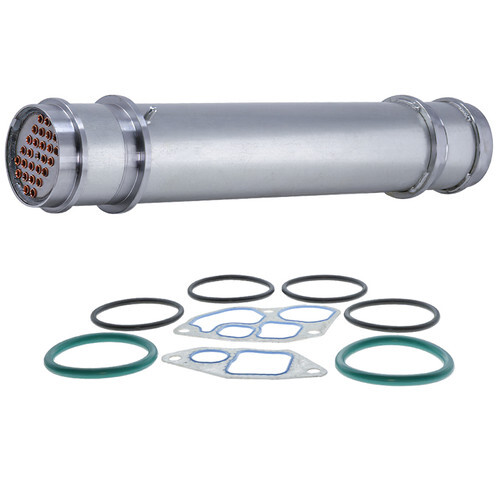
- Problem 12: Oil Cooler Seepage and Cooling System Issues
- The Year Split: 1994.5 to 1997 OBS vs 1999 to 2003 Super Duty
- Maintenance Recommendations to Protect Your 7.3
- Bostech Solutions for the 7.3L PowerStroke
- Frequently Asked Questions
- Disclaimer
The 7.3L PowerStroke is widely regarded as the most reliable diesel engine Ford ever sold in a pickup truck. Produced from 1994.5 through 2003 in Ford F-Series and Excursion vehicles, the engine is actually a Navistar T444E built by International Harvester (now Navistar), with Ford handling the truck integration and the calibration. The 7.3L predates DPFs, EGR coolers, DEF systems, and common rail injection. Its hydraulically actuated electronically controlled unit injection (HEUI) system runs on engine oil pressure rather than fuel pressure, which gives the engine its distinctive cold idle sound and contributes to its reputation for going 300,000 to 500,000 miles with routine maintenance.
That reliability reputation is real, but it is not unconditional. The 7.3L develops a recognizable set of problems as it ages, most of them in the electrical and oil control side of the HEUI system rather than in the engine itself. Camshaft position sensor failures, under valve cover harness faults, ICP sensor leaks, IPR valve sticking, HPOP fitting leaks, glow plug and relay wear, turbo pedestal seepage, up pipe donut gasket leaks, and injector wear all show up at predictable mileages and produce predictable symptoms.
This guide walks through the twelve most common 7.3L PowerStroke problems, with diagnostic steps, repair guidance, and the distinctions between the 1994.5 to 1997 OBS (old body style) trucks and the 1999 to 2003 Super Duty trucks. The goal is to give a 7.3L owner the information needed to keep their truck on the road for another decade or longer.
Introduction: The Last Pre Emissions PowerStroke
When the 7.3L PowerStroke replaced the 7.3L IDI Navistar engine in 1994.5, it represented a major leap forward for Ford diesel trucks. The previous IDI was an honest workhorse but limited by its 1980s era technology. The new direct injection 7.3L PowerStroke brought electronic injector control, modern emissions compliance for the era, and substantially more usable power. The basic engine architecture (cast iron block, forged crankshaft, cast iron heads) was robust enough that it carried the engine through nearly a decade of production with relatively minor changes.
The 7.3L is the last Ford diesel built without modern emissions equipment. There is no EGR system, no diesel particulate filter, no diesel exhaust fluid, and no urea injection. This simplicity is one of the main reasons 7.3L trucks remain in such high demand on the used market today. They run on any quality diesel fuel, they tolerate aftermarket modifications well, and they pass emissions inspection in most jurisdictions without complicated equipment.
The trade off is that the 7.3L is built around an unusual fuel injection system. HEUI uses high pressure engine oil to actuate the fuel injectors, not the fuel itself. This makes the engine sensitive to oil condition, oil pressure, and the electrical components that control oil pressure. Most of the common problems on the 7.3L trace back to either the HEUI oil control system or to electrical components that age out after 20 plus years of service. The mechanical engine itself rarely fails when properly maintained.
The HEUI System and How It Differs From Other Diesels
Understanding the 7.3L PowerStroke starts with understanding HEUI, the hydraulically actuated electronically controlled unit injection system. Unlike a common rail diesel that pressurizes fuel to 24,000 PSI and uses that fuel pressure to spray the injectors, the 7.3L uses pressurized engine oil at 500 to 3,000 PSI to push the injectors open. The fuel side of the system runs at relatively low pressure (around 60 PSI) and the high pressure work is done by oil. The system has six main components:
- The high pressure oil pump (HPOP) mounts in the engine valley, gear driven by the camshaft. It pressurizes engine oil from approximately 50 PSI up to 3,000 PSI for the HEUI system.
- The injection pressure regulator (IPR) is a solenoid valve on the back of the HPOP. The IPR meters how much high pressure oil escapes back to the sump versus held in the high pressure rails. The PCM controls the IPR with a duty cycle signal.
- The injection control pressure (ICP) sensor sits on the driver side cylinder head and measures actual oil pressure in the high pressure rail. The PCM uses this feedback to adjust the IPR duty cycle in a closed loop.
- The high pressure oil rails are passages cast into each cylinder head that distribute oil to the injectors.
- The injector driver module (IDM) is a separate module on the driver side fender that converts PCM signals to the high voltage signals (110 to 120 volts) that fire the injector solenoids.
- The HEUI injectors themselves contain a spool valve that admits high pressure oil to a pressure intensifier piston, which forces a smaller plunger to pressurize fuel to roughly 21,000 PSI inside the injector and spray it through the nozzle.
Several practical consequences flow from this architecture. The engine cannot start without 500 PSI of injection control pressure, which means anything that prevents the HPOP from making pressure results in a crank no start. The injectors are sensitive to oil viscosity and oil cleanliness. And the high voltage IDM circuit can develop faults at the connectors (especially the under valve cover harness) that present as misfires or dead cylinders. The HEUI system is also the reason for the 7.3L’s distinctive cold idle sound; the injectors fire later in the compression stroke than common rail injectors, producing a characteristic loud diesel knock until the engine warms.
Problem 1: Camshaft Position Sensor (CPS) Failure
The camshaft position sensor on the 7.3L PowerStroke is the single most famous failure point on the engine, to the point that experienced owners carry a spare CPS in the glovebox at all times. The sensor mounts on the front timing cover and reads a tone wheel on the front of the camshaft. The PCM uses the CPS signal to know engine speed and crankshaft position. Without a valid CPS signal, the engine cannot run.
The CPS failure pattern is well known. The truck is running fine when the sensor begins to fail. The first symptom is usually intermittent stalling, often when hot, sometimes at the worst possible moment such as merging onto a highway. The engine cuts out, restarts after a few seconds or minutes, runs for a while, and then cuts out again. Eventually the sensor fails completely and the truck will not start at all. Diagnostic signatures include:
- Intermittent stall at random moments, especially when the engine is fully warm.
- No tachometer movement during cranking. This is the smoking gun. A healthy 7.3L should show a flicker of tach movement during cranking; a CPS failure produces zero tach movement.
- Engine starts and runs fine when cold, then dies after the engine reaches operating temperature.
- Engine cranks and cranks but will not fire.
- No diagnostic code, or sometimes a P0344 (camshaft position sensor circuit intermittent).
The fix is straightforward: replace the sensor. The CPS is held in by a single bolt on the front timing cover, located behind the alternator and water pump pulley area. The replacement takes 30 minutes or less with basic hand tools. Quality replacement matters; generic aftermarket sensors have a reputation for failing within months. The Motorcraft or International OEM unit is the recommended choice. Many shops also replace the CPS pigtail at the same time on high mileage trucks because the wiring connector can develop intermittent contact issues over the decades. Smart 7.3L owners treat the CPS as a wear item and carry a spare; the sensor costs $30 to $80 and a spare plus a 10mm wrench in the glove box has saved many owners from a tow bill.
Problem 2: Under Valve Cover Harness (UVCH) Faults
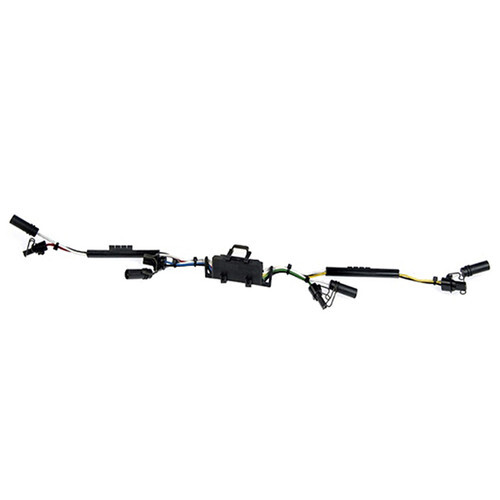
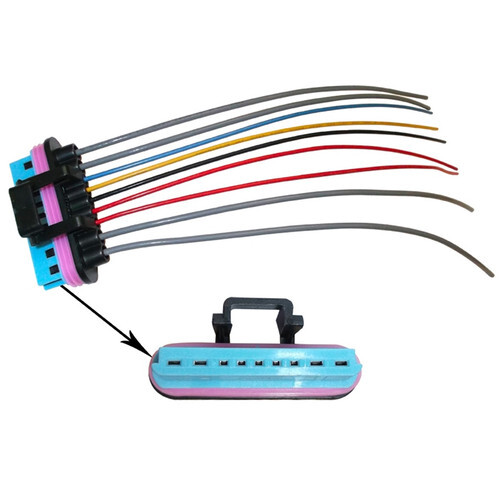
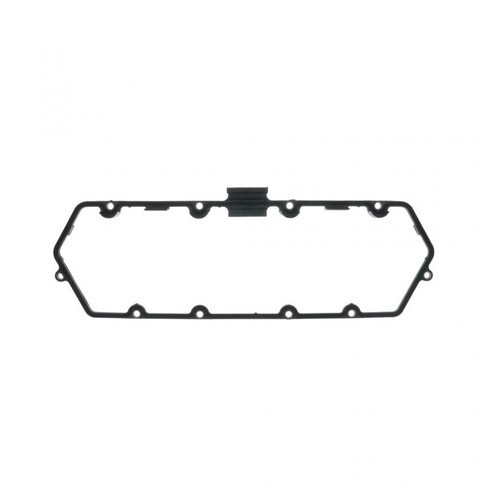
The under valve cover harness, or UVCH, is the wiring assembly that runs from the valve cover gasket plug down to each injector solenoid inside the valve covers. Each cylinder bank has its own UVCH that plugs into a connector molded into the valve cover gasket on the outside. The harness then runs to the eight injectors (four per side) and routes through the glow plug bus bar on the way.
UVCH faults are responsible for a significant fraction of 7.3L injector related complaints. The harness runs in a hot oily environment for years, the connector pins can corrode or burn, the wiring insulation can crack, and the plug at the valve cover can lose its retention to the gasket. When any of those happens, the symptoms look like injector failure but are actually wiring failures. Recognizable UVCH symptoms include:
- A misfire or dead cylinder that comes and goes, sometimes related to engine load, sometimes related to temperature.
- A complete dead bank, where four cylinders all stop firing simultaneously.
- Erratic injector codes (P0261, P0264, P0267, P0270, P0273, P0276, P0279, P0282 family) for various individual cylinders without an obvious mechanical cause.
- Misfire that worsens as the engine heats up, then sometimes clears when the engine cools.
- Visible heat damage on the valve cover gasket where the UVCH plugs in: melted plastic, browned connector, or cracked insulation on the pigtails.
Diagnosis usually starts by removing the valve cover gasket connectors and inspecting the pins for corrosion, melting, or pushed back contacts. A flashlight and a magnifying glass show most UVCH failures within a minute. Ohm testing each injector solenoid through the UVCH (approximately 3 ohms is healthy) catches the harness side faults. Replacement is the right fix in most cases. The UVCH is sold as a complete assembly for each bank, typically $50 to $80 per side from quality sources. The valve cover gasket with the molded connector is also a wear item and should be inspected and often replaced at the same time. Total parts cost is $150 to $250 for a thorough repair, plus a few hours of labor.
Problem 3: Injector Driver Module (IDM) Failure
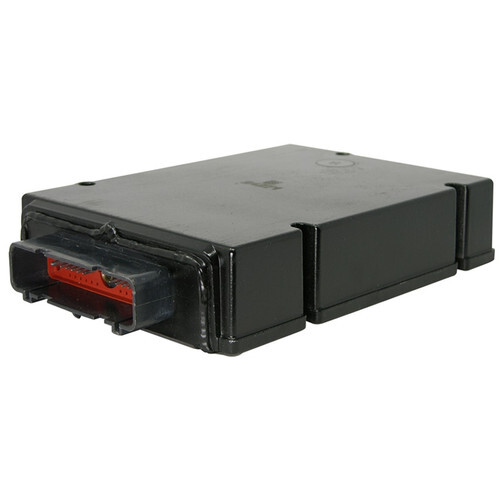
The injector driver module is the electronic brick that converts the PCM’s low voltage injector command signals into the 110 to 120 volt high voltage pulses that actually fire the injector solenoids. On 1994.5 through 1998 trucks the IDM mounts on the driver side fender behind the front wheel well. On 1999 through 2003 trucks the IDM mounts on the driver side fender liner in a similar location. Either way it lives in a wet, vibration prone environment where water intrusion is the leading cause of failure. IDM failure produces several distinctive symptom patterns:
- Total no start with the engine cranking normally and the PCM commanding ICP normally, but no injector firing.
- Intermittent dead miss or misfire that affects multiple cylinders without a logical pattern.
- Stalling at idle, especially after the engine has been running for some time and the IDM is heat soaked.
- A burnt smell from the driver side fender area in severe failure cases.
- Visible water intrusion on the IDM connector or inside the IDM housing.
Diagnosis is somewhat involved because IDM failures can mimic UVCH faults, injector faults, or PCM faults. The diagnostic flow generally starts with verifying PCM commands reach the IDM (a scan tool that can read IDM commanded values is useful), then verifying the IDM is producing the proper output voltage on the high voltage side. A truck with a verified PCM signal in but no IDM output is a confirmed IDM failure.
Replacement IDMs are available reman from several sources. The Bostech IDM110 covers 1994 through 1998 applications and the Bostech BM6902120 covers 1999 through 2003 applications. Both are remanufactured to OEM specifications with full bench testing. A key advantage of quality reman IDMs is that they come pre programmed with the latest OE software, eliminating any additional programming step during installation. Pricing typically runs $200 to $400 plus a core return. Installation takes 30 minutes once the module is in hand. Many owners proactively check the IDM mounting hardware and seal during any major service to prevent water intrusion failures.
Problem 4: ICP Sensor Failure
The injection control pressure (ICP) sensor is one of the most frequently replaced sensors on the 7.3L PowerStroke. The sensor mounts on the driver side cylinder head, threaded into a port that taps directly into the high pressure oil rail. Its job is to measure actual oil pressure in the rail and feed that data back to the PCM so the IPR valve can adjust to hit the commanded pressure. When the ICP fails, the closed loop control of the entire HEUI system breaks down.
The most common ICP failure mode is oil intrusion through the sensor body. The sensor has internal seals that age out, allowing oil to migrate up through the body, fill the connector, and contaminate the electrical contacts. Once oil reaches the wiring side, the sensor produces erratic or invalid signals. Recognizable ICP symptoms include:
- Hard starting, especially when hot, because the PCM cannot accurately control rail pressure during cranking.
- Rough idle, surging, or stalling at low engine speed.
- Loss of power and slow throttle response.
- Oil pooled in the ICP electrical connector when the pigtail is removed. The single most diagnostic visual indicator on the engine.
- A check engine light with P1280 (ICP circuit out of range low), P1281 (ICP above maximum), or related ICP codes.
- Erratic ICP readings on a scan tool that do not match commanded pressure.
A quick diagnostic test takes less than five minutes. Pull the plastic clip off the ICP connector, lift the pigtail off the sensor, and look at the receptacle and the pin side. Oil residue confirms ICP failure. A second test is to unplug the ICP sensor with the engine running. The PCM defaults to a fixed 725 PSI ICP value when the sensor is disconnected, and if the truck runs better unplugged than plugged in, the sensor is the problem. Replacement is straightforward. Two types of sensors exist (an original International round body with a 5/8 inch integral nut, and a Ford replacement with a 1-1/16 inch hex head); both are interchangeable. The ICP pigtail should be replaced at the same time if oil is visible in the connector. Total parts cost is typically $80 to $150, labor is 15 to 30 minutes.
Problem 5: IPR Valve Sticking and Failure
The injection pressure regulator valve is the actuator side of the HEUI control loop. It mounts on the back of the high pressure oil pump and meters how much high pressure oil is returned to the sump versus held in the rails. The PCM controls the IPR with a pulse width modulated signal. Duty cycle at idle on a healthy truck is around 10 to 14 percent. Duty cycle climbs to 60 to 80 percent during heavy acceleration.
IPR failure generally falls into two patterns. The mechanical failure mode is the IPR sticking, usually because of magnetic particle accumulation on the solenoid armature or contamination of the small inlet screen. A stuck IPR cannot respond properly to PCM commands and produces erratic ICP readings. The seal failure mode is leaking O-rings, which causes external oil leaks and contributes to internal pressure loss. Common IPR failure symptoms include:
- Hard starting hot. The hot starting weakness is one of the most reliable indicators that the IPR or the high pressure oil system is degrading.
- Surging idle that comes and goes, sometimes with the engine stalling when dropped into gear.
- Loss of power under load.
- Diagnostic codes such as P1211 (ICP pressure not controllable), P1282 (IPR stuck open), or P1283 (IPR control circuit faults).
- Oil leaking from the IPR or its mounting area on the back of the HPOP.
- IPR duty cycle pegged at 60 percent or higher at idle, indicating the IPR cannot hold pressure or the ICP sensor is feeding back bad data.
Diagnosis often involves separating the IPR from the ICP sensor as the failure point. A common technique is to clean the IPR (remove the valve, clean the screen and the armature with brake clean, reinstall with new O-rings) and see if the symptoms clear. If they do, the IPR was the culprit. IPR replacement requires removing the fuel filter housing assembly for access. The valve unscrews from the back of the HPOP in pieces: small nut at the rear with a 3/4 inch socket, then the spacer and solenoid, then the valve body with a 1-1/8 inch deep socket. Torque on reinstallation is 35 foot pounds for the valve body and 53 inch pounds for the retaining nut. OEM Motorcraft or International IPR valves are strongly recommended over generic aftermarket. Total parts cost is $200 to $300 for a quality unit, plus a few hours of labor.
Problem 6: High Pressure Oil Pump (HPOP) Leaks
The high pressure oil pump is gear driven from the camshaft gear and sits at the front of the engine valley behind the engine front cover. It is an axial piston pump with a swash plate. Early 1994.5 to 1998 trucks use a 15 degree swash plate with average flow of 6.8 cc per revolution. Later 1999 to 2003 trucks use a 17 degree swash plate with 7.2 cc per revolution. The pump itself is remarkably durable; outright pump wear is rare under 300,000 miles. What does fail are the seals, fittings, and the IPR mounted on the back.
The HPOP and its associated fittings are responsible for most of the oil that ends up in the engine valley of a high mileage 7.3L. Common leak points include:
- The HPOP discharge fittings and the high pressure oil lines that run to each cylinder head. On 1999 to 2003 trucks the lines use STC (snap-to-connect) fittings that are particularly prone to leaks.
- The HPOP rear cover or non-serviceable plug. Often appears as oil running down the rear of the engine, sometimes misdiagnosed as a rear main seal leak.
- The serviceable long threaded plug on the front cover, which uses an O-ring that ages out.
- The IPR valve mounting area (covered in the previous section).
- The HPOP reservoir cover, where O-rings can leak after years of thermal cycling.
Symptoms split into two categories. Leak symptoms include visible oil pooling in the engine valley and a burning oil smell. Performance symptoms only appear when leaks become severe enough to affect operating pressure: hard starting hot, rough idle, low power, and sometimes a no start condition when the pump cannot reach the 500 PSI minimum. Codes like P1211 (ICP not controllable) and P1212 (ICP voltage too low) point toward HPOP problems.
The diagnostic workflow starts with cleaning the engine valley thoroughly and then running the engine to see where new oil appears. A UV dye in the oil makes this much easier. Most leaks can be addressed without replacing the pump itself by resealing the fittings, the rear cover, and the serviceable plug with quality Viton O-rings. The Bostech HPOP008X covers 1999 to 2003 applications as a complete remanufactured pump for trucks where the pump itself has worn or where the leak repair is too extensive to justify piecemeal sealing. The HPOP008X-K2 adds the IPR valve and ICP sensor to the kit, which is the right choice on high mileage trucks where all three components are due. For high mileage owners, doing the IPR, ICP sensor, HPOP fitting O-rings, and possibly the HPOP itself as one coordinated job makes economic sense because of overlapping labor.
Problem 7: Injector Wear, Stiction, and O-Ring Leaks
The 7.3L HEUI injectors live a long life compared to common rail injectors on later platforms. A factory injector set can run 250,000 to 350,000 miles before showing significant wear, and many trucks make it past 400,000 miles on original injectors. When injector problems do appear, they typically fall into three categories: wear, stiction, and O-ring leaks.
Wear is the gradual degradation of internal injector components. The poppet valve and seat erode, the spool valve develops more clearance, the nozzle holes wear larger, and the intensifier piston seals harden. A worn injector still fires but produces less efficient combustion, more smoke, and reduced power.
Stiction is a specific failure mode where the spool valve inside the injector sticks in its bore because of varnish or sludge buildup, especially when the engine has been sitting. Stiction injectors produce a characteristic intermittent misfire that improves as the engine warms and the oil thins. The cure is either thorough cleaning (sometimes possible with quality stiction eliminator additives) or replacement.
O-ring leaks are external. Each HEUI injector has multiple O-rings sealing it to the injector cup in the head and isolating fuel from oil from atmosphere. Aged O-rings can leak fuel into the lifter valley, leak oil onto the outside of the engine, or allow fuel to enter the engine oil. Rising oil level with diesel smell is the warning sign for O-ring failure on the fuel side. Symptoms of injector trouble include:
- Rough cold idle that smooths as the engine warms (classic stiction).
- White smoke at startup, especially in cooler weather.
- Misfire on one or more cylinders, sometimes accompanied by a P0301 through P0308 code.
- Loss of power and slow throttle response.
- Black smoke under load on tuned trucks where injectors cannot keep up with commanded fuel.
- Rising oil level with diesel smell indicating fuel intrusion through bad O-rings.
- Visible fuel or oil in the lifter valley between the heads.
Diagnosis uses balance contribution data from a scan tool plus visual inspection of the lifter valley and the dipstick. When replacement is the answer, the right injector depends on the year split and the cylinder. Code AA injectors fit 1994 to 1997 trucks. Code AB fits California spec 1997 and early 1999 trucks. Code AD covers most 1999.5 to 2003 trucks. Code AE is the long lead injector specifically for cylinder 8 on 1999.5 to 2003 trucks. The Bostech DE504-K9 is a Silver Series Code AD/AE injector set for 1999 to 2004 applications and includes the correct mix for a full set. Replacing all eight at once is standard practice on high mileage trucks.

Problem 8: Fuel Bowl and Filter Housing Leaks
The fuel filter housing on the 7.3L, often called the fuel bowl, sits on top of the engine in the valley behind the air intake. It houses the primary fuel filter, a water separator (with a drain valve on 1999 to 2003 trucks), the fuel heater on cold weather equipped trucks, and various pressure regulator and sensor components. The bowl uses a stack of O-rings and gaskets to seal the various passages, and over 20 plus years of thermal cycling those seals harden, shrink, and crack. Fuel bowl leaks are one of the most common service items on any high mileage 7.3L. Symptoms include:
- Strong diesel smell from the engine bay, especially after the engine has been running.
- Fuel puddle or drips under the truck near the front of the engine.
- Visible fuel in the engine valley between the cylinder heads.
- Hard starting because the bowl loses prime when the engine sits and air enters the fuel system.
- Reduced fuel pressure on a gauge connected to the bowl test port.
- On 1999 to 2003 trucks, the drain valve at the bottom of the bowl is a particularly common leak point and often the easiest fix.
Repair options scale with severity. A bowl that leaks only at the drain valve usually needs just a new drain valve assembly with O-rings (a part typically under $30 with about an hour of labor). A bowl that leaks at the upper seals needs a complete rebuild kit with all the O-rings ($40 to $80 in parts plus a few hours of labor). A bowl that is cracked in the casting itself needs complete replacement, with new aftermarket housings available for around $400.
The Bostech ISK641 fuel pressure regulator billet valve cap kit (covering 2001 to 2003 applications) addresses the upper portion of the bowl assembly with a billet aluminum cap, an O-ring kit, and a brass valve. The billet cap upgrade is a popular preventive measure because the original plastic cap can crack and leak over time. Combined with new lower seals and a fresh drain valve, the bowl can be returned to like new condition for under $150 in parts. On any bowl rebuild, replace the fuel filter at the same time and verify that the fuel pickup hoses and supply lines do not show cracking.
Problem 9: Glow Plug and Relay Failure
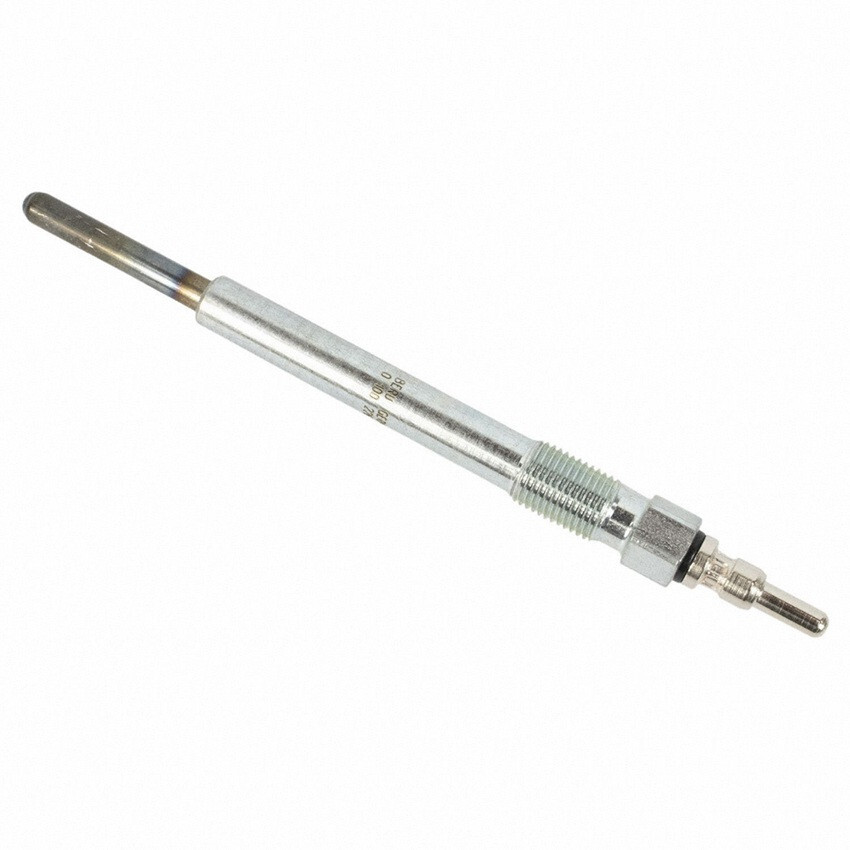
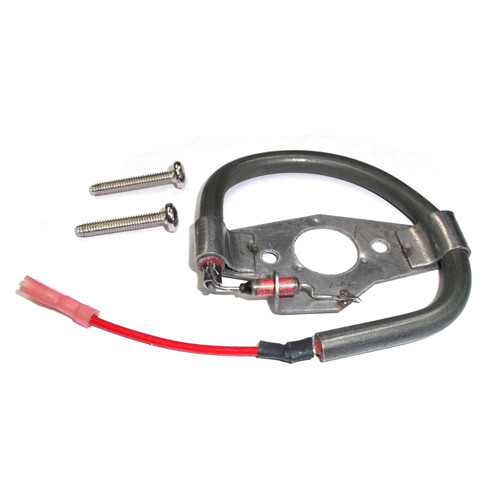
The 7.3L PowerStroke uses eight glow plugs (one per cylinder) to preheat the combustion chambers for cold starts. The glow plugs sit in the cylinder head, accessible from above with the engine cover removed. They are energized by a high current relay mounted on the driver side of the engine that switches a substantial current (15 to 30 amps total) to all eight plugs simultaneously during the preheat cycle and cold idle.
Both the glow plugs themselves and the glow plug relay are wear items. Glow plugs fail one at a time as their internal heating elements burn out, and symptoms appear gradually. The relay fails more dramatically, often as a single event where its internal contacts burn open and the entire glow plug system stops working at once. Symptoms include:
- Hard cold starting that worsens as temperatures drop. A truck that starts fine at 50 degrees but struggles at 20 degrees is showing classic glow plug degradation.
- White smoke at cold start, indicating raw fuel that did not ignite because cylinders were not warm enough.
- Rough cold idle that smooths once the engine warms.
- Long cranking time before the engine catches.
- No glow plug indicator light cycle, indicating relay or wiring failure.
- A wait to start light that turns on but no actual heat being delivered.
Diagnosis is simple. An ohmmeter at the glow plug terminal shows a healthy plug at roughly 0.5 to 2 ohms. A burned out plug reads infinity. Testing each plug takes a few minutes once the valve covers are accessible. The relay can be tested with a voltmeter at the plug bus bar. Replacement is straightforward but tedious. The valve covers must come off to access the plugs. Replace all eight at once even if only one or two test bad. Use OEM Motorcraft or International plugs. For the relay, a heavy duty replacement (such as a Stancor unit) is widely preferred over the original Ford part for its longer service life. Total parts cost is $100 to $200.
Problem 10: Turbo Pedestal and EBPV Oil Leaks
The turbocharger on the 1999 to 2003 7.3L mounts on a cast iron pedestal that sits between the turbo and the engine valley. The pedestal serves multiple functions: it supports the turbo, it routes oil to and from the turbo bearings, and (on most year applications) it houses the exhaust backpressure valve (EBPV) used for cold start emissions control. The pedestal seals to the engine with four O-rings at the bottom and to the turbo with additional O-rings at the top. Pedestal leaks are one of the most common oil leak sources on a 1999 to 2003 7.3L. Symptoms include:
- Oil running down the rear of the engine, often pooling near the bellhousing or rear transmission inspection plate. Frequently misdiagnosed as a rear main seal leak.
- Burning oil smell from the turbo area, especially after engine shutdown.
- Oil in the engine valley between the heads.
- Visible oil weeping from the EBPV actuator or the pedestal mounting flange.
- Sticky cold start performance if the EBPV is not actuating properly.
The repair requires removing the turbo to access the pedestal seals. While the turbo is off, smart owners typically address everything at once: new pedestal O-rings (the yellow Viton replacement set is the standard upgrade), new turbo O-rings, inspection of the turbo shaft endplay, and a decision about the EBPV. Many owners delete the EBPV altogether at this point and replace the pedestal with a non-EBPV version, since the EBPV is a known leak source. EBPV delete is generally legal in non-emissions states but worth checking local regulations.
The 1994.5 to 1997 OBS trucks use a different turbo arrangement without the same pedestal architecture. OBS trucks have their own turbo related leaks (typically at the up-pipe to turbo joint) but the failure pattern is different. Total parts cost for a thorough pedestal reseal is typically $100 to $200, with labor running 4 to 8 hours. Many shops bundle this job with up-pipe replacement since both jobs require similar disassembly.
Problem 11: Up-Pipe Donut Gasket Failure (1999 to 2003)
The up-pipes are the two exhaust tubes that carry exhaust gas from the manifolds up to the turbocharger inlet on the 1999 to 2003 7.3L. Each up-pipe seals to the exhaust manifold with a small crush gasket that diesel owners universally call the donut gasket because of its shape. The donut gaskets sit in an extremely hostile environment: thousands of heat cycles between cool and 1,200 degrees Fahrenheit, with constant exhaust pressure pulsing through them. Over time the gaskets crush down, lose their seal, and start leaking.
A leaking up-pipe donut produces pre-turbo exhaust gas escape, which has several recognizable consequences:
- A distinctive chuff or whistle from the engine bay under load, sometimes described as breathing or hissing as boost builds.
- Soot accumulation around the exhaust manifold to up-pipe joints, visible during routine inspection.
- Slow turbo spool because exhaust energy that should be driving the turbo escapes through the leak.
- Loss of low end power and reduced turbo response.
- Higher than normal exhaust gas temperatures because the turbo cannot pull heat out of the exhaust effectively.
- Reduced fuel economy as the engine works harder to make the same power.
Diagnosis is usually by ear and by visual inspection. The chuff under load is distinctive once you have heard it on a known leaking up-pipe. Soot trails at the manifold to up-pipe joint confirm the leak location. A propane test or soapy water test along the joints will pinpoint exact leak points.
Repair involves removing both up-pipes and replacing the donut gaskets. The factory crush gaskets are the cheap fix, typically $30 for a complete set, and they work but tend to fail again within a few years. The upgraded approach uses bellowed up-pipes with one piece flange to flange construction that essentially eliminates the donut gasket as a failure point. Bellowed up-pipes are a common upgrade during any turbo or pedestal service, typically $150 to $250 for a quality set with proper sealing flanges.
On 1994.5 to 1997 OBS trucks, the up-pipe architecture is different but the underlying problem (pre-turbo exhaust leaks at gasket joints) shows up similarly. The fix concept is the same, with appropriate year specific parts.
Problem 12: Oil Cooler Seepage and Cooling System Issues
The 7.3L PowerStroke uses an engine oil cooler mounted in the engine valley, with engine coolant flowing through one side and engine oil through the other to keep oil temperature in check. After 200,000 plus miles, the seals between the oil and coolant sides can begin to seep, allowing slow cross contamination. This is not the catastrophic oil cooler failure pattern that plagues the 6.0L PowerStroke; the 7.3L oil cooler is a more durable design overall. Still, on very high mileage trucks, slow seepage does occur. Cooling system and oil cooler symptoms include:
- Slow coolant loss with no external leak visible.
- Oil sheen on the surface of the coolant in the overflow bottle.
- A milky deposit on the underside of the oil cap or the dipstick.
- Coolant temperature climbing slowly under load, especially when towing in hot weather.
- Plastic radiator end tank seepage, a common high mileage 7.3L cooling system failure where the radiator tanks crack at the plastic to aluminum joint.
- Coolant hoses showing swelling or weak spots after 15 plus years of service.
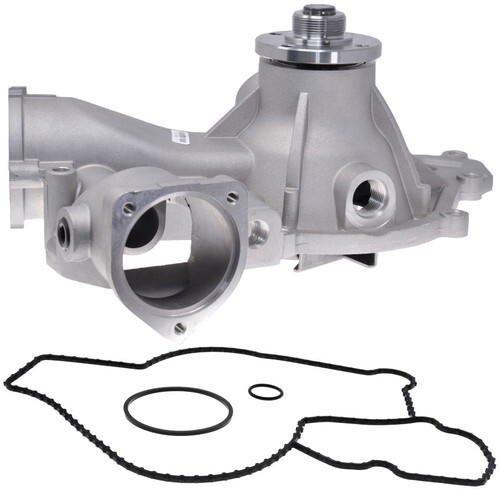
The cooling system on a high mileage 7.3L benefits from regular preventive attention. The radiator should be inspected at every oil change for any sign of weeping at the end tanks. Coolant hoses should be replaced at any sign of swelling, cracking, or softness. Cooling system flushes every 50,000 to 100,000 miles refresh the corrosion inhibitor package. For confirmed oil cooler issues, replacement is the only correct repair. The cooler sits in the engine valley and requires removing the fuel bowl and intake plenum to access. Most experienced shops bundle the oil cooler replacement with other valley work. Parts cost is typically $200 to $400 plus gaskets and O-rings.
The Year Split: 1994.5 to 1997 OBS vs 1999 to 2003 Super Duty
A frequent source of confusion among 7.3L owners is the distinction between the 1994.5 to 1997 OBS (old body style) trucks and the 1999 to 2003 Super Duty trucks. The engine carries the same 7.3L PowerStroke name across the entire production run, but there are meaningful differences between the two eras that affect parts compatibility and repair approaches. Note that there was no 1998 model year 7.3L PowerStroke pickup; the engine was on hiatus during the body style transition.
Key differences between the OBS (1994.5 to 1997) and Super Duty (1999 to 2003) 7.3L variants include:
- HPOP swash plate: OBS trucks use a 15 degree swash plate with 6.8 cc/rev flow. Super Duty trucks use a 17 degree swash plate with 7.2 cc/rev flow. Aftermarket performance pumps often increase this further.
- Injectors: OBS trucks use AA code injectors. Super Duty trucks use AD code injectors with an AE long lead variant on cylinder 8. The injector codes are not interchangeable between the eras.
- IDM: OBS and Super Duty use different IDM part numbers and different mounting locations. Bostech IDM110 covers OBS and BM6902120 covers Super Duty.
- Turbo and pedestal: The Super Duty trucks introduced the cast iron pedestal architecture with the EBPV exhaust backpressure valve. OBS trucks use a simpler turbo mounting without the EBPV.
- Fuel bowl: The Super Duty fuel bowl has the drain valve at the bottom that is a common leak point. The OBS bowl uses a different drain arrangement.
- PCM and emissions: The Super Duty trucks have more sophisticated emissions calibration and additional sensors compared to OBS. CARB compliance on Super Duty California trucks added some specific items.
- Up-pipes and exhaust: The donut gasket leak pattern is most associated with Super Duty up-pipes. OBS trucks have their own exhaust joint leak pattern but the details differ.
When ordering parts, always specify exactly which year and which body style. Many of the common problems described in this guide affect both eras but with different specific symptoms, different specific parts, and different repair approaches. Reputable diesel parts suppliers can usually confirm fitment by VIN if there is any question.
A few items are essentially the same across both eras: the CPS (with minor connector differences), the basic ICP sensor concept, the glow plug system architecture (though plug part numbers differ), and the underlying HEUI principle. So most of the diagnostic approach described in this guide applies regardless of year, even if the specific replacement parts vary.
Maintenance Recommendations to Protect Your 7.3
The 7.3L PowerStroke rewards consistent maintenance with extraordinary service life. Owners who follow a disciplined maintenance schedule regularly achieve 400,000 to 500,000 miles or more on original major components. The following intervals reflect typical best practice for keeping a 7.3L healthy:
- Engine oil and filter every 5,000 to 7,500 miles with a high quality 15W-40 CK-4 or equivalent diesel rated oil. The HEUI system is sensitive to oil condition; do not stretch oil change intervals on this engine.
- Fuel filter every 15,000 miles or sooner if water in fuel is suspected. Water in fuel damages injectors directly.
- Air filter inspection at every oil change, replacement every 30,000 miles or sooner in dusty conditions.
- CPS replacement preventively every 100,000 miles, and always keep a spare in the glove box.
- Glow plug inspection (ohm test) every 50,000 miles, replacement of all eight when more than one or two fail.
- Glow plug relay replacement at 100,000 miles or at the first sign of weakness.
- Coolant flush and refill every 50,000 miles with a quality extended life coolant.
- Inspect for HPOP, pedestal, and fuel bowl leaks every oil change. Catch leaks early before they accelerate.
- IPR and ICP sensor preventive service at 150,000 miles, especially if the IPR has never been cleaned.
- Up-pipe inspection at any turbo service interval, with proactive replacement of donut gaskets after 100,000 miles.
- Battery and battery cable inspection annually; the 7.3L has high cranking current demands and weak batteries make every diagnostic harder.
Beyond scheduled maintenance, two driving habits matter on the 7.3L. First, let the engine warm up before heavy load. The HEUI system needs oil at operating temperature to deliver consistent performance, and cold operation under heavy throttle accelerates injector and HPOP wear. Second, let the engine cool down after heavy load before shutdown. The turbocharger benefits from a 30 to 60 second idle after high speed or heavy towing operation to prevent oil coking at the turbo center section.
Bostech Solutions for the 7.3L PowerStroke
Bostech offers a comprehensive catalog of remanufactured and new parts for the 7.3L PowerStroke, all backed by extended warranty coverage. The relevant parts for any 7.3L diagnostic or repair work include:
- Bostech HPOP008X High Pressure Oil Pump for 1999 to 2003 Ford 7.3L PowerStroke. Remanufactured to OEM specifications with the 17 degree swash plate, backed by 24 month unlimited mileage warranty.
- Bostech HPOP008X-K2 HPOP Kit with IPR Valve and ICP Sensor for 1999 to 2003 Ford 7.3L PowerStroke. The complete high pressure oil system service in one package, useful when all three components are due for service.
- Bostech IDM110 Reman Injector Driver Module for 1994 to 1998 Ford 7.3L PowerStroke. Pre programmed with the latest OE software, no additional programming required at installation. 24 month unlimited mileage warranty.
- Bostech BM6902120 Reman Injector Driver Module for 1999 to 2003 Ford 7.3L PowerStroke. The Super Duty era IDM with the same OEM specifications and 24 month warranty.
- Bostech DE504-K9 Silver Series Fuel Injector Set for 1999 to 2004 Ford 7.3L PowerStroke. The complete eight injector set with Code AD and AE long lead for cylinder 8, fully remanufactured and bench tested.
- Bostech ISK641 Fuel Pressure Regulator Billet Valve Cap Kit for 2001 to 2003 Ford 7.3L PowerStroke. The billet aluminum cap upgrade for the fuel bowl, with O-ring kit and brass valve.
- Bostech DEC021213 HEUI Injector Cup Sleeve for Ford 7.3L PowerStroke. The injector sleeve that seals the injector to the cylinder head.
For specific HEUI system service jobs, ordering a coordinated kit is often the right approach. A typical mid life HEUI service on a high mileage 7.3L might include the HPOP008X-K2 (covering pump, IPR, and ICP) plus the DE504-K9 injector set if injectors are due. For IDM replacement, ordering the year specific module with installation handled in 30 minutes is straightforward. For fuel system service, the ISK641 plus a standard bowl rebuild kit covers the most common leak points.
For pricing, fitment confirmation by VIN, or to place an order, contact Bostech at 1-800-868-0057, by email at customerservice@bostechauto.com, or visit bostechauto.com to browse the full 7.3L PowerStroke catalog. Bostech customer service can help confirm fitment between OBS and Super Duty applications and answer technical questions about HEUI system service.
Frequently Asked Questions
Yes, with one important qualification. The core engine (block, crankshaft, rods, head, cooling jacket) is genuinely durable and routinely runs past 400,000 miles. The supporting electrical and oil control components that make HEUI work do age out and require maintenance. Owners who treat the 7.3L as a maintenance-light engine end up disappointed. Owners who follow a consistent maintenance schedule and address common wear items proactively generally get the legendary 500,000 plus mile service life. The reliability reputation reflects the latter group, not the former.
On a 7.3L, no start situations almost always trace to one of five things: a failed CPS (no tach movement during cranking), insufficient injection control pressure (failed IPR, HPOP, or low oil level), a failed IDM (no injector firing despite valid signals from the PCM), an ICP sensor failure (PCM cannot regulate pressure properly), or a fuel supply issue (failed lift pump, clogged filter, or air in the fuel system). The first thing to check is tach movement during cranking. Zero movement points strongly to the CPS. Tach movement plus no start points toward the high pressure oil system or IDM. A scan tool with HEUI parameter access narrows down the rest quickly.
Factory injectors routinely last 250,000 to 350,000 miles before showing significant wear. Some trucks make 400,000 plus miles on original injectors. Quality reman injectors typically last 150,000 to 250,000 miles when fuel quality is good. The HEUI design is forgiving compared to common rail systems, and gradual wear is the normal failure mode rather than catastrophic failure.
OBS refers to the 1994.5 to 1997 old body style trucks (F-250 and F-350 with the previous generation cab and chassis). Super Duty refers to the 1999 to 2003 trucks with the new Super Duty cab and chassis. There was no 1998 model year 7.3L pickup as the engine was on hiatus during the body style transition. The 7.3L engine itself is similar between the two eras but with several differences: different HPOP swash plate, different injector codes, different IDM part numbers, different turbo pedestal architecture, and different fuel bowl design. Parts are not interchangeable between the two eras without verifying specific fitment.
Many owners do, with good results. The EBPV is the exhaust backpressure valve used for cold start emissions and supplemental engine braking. It is a known leak source at the turbo pedestal and contributes nothing critical to engine operation in modern conditions. Modern multi-viscosity oils and the engine’s own thermal management generally provide adequate cold start performance without the EBPV. Delete kits replace the EBPV equipped pedestal with a non-EBPV version, eliminating the leak source. EBPV delete is generally legal in non-emissions inspected states; check local regulations before performing the modification.
No. The 7.3L uses HEUI injection, which means the high pressure work is done by engine oil pressure rather than fuel pressure. The fuel side of the system runs at low pressure (around 60 PSI) and the fuel pump is a simple mechanical or electric lift pump depending on the year. There is no CP3, CP4, or other high pressure fuel pump to fail catastrophically. This is one of the structural advantages of the 7.3L compared to later common rail diesels.
ICP stands for Injection Control Pressure, the high pressure engine oil pressure that actuates the HEUI injectors. The ICP sensor measures this pressure and reports it to the PCM, which adjusts the IPR valve to maintain commanded pressure. ICP matters because the injectors will not fire below approximately 500 PSI of ICP. Hard starts, no starts, and rough running on a 7.3L often trace to ICP control problems. The ICP sensor itself is a frequent failure point, primarily through internal seal failure that allows oil into the electrical connector.
IDM failure typically presents as a sudden no start with the engine cranking normally, or as intermittent dead misses that affect multiple cylinders. Visual inspection of the IDM mounting location (driver side fender area) for water intrusion is a useful first step. A scan tool that can read PCM commands to the IDM and verify the IDM is producing the proper high voltage output to the injectors confirms the diagnosis. If PCM signals reach the IDM normally but no high voltage output is present, the IDM is the failure point.
Oil in the engine valley is the classic 7.3L symptom and almost always traces to one of four sources: the HPOP fittings or rear cover, the ICP sensor (oil seeping out through the sensor body), the IPR valve mounting area, or the turbo pedestal. Clean the valley with degreaser, run the engine, and watch for new oil to appear. Each leak source has a distinctive location that makes diagnosis easier once the valley is clean. UV dye in the oil makes the inspection even easier.
Bostech offers a comprehensive catalog of reman 7.3L PowerStroke parts including the HPOP (HPOP008X and HPOP008X-K2 kit), IDMs (IDM110 for 1994 to 1998, BM6902120 for 1999 to 2003), injector sets (DE504-K9), fuel pressure regulator kits (ISK641), and HEUI injector sleeves (DEC021213), all backed by 24 month unlimited mileage warranty. Contact Bostech at 1-800-868-0057, by email at customerservice@bostechauto.com, or visit bostechauto.com to confirm fitment by VIN and place an order.
Disclaimer
The information in this guide is provided for educational and reference purposes only. Diesel engine repair involves working with high pressure oil and fuel systems, hot exhaust components, and heavy parts that can cause serious injury or property damage if handled incorrectly. The 7.3L PowerStroke HEUI system uses engine oil at pressures up to 3,000 PSI; high pressure oil can penetrate skin and cause serious injury. Always relieve pressure before opening any high pressure component. Disconnect batteries before performing any electrical diagnostic work near the IDM or injector circuits, which use high voltage signals up to 120 volts. Always follow factory service procedures, consult a qualified diesel technician for repairs beyond your skill level, and observe all applicable safety precautions. Specifications, part numbers, and procedures in this article reflect general best practice for the 1994.5 to 2003 Ford 7.3L PowerStroke at the time of writing and may vary by build date, region, or aftermarket configuration. Always verify part fitment by VIN before purchasing, especially across the OBS to Super Duty transition where many parts are not interchangeable. Bostech and its affiliates are not responsible for repairs performed using this information, and emissions equipment modifications may be illegal in some jurisdictions.