
LBZ Duramax Common Problems: The Complete 2006 to 2007 Owner Diagnosis and Repair Guide
Aug 27th 2026
Table of Contents
- Introduction: The Duramax Everyone Wants
- The LBZ Duramax at a Glance
- Problem 1: Water Pump Failure
- Problem 2: Injector Harness Chafing and Misfires
- Problem 3: Fuel Injector Wear and Balance Rates
- Problem 4: VGT Turbo Vane Sticking
- Problem 5: Air in Fuel and Filter Head Problems
- Problem 6: Glow Plug and Cold Start Problems
- Problem 7: Cracked Pistons on Tuned Trucks
- Problem 8: EGR Valve Soot Accumulation
- Problem 9: Transmission Cooler Line Leaks and Allison Behavior
- Diagnostic Trouble Code Reference
- LBZ vs LLY vs LMM: Where It Sits in the Duramax Family
- Buying an LBZ in 2026: Inspection Checklist
- Sourcing Parts for a Twenty Year Old Platform: Bostech Remanufactured Solutions
- Frequently Asked Questions
- Disclaimer
1. Introduction: The Duramax Everyone Wants
Ask a room full of diesel technicians to name the best Duramax ever built and the answer comes back with unusual agreement: the LBZ. Produced for only about a year and a half, from mid 2006 through the 2007 classic body style, the LBZ occupies a sweet spot no other Duramax generation quite matches. It arrived after GM had strengthened the platform in response to LB7 and LLY lessons, and it left the market just before the diesel particulate filter era began with the LMM. The result is the strongest of the pre emissions Duramax engines, with no DPF, no DEF, and no regeneration cycles, sitting in front of the proven six speed Allison 1000.
That reputation has real market consequences. Clean LBZ trucks routinely sell for more than newer, lower mileage trucks from the LMM era, and asking prices for well kept examples have held or climbed even as the trucks pass their twentieth birthday. Buyers are paying for simplicity, tunability, and a legend, and for the most part the legend is deserved.
Deserved is not the same as flawless. Every LBZ on the road today is a high mileage, two decade old vehicle, and the platform has a well documented list of wear items and design quirks that owners and buyers need to understand: a water pump with a plastic impeller on borrowed time, an injector harness that chafes in two famous spots, a variable geometry turbo that gums up with carbon, and pistons that draw a hard line for the tuning crowd. This guide works through all of it, problem by problem, with symptoms, diagnostic codes, testing procedures, and honest repair guidance for the truck that everyone wants and more people than ever are now maintaining.
2. The LBZ Duramax at a Glance
The LBZ, RPO code for the 2006 to 2007 classic 6.6L Duramax V8, was a substantial engineering revision rather than a simple recalibration of the LLY it replaced. GM strengthened the block casting with thicker main webbing, fitted stronger connecting rods, lowered compression from 17.5 to 1 to 16.8 to 1 to support higher injection pressure and cleaner combustion, and raised common rail pressure to 26,000 psi with a revised Bosch CP3 pump and updated injectors. The changes lifted output to 360 horsepower at 3,200 rpm and 650 lb-ft of torque at 1,600 rpm, the strongest ratings of any pre emissions Duramax.
Just as important was what bolted behind it. The LBZ debuted alongside the six speed Allison 1000, which added a second overdrive, better grade braking, and improved towing manners over the five speed used through 2005. The engine retained the Garrett GT3788VA variable geometry turbocharger introduced on the LLY, but with the airflow restrictions of the early LLY intake resolved and calibration matured, the combination finally worked the way GM intended.
Key Specifications
- Displacement: 6.6 liters (403 cubic inches), V8, 32 valve overhead valve architecture
- Horsepower: 360 at 3,200 rpm; torque: 650 lb-ft at 1,600 rpm
- Compression ratio: 16.8 to 1, reduced from 17.5 to 1 on the LLY
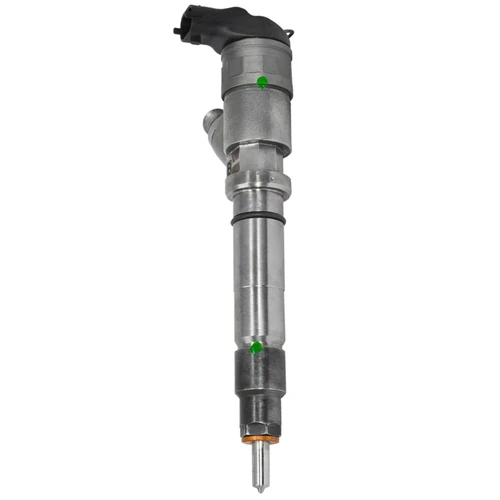
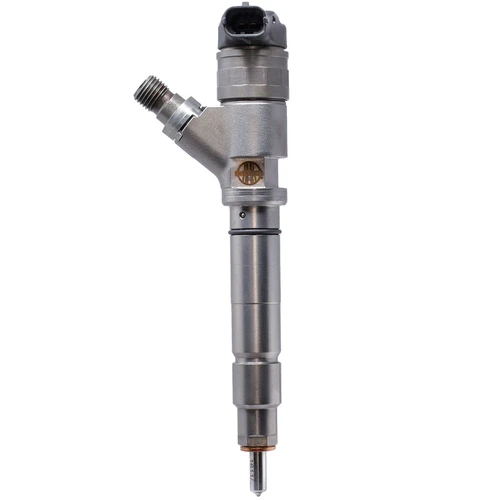
- Fuel system: Bosch CP3 injection pump, common rail at up to 26,000 psi, solenoid style injectors mounted outside the valve covers
- Turbocharger: Garrett GT3788VA variable geometry with electronic vane control
- Emissions equipment: EGR and catalytic converter only, no DPF, no DEF, no active regeneration
- Transmission: six speed Allison 1000 automatic or ZF six speed manual
- Production: 2006 through 2007 classic body Chevrolet Silverado 2500HD/3500 and GMC Sierra 2500HD/3500, plus Kodiak and TopKick applications
Model Year Notes: 2006 vs 2007 Classic
Within the short LBZ run there is little mechanical difference between a 2006 and a 2007 classic body truck, and no year within the range is known to be better or worse. The distinction that matters is at the boundary: 2007 was a split year for GM, with classic body trucks carrying the LBZ while the newly introduced GMT900 body trucks received the LMM and its diesel particulate filter partway through the year. A buyer shopping 2007 trucks must confirm which engine is present rather than trusting the model year, and the eighth digit of the VIN, the letter D for the LBZ and 6 for the LMM, settles the question in seconds. Kodiak and TopKick medium duty applications also carried the LBZ with their own calibrations and cooling packages.
Two design details matter for everything that follows. First, unlike the LB7, the LBZ mounts its injectors outside the valve covers, which turns injector replacement from a legendary ordeal into a reasonable job. Second, the absence of a diesel particulate filter means the LBZ never dilutes its oil with regeneration fuel and never derates over soot load, which is a large part of why these engines routinely see 300,000 miles. With the platform established, here are the nine problems that actually bring LBZ trucks into the shop.
3. Problem 1: Water Pump Failure
If there is one repair that nearly every LBZ will need in its life, and many will need twice, it is the water pump. The factory pump uses an impeller with plastic composite construction that degrades with heat cycles and coolant age. As the impeller erodes or separates from its shaft, coolant flow drops even though the pump still spins, and the first sign is often a truck that runs warm on grades it used to climb cold. Complete failure ranges from a seized bearing to an impeller freewheeling on the shaft, and the weep hole seal commonly begins seeping in the same mileage window.
The practical service life runs 80,000 to 120,000 miles, which means a twenty year old truck is either on its second or third pump or is overdue. Because the pump sits behind the fan assembly and drive components, the labor is meaningful, and the smart money replaces the thermostats, both of them, since the Duramax uses dual thermostats, along with hoses and fresh coolant while the front of the engine is open.
The water pump is also the headline item of a broader cooling system that is now twenty years old everywhere. The fan clutch weakens with age and stops pulling the airflow a loaded truck needs, radiator fins pack with debris and delaminate, and the cooling stack of radiator, charge air cooler, and condenser accumulates two decades of bugs and mud between its layers. A truck that runs warm towing with a healthy new pump has usually reached the point where the fan clutch and stack cleanliness deserve the next look, and doing pump, clutch, thermostats, and a stack cleaning as one refresh is the pattern experienced LBZ owners follow.
Symptoms of Water Pump Failure
- Gradual overheating under load, especially towing, with normal temperatures in light driving as flow becomes marginal
- Coolant seepage or crust trails from the weep hole below the pump, the seal announcing its retirement
- Frequent low coolant warnings and unexplained reservoir drops without visible puddles
- A squeak, growl, or rumble from the front of the engine that changes with rpm, indicating bearing wear
- Overheating that a new thermostat did not fix, the classic sign of an eroded impeller
Diagnosis and Repair
Verify flow rather than guessing: with the engine warm, a functioning pump produces visible coolant movement at the filler neck at fast idle, and an infrared thermometer will show a healthy temperature drop across the radiator. Pressure test to rule out external leaks, and inspect the weep hole with a mirror. When replacement time comes, insist on a pump with an improved impeller design rather than a repeat of the original construction. Bostech supplies water pumps for Chevy and GMC Duramax applications built to resist exactly this failure mode, along with the gaskets, thermostats, and cooling system seals to complete the job in one pass. The catalog at bostechauto.com lists fitment by year and RPO code.
4. Problem 2: Injector Harness Chafing and Misfires
The most famous electrical gremlin on the LBZ is not a failed component at all, it is a wiring harness rubbing itself bare. The engine harness routes injector wiring along paths where, over tens of thousands of miles of vibration, the loom can contact brackets and edges until insulation wears through. Cylinders 2 and 7 are the notorious victims, to the point that experienced Duramax technicians check those circuits before anything else when an LBZ arrives with a single cylinder misfire and an injector circuit code.
A chafed wire produces symptoms that are maddeningly intermittent. The circuit works cold and fails hot as the copper expands, or cuts out on bumps, or misbehaves only under torque as the engine rocks. Owners replace injectors, then FICMs, chasing a fault that a ten dollar length of wire and heat shrink would have solved. Corrosion at the injector connectors and at the FICM connector adds a second, related failure path on trucks from road salt states.
Symptoms of Harness Problems
- Single cylinder misfire codes such as P0202 or P0207, injector circuit codes for cylinder 2 or 7, that come and go with temperature or road surface
- A miss or stumble that appears when the engine is torqued under load but idles smoothly in the driveway
- Injector circuit open or short codes, P2146 through P2149 family, identifying a bank or pair rather than a single injector
- A misfire that persists after an injector swap, or moves unpredictably, pointing away from the injector itself
Diagnosis and Repair
Diagnosis is hands on: unwrap the loom along its routing, especially approaching cylinders 2 and 7, and inspect for shiny copper, flattened insulation, and rub witness marks on adjacent brackets. Wiggle test the harness at idle while watching for the miss, and inspect connector terminals for green corrosion and spread pins. Repairs range from splicing and re routing a single chafed conductor with proper heat shrink to replacing harness sections outright on a corroded truck.
The FICM Question
The LBZ drives its injectors through a fuel injection control module mounted on the engine, and because the module lives with vibration and heat, it appears on every internet list of suspects when injector circuit codes arrive. In practice, genuine FICM failures on the LBZ are far less common than harness and connector problems pretending to be one. Before replacing a module, verify its power and ground supplies under load, clean and inspect its connectors, and complete the harness inspection above, because a chafed wire will happily take out the same circuit on a fresh module. When a module has genuinely failed, confirmed by absent injector drive signals with proven supplies and wiring, replacement is straightforward, and the harness work should still be done at the same time to protect the investment.
This is a problem area where parts availability matters, because GM harness components for a 2006 truck are increasingly scarce. Bostech stocks fuel injector harnesses, pigtails, and connector repair components for Duramax applications, letting you replace a damaged section with new wiring rather than gambling on another twenty year old used harness. Fitment help is a phone call away at 1-800-868-0057.
5. Problem 3: Fuel Injector Wear and Balance Rates
The LBZ escaped the internal design flaws that made LB7 injectors infamous, and its injectors are both more durable and far easier to replace thanks to their external mounting. But no common rail injector lasts forever, and at the mileages LBZ trucks now carry, ordinary wear is the dominant fuel system issue. Nozzle erosion, ball seat wear, and internal leakage gradually skew how much fuel each injector delivers for a commanded pulse, and the engine control module quietly compensates until it no longer can.
That compensation is visible to anyone with a capable scan tool through balance rates, the fueling correction the ECM applies to each cylinder to smooth the engine at idle. Balance rates are the single most useful health metric on this engine and the first data any prospective LBZ buyer should ask to see.
Reading Balance Rates
- Read balance rates at operating temperature, at idle, in park and then in drive with the brake held, since load changes the picture
- Healthy injectors read within roughly plus or minus 4 mm3 in park; a cylinder pegged high or low, or drifting past plus or minus 5 to 6 in drive, is compensating for a problem
- Consistently positive rates on one cylinder mean the ECM is adding fuel to a weak or leaking injector; strongly negative rates mean it is pulling fuel from a rich one
- Confirm suspicion with a return flow test, since an injector with excessive internal leakage will show outsized return volume and can drag rail pressure down against the whole engine
Symptoms of Injector Wear
- Hard starting or long cranking, particularly warm, as internal leakage bleeds rail pressure during cranking
- White smoke at idle, a haze that smells of unburned fuel, from a cylinder receiving poorly atomized fuel
- Fuel knock, rough idle, or a subtle chuff at the exhaust that smooths as rpm rises
- Rising oil level or fuel smell in the oil, the signature of an injector leaking into the cylinder
- Rail pressure codes such as P0087 or P1093 under load once leakage outruns the CP3 pump's capacity
Fuel quality drives injector life on this engine more than any other single factor. The LBZ predates the worst of the CP4 era, and its CP3 pump is famously tolerant, but the injectors still meter fuel through clearances measured in microns, and water, sediment, and marginal fuel erode those clearances mile by mile. Trucks that fuel at high turnover stations, keep filters fresh, and run a lubricity additive routinely double the injector life of trucks that do not, which is worth remembering on a platform where a full set of injectors is the largest routine expense an owner will face.
Repair Guidance
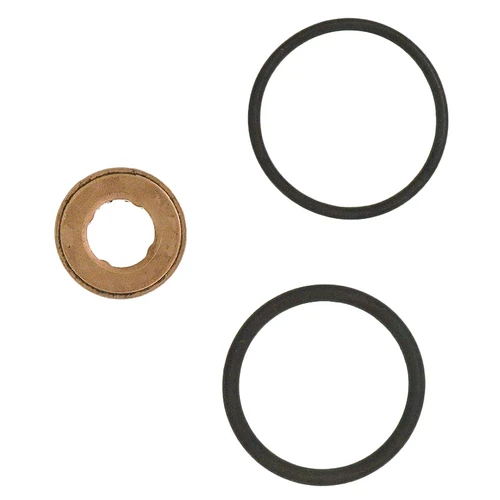
Replace injectors in matched sets where possible. On an engine this age, installing one new injector alongside seven worn ones produces balance complaints and a second labor bill within the year. Insist on injectors that are flow tested and matched, use new lines and seals, and address the harness section above at the same time, since a chafed circuit will make a fresh injector look faulty. Bostech remanufactured Duramax injectors are rebuilt to OEM specification, individually flow tested, and backed by the standard Bostech warranty, and complete sets ship with the seals and hardware the job requires. Where the CP3 pump itself has aged past its prime, remanufactured CP3 pumps are cataloged for the same applications.
6. Problem 4: VGT Turbo Vane Sticking
The LBZ carries the Garrett GT3788VA variable geometry turbocharger, and by 2006 GM had solved the intake restriction and calibration issues that plagued the same turbo on the early LLY. What no calibration can solve is chemistry: the movable vanes that give a VGT its flexibility live in the exhaust stream, and over years of heat cycles, soot and carbon accumulate on the vanes and the unison ring that rotates them. Deposits build until the ring drags, then sticks, and the turbo can no longer change its geometry on command.
On the LBZ this is a slow, high mileage failure rather than an early defect, and many original turbos run well past 200,000 miles before sticking becomes noticeable. Trucks that idle extensively, run short trips, or rarely work hard carbon up fastest, because sustained exhaust heat is what keeps the mechanism clean. The failure presents in two directions: vanes stuck toward the open position produce lazy spool, low boost, and underboost codes, while vanes stuck closed produce surging, overboost, and elevated exhaust temperatures.
Symptoms of Vane Sticking
- Sluggish, delayed boost response and a truck that feels flat until high rpm, the stuck open pattern
- Overboost surging or a bark on throttle lift, the stuck closed pattern
- Codes P0299 for underboost, P0234 for overboost, or P2563 for vane position sensor performance
- Loss of exhaust brake effectiveness on trucks using the VGT for exhaust braking
- Limp mode under load as commanded and actual vane position diverge
Diagnosis and the Repair Decision
A scan tool comparison of commanded versus actual vane position, swept through its range at idle, exposes a sticking mechanism immediately: watch for lag, jumps, or a position that never reaches target. Rule out boost leaks and a lazy MAP or baro sensor before condemning the turbo. Caught early, a sticking unison ring can sometimes be freed with a careful cleaning regimen and a change in duty cycle, and regular hard highway pulls are genuinely preventive. A mechanism with heavy deposits, worn vane pivots, or bearing play is a replacement, and at LBZ mileages a quality remanufactured or new turbocharger assembly is usually the honest answer.
Prevention on this system is unusually concrete. The VGT mechanism stays free when it moves and heats regularly, so trucks whose owners use engine braking, tow with purpose, and take a weekly sustained highway pull simply do not carbon up on the schedule that pampered trucks do. Aftermarket exhaust brake calibrations that sweep the vanes closed on deceleration exercise the mechanism as a side effect, which is part of why worked trucks with exhaust brakes routinely show the cleanest mechanisms at teardown. If your LBZ leads a gentle life, a monthly session of deliberate load is legitimate maintenance, not indulgence.
This guide keeps the turbo section deliberately compact because the full treatment, including generation context across the Duramax family, actuator testing, and replacement options, lives in our dedicated article, Duramax Turbo Problems: Complete LLY, LBZ, LMM and L5P Troubleshooting Guide, on the Bostech blog. When replacement is the call, Bostech carries turbocharger assemblies, actuators, vane position sensors, gasket kits, oil feed lines, and up pipes for GM Duramax applications so the whole hot side can be done properly at once.
7. Problem 5: Air in Fuel and Filter Head Problems
The Duramax fuel system through the LBZ era has a structural quirk: there is no factory lift pump. The CP3 injection pump must suck fuel the entire distance from the tank, which means the supply side of the system operates under vacuum. Any tiny breach on that suction path, a hairline crack, a hardened o ring, a loose bleeder, admits air rather than leaking fuel, so the problem leaves no puddle and drives owners in circles.
The usual culprit sits on top of the engine: the fuel filter head. Its priming pump seals harden with age, the bleeder screw o ring flattens, and the plastic housing itself can develop hairline cracks, each admitting a stream of bubbles that collect while the truck sits. The classic presentation is a truck that starts instantly when warm but cranks long after sitting overnight, because air has migrated up the lines and the CP3 must re prime before pressure can build.
Symptoms of Air Intrusion
- Extended cranking after sitting overnight or over a weekend, with normal starts when warm, the signature symptom
- A stumble or brief power loss on hard acceleration as accumulated air reaches the pump
- Visible bubbles in a clear line temporarily plumbed into the filter outlet during a running test, the definitive confirmation
- Low rail pressure codes P0087 or P1093 under heavy fueling as air displaces supply
- A primer that loses its firmness or will not build resistance, pointing at the filter head check valve and seals
On trucks this age the filter head has company. The rubber sections of the supply lines harden and develop porosity that admits air without dripping fuel, the tank pickup module's seals age, and any previous owner's plumbing work, splices, worm clamps, mystery fittings, adds candidate leak points. When a seal kit and filter do not cure the overnight hard start, work backward along the suction path methodically rather than re replacing the same parts, and treat every rubber section older than fifteen years as a suspect regardless of how it looks from outside.
Repair and the Lift Pump Question
Start cheap and work up: replace the filter head seal kit and bleeder o ring, verify the filter is genuine and correctly seated, and inspect the lines from tank to head for chafe and porosity. A cracked filter head gets replaced, not patched. Beyond fixing leaks, the most popular durability upgrade on any LBZ is adding an aftermarket lift pump, which converts the suction side to positive pressure, adds real filtration and water separation, and takes strain off the CP3. It is not a factory requirement, but for a truck that tows or has modified fueling it is cheap insurance for a pump that has become expensive to replace. Bostech stocks fuel filter head components, filters, seals, lines, and CP3 pumps for Duramax applications when the parts list comes together.
8. Problem 6: Glow Plug and Cold Start Problems
With 16.8 to 1 compression, the LBZ leans on its glow system harder than the earlier 17.5 to 1 engines, and cold weather behavior is where aging glow components make themselves known. The system is simple: eight glow plugs, a controller that manages pre glow and after glow timing, and the wiring between. Any of the three can fail, and on a twenty year old truck, several usually have.
Individual plug failure is gradual and cumulative. One dead plug is barely noticeable in mild weather; three or four produce the classic cold morning routine of long cranking, lumpy running, and a white cloud that embarrasses the owner at every winter job site. Controller and relay failures take the whole system down at once and announce themselves the first cold snap after they die.
Symptoms and Codes
- Hard starting below roughly 40 degrees Fahrenheit, with progressively longer cranking as more plugs fail
- Rough running and white gray smoke for the first minute after a cold start, clearing with warmth
- Glow plug circuit codes P0671 through P0678 identifying individual cylinders, or P0380 and P0382 for the glow module circuits
- No wait to start lamp at cold key on, indicating a controller or circuit fault rather than plugs
Testing and Replacement
Testing is multimeter simple. Disconnect each plug and measure resistance to ground: expect roughly one to two ohms healthy, with an open circuit confirming failure. Verify the controller is delivering voltage to the plug feed during the pre glow cycle with the key on cold. Replace plugs as a complete set on a high mileage engine, torque them carefully into aluminum heads that have seen twenty years of heat cycles, and never force a seized plug without penetrating oil and patience, since a snapped plug turns a driveway job into a head job. Bostech lists glow plugs, glow plug harnesses, and controllers for Duramax applications by year at bostechauto.com.
9. Problem 7: Cracked Pistons on Tuned Trucks
This is the problem that requires the most honest framing, because it is simultaneously the most feared LBZ failure on the internet and a near non issue for a stock truck. When GM strengthened the LBZ bottom end, the block and rods got the attention while the cast aluminum pistons carried over largely unchanged. At factory power levels they are entirely adequate, and stock LBZ engines run to 300,000 miles without piston drama. The picture changes when the tuning community discovered how much power the LBZ makes on a tune alone.
Pushed past roughly 550 to 650 horsepower at the wheels, especially with aggressive timing and sustained load, LBZ pistons develop a signature failure: a crack propagating across the piston crown along the centerline of the wrist pin. The failure begins as a subtle compression loss and blowby increase, and ends with a windowed piston and metal through the engine. It is a cylinder pressure and thermal fatigue failure, and it is overwhelmingly a modified truck problem: the harder the tune and the more the truck tows on it, the earlier it arrives.
Warning Signs and Confirmation
- Gradually increasing crankcase pressure and blowby, visible as breather mist and oil film, on a tuned truck
- Unexplained white smoke and coolant free misfire on one cylinder under load
- A cylinder down on relative compression testing or a formal compression test
- Borescope inspection showing a crown crack across the wrist pin axis, the definitive confirmation
Prevention and the Honest Advice
For a stock or lightly tuned truck, no action is needed beyond normal maintenance, and buyers should not fear the engine over this issue. For owners chasing big numbers, the prevention is well established: keep street tunes moderate, manage exhaust gas temperature with gauges and sane fueling, and accept that a build past the 600 wheel horsepower neighborhood belongs on forged or cut and coated pistons. The LBZ rewards restraint, and the trucks that crack pistons are almost always the ones asked to make sled pull power on factory castings every day.
While We Are Being Honest: Head Gaskets
The LBZ also inherits a modest version of the Duramax head gasket conversation. Unlike the LLY, whose marginal cooling made gasket failures a genuine pattern, LBZ head gaskets at stock power are a rare, high mileage event rather than a characteristic problem. Where they appear is the same territory as cracked pistons: sustained high boost and cylinder pressure on tuned trucks, which is why head studs are standard practice on serious builds. A stock truck showing classic gasket symptoms, coolant pushed into the reservoir under load, hydrocarbon in the coolant, should be diagnosed rather than assumed, because a failing water pump or restricted stack produces overheating that mimics the early complaints.
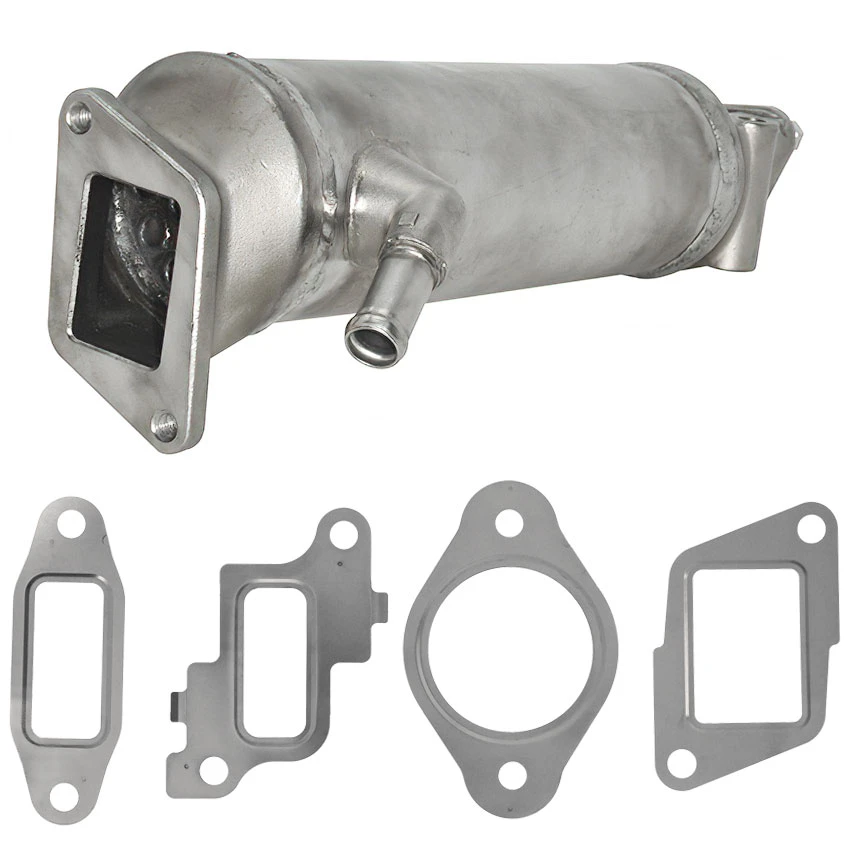
10. Problem 8: EGR Valve Soot Accumulation
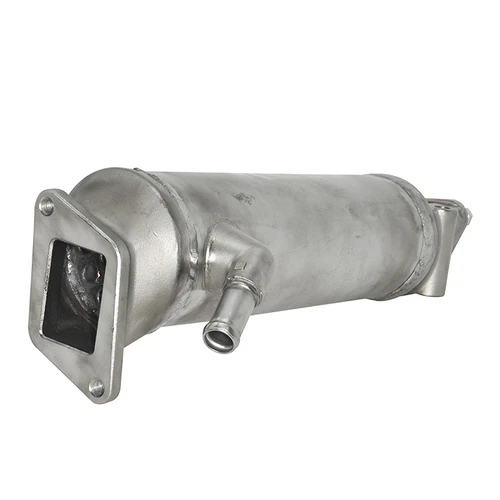
The LBZ era predates the DPF, but it does carry exhaust gas recirculation, and its EGR valve and cooler ingest soot laden exhaust every mile. Over tens of thousands of miles the valve pintle and bore accumulate baked carbon until the valve sticks, sluggishly responds, or hangs partially open. A valve stuck open at idle admits exhaust when the engine wants clean air, producing rough idle, smoke, and hesitation; a valve stuck closed sets flow codes and, on an engine this age, often accompanies a cooler that is itself partially restricted.
Symptoms of EGR Trouble
- Rough idle, stumble on tip in, or light throttle surging that smooths at higher load
- Black smoke and lazy response when a stuck open valve dilutes intake air
- Codes P0401 for insufficient flow, P0404 for valve performance, or P1404 for the pintle not returning to its commanded rest position
- Visible heavy soot at the intake mouth and valve when inspected, the LBZ intake tract is never clean, but caked deposits tell the story
Service and Repair
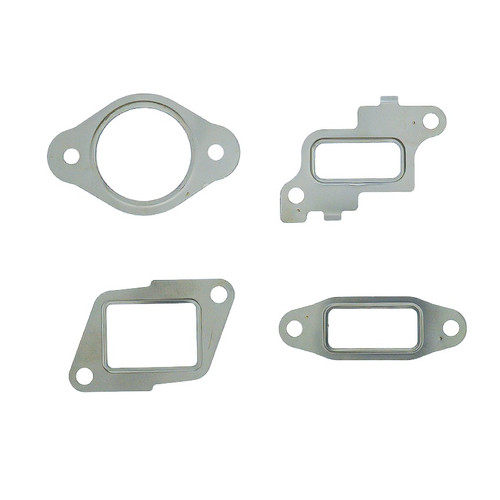
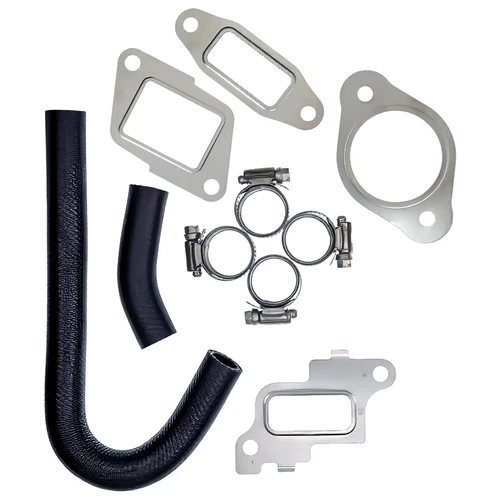
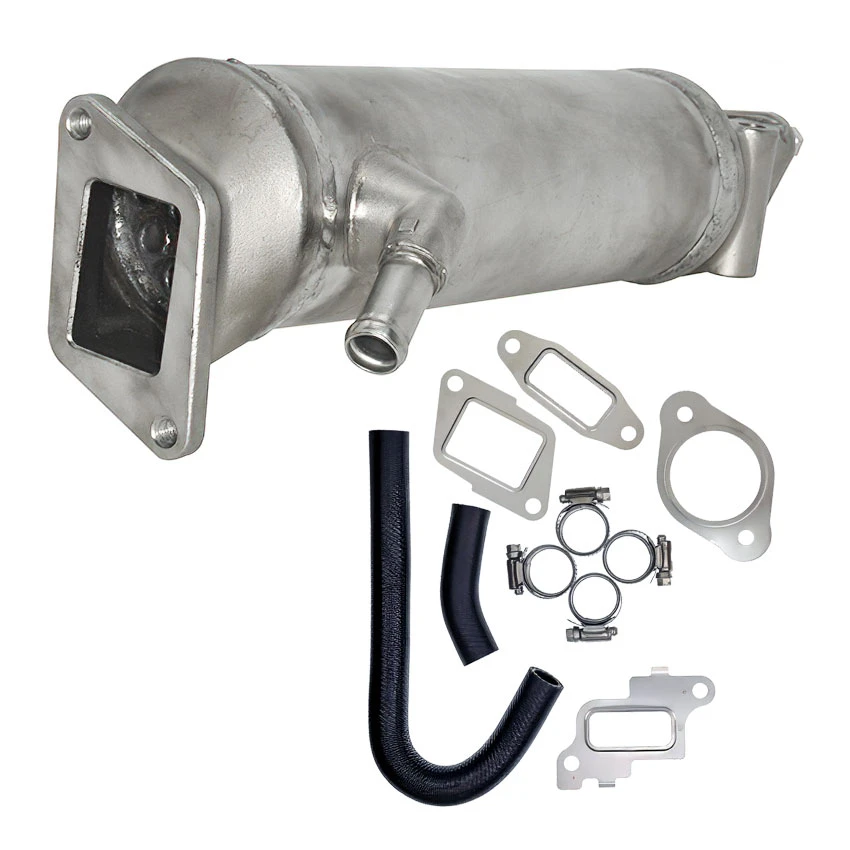
A sticking valve can often be removed and cleaned as a first step, and scan tool actuation afterward confirms whether full, prompt travel returned. A valve with worn actuator gears or a dead position sensor is a replacement. While the valve is off, evaluate the cooler passages, since a restricted cooler pushes the system out of range even with a fresh valve. Bostech supplies EGR valves, new and remanufactured EGR coolers, and the gaskets for Duramax applications, and the cross platform companion article Most Common EGR Failure Modes and Testing Procedures on the Bostech blog covers the full testing methodology.
One frequent question deserves a direct answer here: removing or blocking the EGR system on a road driven LBZ is illegal under federal law even though the truck predates the DPF era, and enforcement against shops and parts sellers has tightened sharply in recent years. The pre emissions reputation of the LBZ refers to what it never had, not permission to remove what it does. A cleaned or replaced valve and a healthy cooler keep the system trouble free without the legal exposure.
11. Problem 9: Transmission Cooler Line Leaks and Allison Behavior
Two drivetrain items round out the LBZ list, and the first is almost a rite of passage. The factory transmission cooler lines use crimped rubber sections that begin weeping at the crimps, commonly by 40,000 to 60,000 miles on the original parts, which means today's trucks are on replacement lines or leaking again on old replacements. The leak is slow, drips at the crimp collars, and left alone will walk the Allison down to a fluid level where it slips and overheats, converting a hundred dollar line into a transmission bill.
The second is behavioral rather than mechanical. The six speed Allison 1000 protects itself: when it detects slip beyond its thresholds, it enters limp mode, locking into a single gear and setting P0700 series codes. On stock trucks limp events are rare and usually trace to fluid level or a genuine fault. On tuned trucks they are the transmission announcing that a 360 horsepower calibration is being fed considerably more, and repeated events glaze clutches. The stock Allison tolerates modest tunes and sensible driving; sustained heavy tunes call for upgraded clutches and a matching transmission calibration.
Service is the Allison's love language. The unit asks for the correct fluid specification, a spin on filter at regular intervals, and the internal filter with a pan drop on the long interval, and transmissions that receive exactly that reach the mileage of the engine in front of them. Fluid that smells burnt, a pan magnet wearing a fur coat of clutch material, or an unknown service history on a twenty year old truck are all arguments for a full service and a season of watchful driving before trusting it with a heavy trailer.
What to Watch
- Drips or wetness at the cooler line crimps, low fluid on the dipstick, or red fluid traces along the frame rail
- Rising transmission temperatures towing, an early sign of low fluid or a restricted cooler circuit
- Slipping, delayed engagement, or a limp mode event, which warrants a fluid level and code check before anything else
- Replace failing lines with braided or improved crimp designs, service the fluid and internal filter on schedule, and keep tunes matched to the transmission's tolerance
12. Diagnostic Trouble Code Reference
The codes below are the ones LBZ owners encounter most, grouped by system and cross referenced to the sections above. Treat every code as the start of a diagnostic path, not a shopping list.
Fuel System Codes
- P0087: fuel rail pressure too low, supply restriction, air intrusion, injector leakage, or CP3 wear, see Problems 3 and 5
- P1093: fuel rail pressure low during power enrichment, the classic wide open throttle starvation code, see Problem 5
- P0201 to P0208: injector circuit faults by cylinder, check harness chafe first on cylinders 2 and 7, see Problem 2
- P2146 to P2149: injector positive voltage circuit faults by bank pair, frequently harness related, see Problem 2
- P0300 series: misfires, fuel, electrical, or mechanical, see Problems 2, 3, and 7
Air, Boost, and EGR Codes
- P0299: turbocharger underboost, vane sticking, actuator fault, or boost leak, see Problem 4
- P0234: overboost, typically vanes stuck toward closed, see Problem 4
- P2563: turbocharger vane position sensor performance, see Problem 4
- P0401, P0404, P1404: EGR flow and pintle position faults, see Problem 8
Glow and Cold Start Codes
- P0671 to P0678: individual glow plug circuit faults, see Problem 6
- P0380, P0382: glow plug module and circuit faults, see Problem 6
Drivetrain Codes
- P0700 series: transmission control faults accompanying limp mode events, check fluid and lines first, see Problem 9
13. LBZ vs LLY vs LMM: Where It Sits in the Duramax Family
The LBZ's reputation makes the most sense in context, sandwiched between the generation it fixed and the generation that followed it into the emissions era.
LBZ vs LLY
The LLY of 2004.5 to 2005 introduced the variable geometry turbo but paired it with a restrictive turbo inlet that contributed to the generation's famous overheating under load, and it retained head gaskets and cooling margins that struggled when worked hard in heat. The LBZ resolved the airflow restriction, strengthened the block and rods, dropped compression, raised rail pressure, and gained the six speed Allison. In practice an LBZ runs cooler, pulls harder, and tolerates tuning far better than an LLY, which is why our companion guide, LLY Duramax Common Problems, spends so much of its length on thermal management that the LBZ largely does not need.
And the LB7 Question
Buyers weighing an LBZ against the 2001 to 2004 LB7 are comparing two different ownership propositions. The LB7 has no EGR at all and the simplest emissions picture of any Duramax, which gives it its own loyal following, but its original injectors carried internal design flaws that failed early and often, and their location under the valve covers makes replacement a ten hour job with the valve covers, fuel lines, and upper engine dressed off. The LBZ's external injectors turn the same repair into a fraction of the labor, its fuel system runs higher pressure with better injectors, and it brings five model years of platform maturity. Unless EGR delete simplicity is the entire mission, the LBZ is the stronger daily proposition, and our LB7 Duramax Injector Failure guide covers exactly why that generation's signature repair looms so large.
LBZ vs LMM
The LMM of 2007.5 to 2010 is mechanically an LBZ sibling, with nearly identical internals, but it introduced the diesel particulate filter and active regeneration. That single change brought regeneration fuel dilution of the oil, reduced fuel economy, DPF servicing, and the first layer of the emissions complexity that defines every later diesel. None of it makes the LMM a bad engine, but it explains the market: buyers pay the LBZ premium precisely to get LBZ internals without the DPF era attached.
The Verdict
- Strongest pre emissions Duramax: the LBZ combination of the reinforced bottom end, 26,000 psi fuel system, and six speed Allison is unmatched before 2007.5
- Simplest to own: no DPF, no DEF, no regeneration, and injectors outside the valve covers keep both maintenance and repair costs down
- Best tuning platform of its era, with the piston caveat covered in Problem 7 as the known ceiling
- The tradeoff is age: every LBZ is now a high mileage twenty year old truck, and condition matters more than the RPO code on the glovebox
A full generation by generation comparison of the Duramax family, LB7 through L5P, is on the roadmap for this blog, and the LB7 injector story is already covered in depth in our LB7 Duramax Injector Failure guide.
14. Buying an LBZ in 2026: Inspection Checklist
Because LBZ trucks command a premium, they attract sellers who know the badge sells itself, and a disciplined inspection separates the honest trucks from the polished ones. Every item below maps to a problem section in this guide.
Set the budget honestly before you shop. Even a good LBZ should be priced with a first year refresh in mind: assume the water pump and thermostats unless receipts prove otherwise, assume the cooler lines, assume a full fluid service, and hold a reserve against injectors on any truck without balance rate evidence. A truck priced at the top of the market should come with the paperwork that makes that reserve unnecessary. Buyers who walk in with this math stop overpaying for shine and start recognizing the genuinely sorted trucks, which are worth every dollar of the premium.
Before the Test Drive
- Connect a scan tool and read codes, pending codes, and history; a freshly cleared module on a truck for sale is information in itself
- Read balance rates warm, in park and in drive, and walk away from vague answers about injector history on a truck with a cylinder pegged past plus or minus 6
- Check commanded versus actual vane position sweep at idle to catch a sticking turbo before you ever feel it
- Inspect the fuel filter head and primer, pump the primer for firmness, and look for fuel stains, cracks, and aftermarket lift pump plumbing done well or badly
- Look for weep trails at the water pump, crust at the cooler line crimps, and the color and level of both coolant and transmission fluid
On the Drive
- Cold start it yourself, ideally after an overnight sit; long cranking warm truck sellers schedule afternoon showings for a reason
- Load the engine on a grade or firm acceleration and watch temperatures, boost behavior, and for smoke of any color
- Listen for turbo whine changes, front of engine bearing noise, and exhaust chuff at idle
- Confirm all six Allison gears engage crisply, with lockup smooth and no flare between shifts
Rust and Chassis Reality
- On any truck from a salt state, inspect the frame over the rear axle, cab mounts, brake and fuel lines, and the bed supports before falling in love with the engine, because chassis rot ends more LBZ trucks than mechanical failure does
- Factory brake and fuel hard lines of this era corrode from the outside in; budget line replacement on a rust belt truck as a matter of course
- Check the cab corners, rockers, and wheel arches for filler and fresh paint over bubbling, standard archaeology on a twenty year old GM truck
- A clean southern chassis with a tired engine is often the better purchase than the reverse, since this guide is a parts list and rust repair is a career
History Questions Worth Asking
- Water pump, thermostat, and coolant service history, and which pump design went in
- Injector and harness history, with receipts, since quality reman injectors are a selling point and mystery injectors are not
- Tuning history, honestly disclosed, including whether the truck towed on the tune, which bears directly on piston and transmission life
- Cooler line replacement, transmission service records, and any limp mode events
15. Sourcing Parts for a Twenty Year Old Platform: Bostech Remanufactured Solutions
The hidden challenge of LBZ ownership in 2026 is not the engine, it is the supply chain. GM support for 2006 and 2007 components shrinks every year, dealer part numbers are discontinued or backordered, and the used market is a lottery of parts as old as the ones being replaced. This is precisely the situation professional remanufacturing exists to solve: the LBZ's failure modes are completely understood after two decades, cores are plentiful, and a quality reman process corrects known weaknesses, like the water pump impeller and injector wear points, rather than reproducing them.
It helps to understand what remanufacturing actually means, because the word covers everything from careful factory grade processes to a pressure washer and a coat of paint. Proper remanufacturing fully disassembles the core, replaces every wear component outright, restores machined surfaces to print specification, and functionally tests the finished unit to the same standard as new production. For injectors that means individual flow benching and set matching; for water pumps it means new bearings, seals, and an improved impeller rather than the original design; for turbochargers it means new bearing systems and a balanced rotating assembly. The warranty is the tell: a supplier that stands behind a reman part for real mileage has tested it, and one that does not, has not.
Bostech has supported the Duramax platform since the LB7 era, and the LBZ catalog covers this guide end to end: remanufactured fuel injectors that are flow tested and matched in sets, CP3 injection pumps, water pumps with improved impeller construction, injector harnesses and pigtails, EGR valves and coolers, glow plugs and controllers, turbocharger assemblies with actuators and gasket kits, and the fuel filter head components and seals that end air intrusion problems. Every remanufactured component is built and tested to OEM specification and backed by the standard Bostech warranty, which matters most on exactly the parts a twenty year old truck needs.
- Browse Duramax parts by year and RPO code at bostechauto.com
- Call 1-800-868-0057 for fitment confirmation, reman versus new guidance, and core return details
- Email customerservice@bostechauto.com for quotes and warranty support
An LBZ maintained with quality parts is a truck with decades left in it. The owners spending real money keeping these trucks on the road are not sentimental, they are doing the math against what replacing the truck costs, and the math keeps coming out in the LBZ's favor.
16. Frequently Asked Questions
It is the strongest and most refined Duramax built before diesel particulate filters arrived: a reinforced block, 360 horsepower and 650 lb-ft, the six speed Allison, easy external injector access, and none of the regeneration, DPF, or DEF complexity of every generation after it. Short production and a strong reputation keep demand, and prices, high.
A maintained stock LBZ routinely reaches 300,000 miles, and higher figures are common. The engines that fall short usually suffered overheating from a neglected water pump, fuel system contamination, or aggressive tuning, rather than any inherent shortcoming of the design.
Plan on 80,000 to 120,000 miles for the original design. Replacing it with an improved impeller pump, together with both thermostats, hoses, and fresh coolant, resets the clock and removes the platform's most common cause of overheating.
Check the injector harness before anything else. Chafed wiring at the well known rub points serving cylinders 2 and 7 is the classic cause of intermittent injector circuit codes and misfires on those cylinders, and it mimics a failed injector convincingly. Inspect and repair the wiring first, then evaluate the injector with balance rate and return flow data.
The LBZ has a stronger block and rods, lower 16.8 to 1 compression, higher 26,000 psi rail pressure, more power, the six speed Allison instead of the five speed, and a resolved turbo inlet, which together eliminate the LLY's overheating reputation and raise its tuning ceiling. Visually similar, mechanically a generation apart.
Effectively no. Piston cracking is a modified truck failure that appears when sustained power climbs past roughly 550 to 650 wheel horsepower with aggressive tuning. A stock or mildly tuned LBZ is not at meaningful risk, and buyers should not avoid the engine over this issue.
For most owners, yes. The factory system pulls fuel under vacuum the whole way from the tank, so a lift pump converts the supply side to positive pressure, adds filtration and water separation, protects the CP3, and eliminates the air intrusion hard start pattern. It is the most universally recommended upgrade on the platform.
For a pre emissions truck, the consensus answer is the 2006 to 2007 LBZ for the reasons throughout this guide. Among newer generations, the L5P from 2017 onward is the strongest and most refined, at the cost of full modern emissions equipment. Which is best depends on whether simplicity or capability leads your priorities.
Original GT3788VA units commonly exceed 200,000 miles before VGT vane sticking becomes noticeable, and trucks that work hard regularly last longest because sustained exhaust heat keeps carbon from accumulating. Sticking caught early can sometimes be cleaned; a worn mechanism calls for a quality replacement assembly.
Whenever you are sourcing injectors, a water pump, harness components, an EGR cooler or valve, glow system parts, a CP3 pump, or a turbocharger for a Duramax and want remanufactured or new parts built to OEM specification with a warranty behind them. Reach the team at 1-800-868-0057, at customerservice@bostechauto.com, or through bostechauto.com for fitment help by year and RPO code.
17. Disclaimer
This guide is provided for general informational purposes only and does not constitute professional mechanical advice for any specific vehicle. Diesel fuel systems operate at extreme pressures, and the procedures described here can cause injury or vehicle damage if performed incorrectly. Always consult factory service information and a qualified diesel technician before performing diagnosis or repair. Bostech is not responsible for damages resulting from the use of this information. Product availability, specifications, and warranty terms are subject to change; confirm current details at bostechauto.com or by calling 1-800-868-0057.