
LB7 Duramax Injector Failure: 2001 to 2004 Diagnosis and Replacement Guide
May 26th 2026
Table of Contents
- Introduction: The First Duramax and Its Famous Weakness
- The LB7 Fuel System and How the Injectors Work
- The Three Original Injector Failure Modes
- Symptoms of LB7 Injector Failure
- Diagnostic Trouble Codes on the LB7
- Diagnostic Step 1: Reading Balance Rates
- Diagnostic Step 2: The Injector Return Flow Test
- Diagnostic Step 3: Visual Inspection for Fuel in Oil
- GM Special Policy Adjustment 04039B (The 7 Year/200,000 Mile Warranty)
- What a Full LB7 Injector Job Costs in 2026
- The Replacement Procedure: Why It Takes So Long
- Why You Replace All Eight Injectors
- Critical Companion Parts for Any LB7 Injector Job
- The Updated Bosch Injector and What Changed
- Reman vs New Injector Considerations
- Post Installation: Oil, Coolant, and Initial Run
- Bostech Solutions for LB7 Injector Service
- Frequently Asked Questions
- Disclaimer
The 2001 to 2004 LB7 Duramax was the first common rail diesel engine in a North American light duty pickup, and it earned a deserved reputation for power and efficiency. It also developed a reputation for one specific weakness that has shaped LB7 ownership ever since: the original Bosch fuel injectors fail at a high rate. Cracked injector bodies, eroded ball seats, and extruded high pressure seals account for most of those failures, and the resulting symptoms (white smoke, fuel dilution of the engine oil, hard starts, and rough idle) become familiar to nearly every long term LB7 owner sooner or later. The good news is that the diagnostic process is well established and the updated Bosch injectors available today are substantially more reliable than the units that originally shipped from the factory. The bad news is that the injectors live under the valve covers (a design choice GM moved away from on the 2004.5 LLY and later engines) and the replacement job runs 10 to 16 hours of labor on a clean truck. This guide walks through every aspect of LB7 injector diagnosis and replacement: how to confirm the injectors are actually the problem, what GM’s famous warranty extension covered, how to budget for the job, what companion parts must be replaced alongside the injectors, and how to choose between Silver Series and Platinum Series reman options.
Introduction: The First Duramax and Its Famous Weakness
When GM introduced the 6.6L LB7 Duramax in 2001, it represented a significant leap forward for diesel pickup trucks. The previous 6.5L Detroit Diesel had been a serviceable but underpowered indirect injection engine, and the LB7 replaced it with a modern V8 featuring a Bosch common rail direct injection system capable of 24,000 PSI rail pressure, electronic injector control, and 300 horsepower with 520 pound feet of torque. Ford and Ram both went common rail within a few years, but the LB7 got there first.
The downside of being first is that there are always lessons that only emerge after thousands of trucks reach high mileage. The lesson the LB7 taught the diesel industry was that the original Bosch injectors had three specific design weaknesses that would eventually cause widespread failures: the injector body could crack, the ball seat inside the high pressure section could erode, and the high pressure seal could extrude. Each failure mode produces different symptoms, but the result is the same: fuel leaks where it should not be, the engine runs poorly, and the only correct repair is to remove and replace the affected injectors.
GM acknowledged the problem early. By 2006 the company issued a special policy adjustment extending the injector warranty to 7 years or 200,000 miles for VIN code 1 LB7 engines, and that extended coverage ultimately replaced injectors in hundreds of thousands of trucks at no cost to the original owners. Most LB7 trucks on the road in 2026 have already had their injectors replaced at least once, and many have had them done twice. The injectors available today are substantially improved over the originals, but the labor intensive replacement procedure remains the same.
The LB7 Fuel System and How the Injectors Work
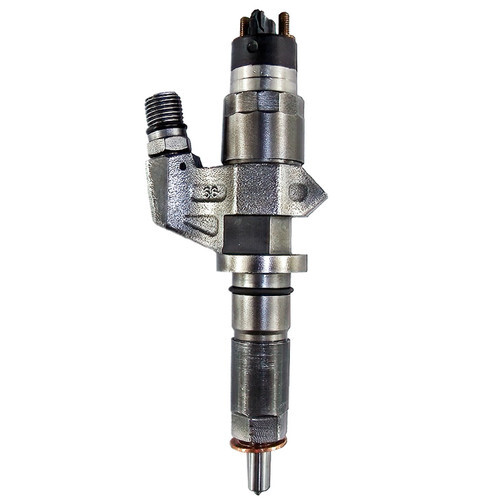
The LB7 fuel system is a textbook common rail design. Fuel flows from the tank through a filter assembly to the Bosch CP3 high pressure injection pump mounted in the engine valley. The CP3 pressurizes fuel to rail pressures ranging from roughly 5,000 PSI at idle to over 24,000 PSI at wide open throttle and delivers it through two fuel rails (one per cylinder bank) mounted on the cylinder heads. From the rails, individual high pressure lines feed the eight Bosch solenoid injectors, one per cylinder.
The defining feature of the LB7 fuel system, and the source of nearly all the labor on injector replacement, is the location of the injectors themselves. Unlike the 2004.5 and newer Duramax engines where the injectors live above the valve covers in external pockets, LB7 injectors are mounted under the valve covers, with the injector body recessed into the cylinder head and the nozzle protruding into the combustion chamber through an injector cup (sometimes called a sleeve) that is sealed to the head. Each injector is held in place by a hold down bracket with a single bolt, with high pressure fuel arriving through a hard line on top and return fuel exiting through a small banjo fitting.
A small electrical pigtail connects the injector solenoid to the engine wiring harness that runs along the inside of the valve cover. The engine control module fires each injector based on cam and crank position input plus a fuel quantity calculation that factors in rail pressure, engine speed, throttle position, intake air temperature, and several other variables. Each combustion event typically includes a pilot injection, a main injection, and on some calibrations a small post injection, all in milliseconds.
The LB7 does not use the injector quantity adjustment (IQA) coding scheme that appeared on the 2006 LBZ and later Duramax engines. LB7 injectors are calibrated to a single flow specification at the factory, and the engine control module uses the same fuel maps for all eight cylinders, applying small balance rate corrections in real time. This is important when replacing injectors because there is no IQA code that must be programmed into the ECM. The new injectors simply install and run.
The Three Original Injector Failure Modes
GM Service Bulletin 04-06-04-007G and the related Special Policy Adjustment 04039B identify three specific failure modes that affect the original LB7 Bosch injectors. Each shows up differently, and understanding which one is occurring helps with diagnosis.
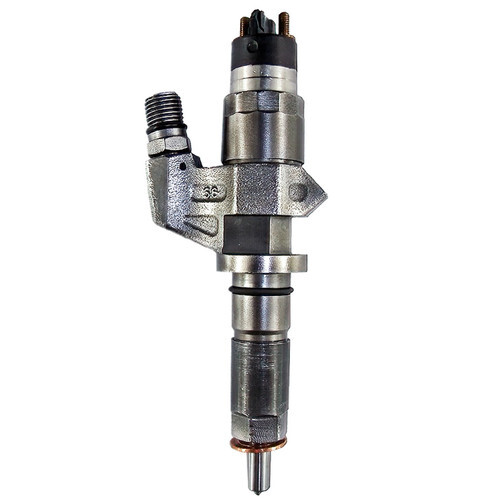
Injector body cracking is the most catastrophic failure. The body of the injector (the long thin metal housing running from the high pressure inlet down to the nozzle in the combustion chamber) develops a hairline crack along its length. When the crack opens, high pressure fuel escapes from the body into the area under the valve cover and runs down past the injector cup seal into the cylinder head oil drain, contaminating the engine oil with raw diesel fuel. The symptom signature is rising oil level on the dipstick, strong diesel smell from the oil, fuel dilution at 5 percent or higher on oil analysis, and eventual bearing damage if the contamination continues unchecked.
Ball seat erosion happens inside the high pressure portion of the injector. The Bosch design uses a small ball valve that seats against a precisely machined surface to control fuel flow. On the original LB7 injectors, that ball seat was not hardened enough to resist the cavitation that occurs at 24,000 PSI of fuel pressure cycling on and off thousands of times per minute. Over time the seat erodes, the ball no longer seals completely, and the injector returns excessive fuel through the bypass port. This shows up on a return flow test as one or two injectors with dramatically higher return volume than the others. Drivability symptoms include rough idle, smoke, low power, and in severe cases hard starting because rail pressure cannot build properly.
High pressure seal extrusion is the third failure mode. The injector body uses an internal seal where high pressure fuel transitions from the high pressure side to the nozzle assembly. Under constant pressure cycling, this seal can extrude through its retaining groove, lose its sealing function, and allow high pressure fuel to leak internally. The symptom set overlaps with the other two failures, since once the seal extrudes, fuel can find its way to either the return circuit or out past the nozzle.
All three failure modes can occur on the same engine, sometimes on different cylinders simultaneously. A high mileage LB7 with the original injectors might have one cylinder with body cracking, two with ball seat erosion, and the rest still in spec. This is one reason why replacing only the worst one or two injectors is rarely a good idea on a high-mileage engine.
Symptoms of LB7 Injector Failure
LB7 injector failure typically shows up as a progressive set of symptoms that get worse over time. Some appear with one bad injector and others only show up when several injectors are out of spec. The most common symptoms include:
- White smoke at idle, especially noticeable when the engine is cold and at start up. This is unburned fuel from one or more dripping nozzles.
- Hazy white or gray exhaust smoke under light load that does not fully clear as the engine warms.
- Rising engine oil level on the dipstick between oil changes, with a strong diesel fuel smell from the dipstick or oil filler cap.
- Rough idle that improves slightly as the engine warms but never quite smooths out.
- Cylinder misfire feel at idle, sometimes audible as an uneven exhaust note.
- Long cranking times, especially when starting hot or after sitting overnight.
- A noticeable loss of power and slower throttle response.
- Reduced fuel economy that the driver may notice over a tank or two of fuel.
- A diesel knock that is louder or more pronounced than the engine’s normal sound.
- In severe cases, the truck will not start at all because rail pressure cannot reach the 2,500 PSI minimum needed to fire any injector.
Of these, the single most diagnostic symptom is rising oil level with diesel smell. Few other failures cause fuel to enter the crankcase, and the combination of white smoke plus oil dilution is a near certain indicator of injector failure on an LB7. The owner should pull the dipstick at every fuel stop on a suspect truck and watch for changes between oil changes. An oil level rising between changes is essentially never normal on a healthy engine, and on an LB7 it almost always means at least one injector is leaking.
The opposite is also worth knowing. Some failing LB7 injectors throw zero check engine lights, idle reasonably well, and only show up on diagnostic measurement. A truck that passes a quick listen test at idle can still have injectors well outside specification on the bench. This is why systematic balance rate and return flow testing matter on any LB7 with over 100,000 miles, even if the truck seems to run fine.
Diagnostic Trouble Codes on the LB7
Unlike the later 2013 and newer emissions controlled Duramax engines, the LB7 has relatively few diagnostic codes that specifically point to injector failure. The engine control module sets a code when something obvious goes wrong, but many failing injectors generate no codes at all. The codes most commonly seen with LB7 injector trouble include:
- P0087, fuel rail pressure too low. This appears when one or more injectors leak so badly that the CP3 cannot maintain commanded rail pressure. Often the first code seen on a severely degraded fuel system.
- P0088, fuel rail pressure too high. Less common but can appear as the regulator compensates erratically for failing injectors.
- P0201 through P0208, individual cylinder injector circuit faults (cylinder 1 through 8). These point to wiring or solenoid faults rather than the mechanical injector failure modes that account for most LB7 problems.
- P1093, fuel rail pressure low during power enrichment. Sometimes seen under heavy load when the fuel system cannot deliver enough pressure.
- P0300, random cylinder misfire detected. May appear if multiple injectors are spraying poorly.
- P0301 through P0308, individual cylinder misfire codes.
The key point about LB7 codes is that absence of codes does not mean absence of injector failure. The engine control module on the LB7 is not as aggressive about flagging fuel system anomalies as later Duramax computers. A truck can drip raw fuel from a cracked injector body straight into the engine oil and never set a single DTC, because the leak goes external to the combustion chamber and never affects rail pressure enough to trigger P0087. The diagnostic process therefore relies heavily on balance rate readings, return flow testing, and visual oil inspection rather than on stored codes alone.
Diagnostic Step 1: Reading Balance Rates
Balance rates are the first diagnostic data point any LB7 owner should look at when injector trouble is suspected. The engine control module continuously adjusts the fuel quantity delivered to each cylinder based on small variations in crankshaft acceleration during each combustion event. If one cylinder is producing less power than the average (because its injector is spraying weakly), the ECM adds a small amount of fuel. If a cylinder is producing more power than average (because its injector is dripping or stuck open), the ECM subtracts fuel. The amount added or subtracted is the balance rate, reported in cubic millimeters of fuel per stroke.
On a healthy LB7 at idle, all eight balance rates should be relatively close to zero, typically within plus or minus 4 mm3 in park or neutral and plus or minus 6 mm3 in gear. Numbers significantly outside these windows indicate that the ECM is working hard to compensate for an injector that is not behaving like its siblings. Reading balance rates requires a scan tool that can access enhanced GM data. The factory Tech 2 and the newer MDI/GDS2 read them natively. Aftermarket tools that work include EFI Live, HP Tuners, and AutoEnginuity. Basic OBD-II readers cannot access this data.
A few important rules apply when reading balance rates on an LB7:
- The engine must be at full operating temperature, generally 170 degrees Fahrenheit or hotter. Cold balance rates are unreliable.
- The truck must be at correct idle speed (600 RPM for 2001 models, 680 RPM for 2002 to 2004 models) and rail pressure must be at the normal idle target (35 MPa for federal LB7s, 30 MPa for most others).
- The transmission should be in park or neutral with the air conditioning off, no load on the engine, and the batteries fully charged.
- Balance rates are only active at idle. Off idle the ECM disables the balance correction logic.
- Total fuel injection quantity at idle should be in the 8 to 9 mm3 range. If it is outside that window, balance rate readings can be misleading.
When balance rates run outside specification, that cylinder gets attention but not always condemnation. A reading of negative 6 mm3 on cylinder 4 means the ECM is pulling fuel from that cylinder because its injector is delivering more fuel than commanded, suggesting a leaking injector body or stuck open injector. A reading of positive 5 mm3 means the ECM is adding fuel because that injector is delivering less than commanded, which usually points to a worn nozzle or partially clogged spray pattern.
The trap with balance rates on the LB7 is that they can lie. A leaking injector that drips raw fuel into the cylinder may still produce normal combustion if the fuel ignites, and the ECM may see a normal balance rate while the engine is silently diluting its own oil. Several experienced shops have torn down LB7s with balance rates all within plus or minus 1.5 mm3 and found cracked injector bodies on the test bench. This is why balance rates are step one of diagnosis, not the end of it.
Diagnostic Step 2: The Injector Return Flow Test
The injector return flow test is the most definitive diagnostic available on the LB7 short of pulling the injectors and bench testing them. It directly measures how much fuel each injector returns to the tank during cranking, which is a sensitive indicator of internal injector wear. Higher return volumes mean the injector is allowing more fuel past internal seats than it should, which on the LB7 almost always points to one of the three failure modes described earlier.
The procedure requires removing the valve covers (which is why some shops bundle this test into the injector replacement decision rather than performing it as a standalone diagnostic). The basic steps are:
- Bring the engine to normal operating temperature, 181 to 189 degrees Fahrenheit.
- Remove the return hoses from one bank of injectors (four injectors at a time).
- Use adapter fittings to route the return flow from each injector into its own graduated cylinder.
- With the fuel injection control module disabled to prevent injector firing, crank the engine for 15 seconds while commanded rail pressure builds (typically 114 to 135 MPa during cranking).
- Measure the fuel volume in each graduated cylinder.
- Repeat for the other bank.
- Add the four readings per bank and compare to specification.
GM specifications for the return flow test are clear. Maximum allowable return for any individual injector is 5 ml in 15 seconds. Maximum per bank (four injectors) is 20 ml. Maximum for all eight injectors combined is 144 ml. If the total exceeds 144 ml the diagnosis points to the CP3 pump rather than the injectors. If any individual injector exceeds 18 ml in 15 seconds, that injector is condemned.
The test is rigorous and the results are unambiguous. An injector that flows 25 ml of return fuel in 15 seconds is leaking internally and cannot be saved. An injector that flows 3 ml is healthy. The middle ground (injectors that flow 8 to 15 ml) deserves more scrutiny and depends on the age and mileage of the truck. On a 200,000 mile LB7 where return rates are climbing into the borderline range, most experienced shops recommend replacing all eight injectors rather than trying to save the marginal ones, because the labor to come back later for the others is the same as the labor that was just paid.
Diagnostic Step 3: Visual Inspection for Fuel in Oil
Before pulling valve covers or hooking up a scan tool, a five minute oil check can confirm or rule out the most common LB7 injector failure mode (cracked body causing fuel dilution). The procedure is simple:
- Park the truck on level ground with the engine at normal operating temperature, then shut it down and wait five minutes for oil to drain back to the pan.
- Pull the dipstick and check the oil level. Compare to where it was at the last oil change.
- Smell the dipstick. Healthy used diesel oil smells like used motor oil. Oil contaminated with raw fuel smells distinctly of diesel.
- If a sample container is available, draw an ounce of oil from the dipstick tube or drain plug and let it stand. Fuel will separate to the top as a lighter colored fluid layer.
- For a definitive answer, send a sample to a lab. Reports under 2 percent fuel in oil are normal background for an emissions controlled diesel. Reports over 5 percent are concerning. Reports over 10 percent confirm active injector leakage.
A rising oil level between changes is the single most reliable indicator of injector failure on an LB7. If the dipstick shows the oil 1/4 inch higher than it was 2,000 miles ago, raw fuel is entering the crankcase, and the only common path on an LB7 is through a cracked or leaking injector body. The visual check costs nothing, requires no special tools, and confirms the diagnosis in many cases before any other test is performed.
When fuel is found in the oil, the immediate concerns extend beyond the injectors themselves. Diesel fuel destroys the oil film and accelerates wear on bearings, cam lobes, and other lubricated surfaces. Any engine that has been running with significant fuel dilution for some time should get a complete oil and filter change immediately after injector replacement, with consideration for a follow up change after 1,000 miles to capture any residual fuel that bleeds out of the system.
GM Special Policy Adjustment 04039B (The 7 Year/200,000 Mile Warranty)
GM Special Policy Adjustment 04039B is one of the most consequential service bulletins in light duty diesel history. Issued in 2006 and revised in November 2007, it extended LB7 injector warranty coverage to 7 years or 200,000 miles, whichever occurred first, from the date the vehicle was originally placed in service. The coverage applied regardless of ownership and covered injector replacement at no cost to the customer.
The bulletin covered these specific vehicles equipped with the 6.6L Duramax Diesel (RPO LB7, VIN code 1) engine:
- 2001 through 2004 Chevrolet Silverado 2500HD and 3500
- 2001 through 2004 GMC Sierra 2500HD and 3500
- 2003 through 2004 Chevrolet Kodiak (medium duty cab and chassis)
- 2003 through 2004 GMC TopKick (medium duty cab and chassis)
The specific failure modes covered were the three described earlier: injector body cracks, ball seat erosion, and high pressure seal extrusion. The trigger conditions were a service engine soon light, low engine power, hard start, or fuel in the crankcase, requiring injector replacement as a result of high fuel return rates.
For LB7 owners reading this in 2026, this warranty has expired on every truck the policy covered. The oldest LB7s were placed in service in 2001 and the newest in 2004, so even the latest production trucks passed the 7 year window in 2011 and most have also crossed 200,000 miles. The historical importance is that virtually every LB7 still on the road today had its injectors replaced at least once under the extended warranty, often at relatively low mileage. Many LB7s have now reached the end of their second injector set’s service life and are due for another replacement, at the owner’s cost.
What a Full LB7 Injector Job Costs in 2026
A complete LB7 injector replacement is one of the more expensive routine repairs on the platform, driven primarily by the labor required to access the injectors under the valve covers. Typical 2026 cost breakdowns at an independent diesel shop run roughly as follows:
- Eight reman injectors: $1,200 to $2,400 depending on whether Silver Series or Platinum Series and whether new or reman.
- Eight new injector cups or sleeves (recommended whenever the injectors come out): $80 to $200 for a set.
- Valve cover gasket set including isolator grommets and injection line oil seals: $50 to $100.
- Injector seal kit (one per bank, two total): $30 to $60 combined.
- New banjo return seals: $15 to $30.
- Optional fuel line replacement (eight high pressure lines from rails to injectors, recommended on high mileage trucks): $200 to $400.
- Engine oil and filter change after the job: $50 to $80.
- Coolant refill (if drained for access): $40 to $80.
- Shop labor at 10 to 16 hours at typical independent diesel rates: $1,200 to $2,500.
Total out the door at an independent shop typically lands between $2,800 and $5,000, with most jobs falling in the $3,200 to $4,200 range on a clean truck. Dealer pricing on the same job can exceed $6,000 because of higher labor rates and more conservative parts replacement habits. A do it yourself owner with the right tools, a clean shop space, and a weekend or two of time can complete the job for the parts cost alone, typically $1,500 to $2,500 depending on which injectors are chosen.
Two cost factors deserve attention. First, attempting to save money by replacing only the worst one or two injectors is almost always a false economy. The labor to remove and reinstall the valve covers is the same whether one injector or eight are replaced, and replacing only the worst injectors almost guarantees a return visit within a year or two as the other aging injectors begin to fail. Second, skipping the companion parts (injector cups, seals, gaskets) is another false economy. The labor savings are negligible and the consequences of failure (coolant leaking into a cylinder, fuel returns mixing with oil) can cost more than the entire injector job in engine damage.
The Replacement Procedure: Why It Takes So Long
The LB7 injector replacement procedure is well documented across forums and shop manuals, but the high level sequence helps explain why this job is so labor intensive compared to later Duramax engines where the injectors live outside the valve covers.
The general sequence on each side of the engine is:
- Disconnect both batteries and drain the engine coolant. This is critical because if an injector cup pulls out with the injector during removal, coolant can pour directly into the combustion chamber.
- On the driver side, remove the turbo to intercooler charge pipe, fuel feed and return lines to the frame, AC compressor (left attached to lines), serpentine belt, and miscellaneous brackets.
- On the passenger side, remove the intercooler to Y-bridge tube, air filter and intake, fuel filter head and mount, engine wiring harness, and the fuel injection control module (FICM, which has fuel running through it).
- Remove the glow plug harness with an 8mm wrench (four nuts per side).
- Disconnect and remove the high pressure fuel lines from the rails to the injectors using a 19mm or 3/4 inch wrench, being extremely careful not to drop any debris into the open fittings.
- Pry off the upper valve cover at the integral pry tabs. Factory sealant is strong and the cover often requires patience to free.
- Disconnect the injector wiring harness (held by four 7mm nuts and two 10mm bolts) and remove it.
- Remove the lower valve cover using a 5mm hex socket. A ball end hex bit helps reach the rear bolts near the firewall.
- Remove the injector return line at each injector using a 5mm allen bit on the banjo bolt. These bolts strip easily, so go gently.
- Remove the injector hold down bolt (8mm hex) and use the GM specialty tool J44639 or equivalent to pry the injector out of the head, working through the hold down bracket.
- Inspect the injector cup as the injector comes out. If the cup pulled out with the injector or shifted, the cup and O-ring must be replaced.
- Clean the injector bore in the head before installing the new injector.
- Install the new injector with a new copper compression washer at the tip and reinstall the hold down bolt to factory torque spec.
- Reinstall the return line with new banjo seals.
- Reinstall the lower valve cover with new gaskets and isolator grommets.
- Reinstall the injector wiring harness.
- Reseal and reinstall the upper valve cover with a 2 to 3 mm bead of sealant 1 mm thick along the bottom.
- Reinstall the high pressure fuel lines with the keeper clips and torque to spec.
- Reinstall the FICM, fuel filter, glow plug harness, and other components that came off for access.
- Refill coolant, fill engine oil, reconnect the batteries, and prime the fuel system before initial start.
Even a fast professional shop with all the right tools and experience needs 10 hours on a clean truck. First time DIY attempts routinely run 16 to 20 hours spread over a weekend. The bottlenecks are removing all the accessories that block valve cover access, the patience required to avoid stripping the small hex bolts on the return lines, and the careful work of resealing the upper valve covers properly. Anyone tackling this job at home should plan on the long end of the labor estimate and should have a factory service manual or a comprehensive online write up on hand for reference.
Why You Replace All Eight Injectors
A question that comes up on nearly every LB7 injector job is whether to replace all eight injectors or only the ones that test bad. The right answer depends on mileage, but on most high mileage trucks the answer is clearly all eight.
The case for replacing all eight on a high mileage LB7 rests on three factors:
- Labor is identical whether you replace one or eight. The valve covers come off either way, the FICM and harnesses come off either way, and the resealing work is identical. The only difference is parts cost.
- The other injectors are typically the same age and have seen the same operating conditions. If one is failing because of body cracking or ball seat erosion at 180,000 miles, the chances that the other seven will reach 250,000 miles without similar issues are slim.
- Mixed sets of injectors run worse than balanced sets. The ECM applies real time corrections at idle, but at higher engine speeds where balance rate logic is disabled, mismatched injector behavior causes uneven combustion, more noise, and reduced fuel economy.
The case for replacing only the failing injectors holds up only in a few specific situations. The first is when the truck is relatively low mileage (under 75,000 miles on the current injector set) and the failure appears truly isolated, often to a single injector with a specific defect like an obvious cracked body. The second is when budget is the absolute constraint and the truck is being kept on the road for a limited time. Even then, most experienced shops counsel against the partial replacement because the customer is often back within 18 months with another failing injector and another invoice for the same labor.
The Bostech reman injector lineup makes the full set replacement more accessible. Pricing on a complete set of eight Silver Series DE651 injectors typically lands in the $1,200 to $1,500 range, which makes the full set affordable for most owners willing to do the job once correctly.
Critical Companion Parts for Any LB7 Injector Job
A proper LB7 injector job is not just the eight injectors. Several supporting parts should be replaced at the same time, both to ensure the new injectors install correctly and to avoid having to redo the labor intensive teardown later for a related failure. The essential companion parts list includes:
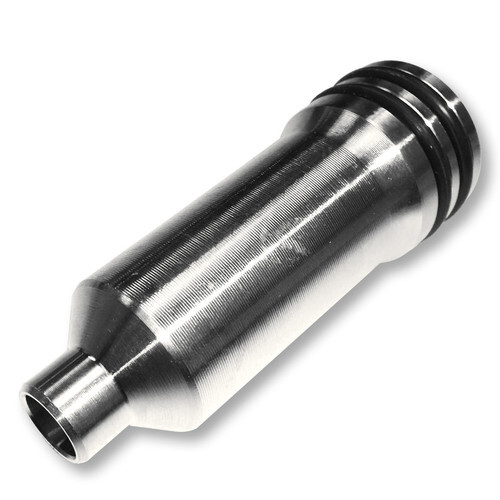
- Injector cups (sleeves): the brass cups that seal the injector to the cylinder head. These are pressed into the head and sealed with red Loctite plus an O-ring. If the cup pulls out with the injector during removal, or if visual inspection shows any cracking or scoring, the cup must be replaced. Many experienced shops replace all eight cups during any injector job regardless of their visible condition.
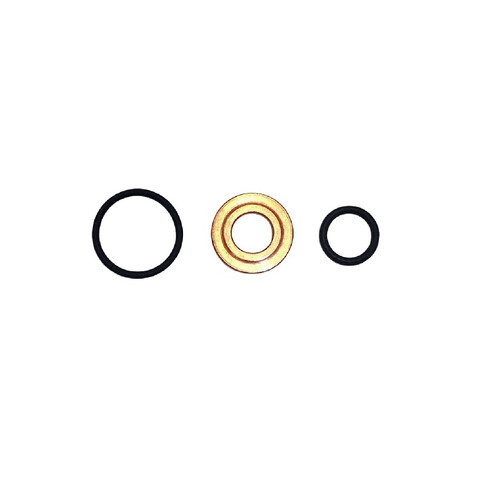
- Copper compression washers: one per injector at the nozzle, between the injector and the cylinder head. These crush during installation and must be replaced every time the injector comes out.
- Banjo return seals: small copper or aluminum sealing washers that seal the injector return line banjo fittings. These should be replaced every time the return line is disturbed.
- Valve cover gaskets and isolator grommets: the lower valve cover gasket, the twelve cover bolt isolator grommets, and the four injection line oil seals in the upper cover. The factory rubber compounds harden over time and gasket sets are inexpensive insurance against future leaks.
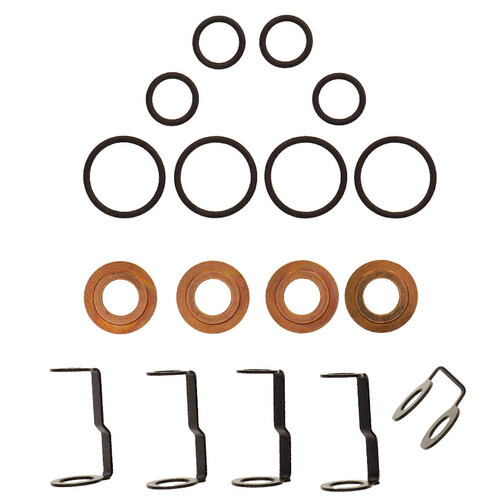
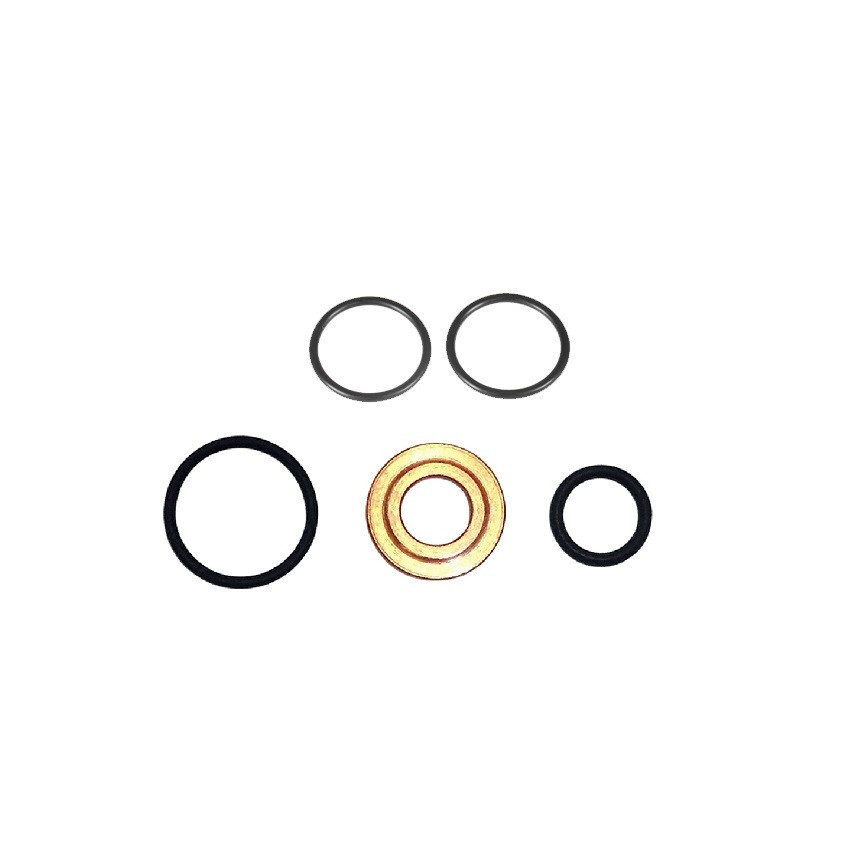
- Injector seal kits: the small O-rings that seal the injector body to the head and the return port. A seal kit per bank ensures all the small soft parts get fresh material.
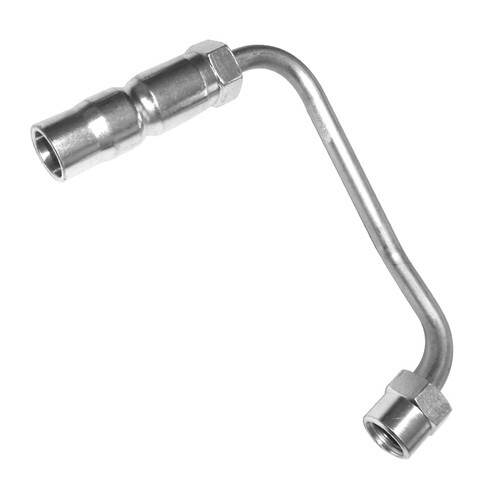
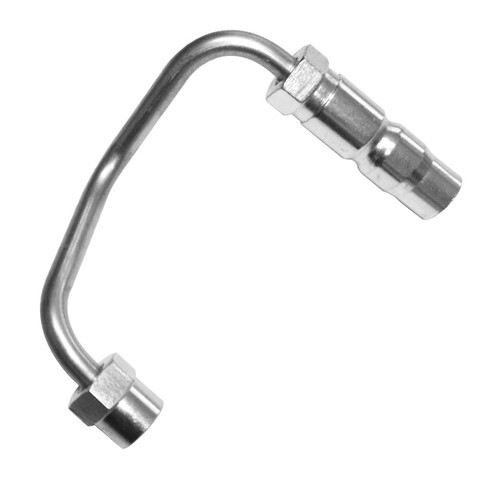
- High pressure fuel lines: the eight lines that run from the fuel rails to the injectors. These can develop internal corrosion at the injector end after high mileage service. Reusing rusty lines can deliver debris to brand new injectors. Many shops recommend replacing the lines as a precaution on any truck over 150,000 miles.
Skipping these companion parts to save money is the most common reason for a premature return visit after an LB7 injector job. A new injector installed on an old, rusty fuel line can be ruined within hours if debris from the line ends up at the nozzle. A reused injector cup that develops a crack can pour coolant into a cylinder days after the repair is finished. Spending $200 to $400 in companion parts on top of a $1,500 injector set is the right economics on a job that costs another $1,500 in labor if anything has to be redone.
The Updated Bosch Injector and What Changed
When Bosch and GM identified the original LB7 injector failure modes, they redesigned key internal components to address them. The current production Bosch injector (and the reman injectors built on current production cores) incorporates several specific improvements over the original 2001 to 2004 design:
- A revised injector body with improved metallurgy that resists the cracking that plagued the original design. The wall thickness and the heat treatment specification both changed.
- A hardened, chrome plated ball seat that resists the cavitation erosion that caused the original ball seat failures. The original seats were uncoated and softer.
- An updated high pressure seal design and seal groove geometry that prevents the seal extrusion failure mode.
- Tighter quality control on the nozzle assembly, with improved spray pattern consistency from unit to unit.
The result is that injectors installed in an LB7 today are substantially more durable than the original units that came in the truck from the factory in 2001 to 2004. Anecdotal service life on the updated injectors runs 150,000 to 250,000 miles before any significant degradation, compared to the 60,000 to 120,000 mile failure pattern of the originals.
This matters when considering whether to keep an LB7 long term. A truck with a recent set of updated Bosch injectors (whether new units or quality reman built on current production cores) can reasonably be expected to give another 150,000+ miles of injector service. That timeline matches the rest of the LB7 powertrain (Allison 1000 transmission, CP3 pump, accessories) and makes the engine viable for at least another decade of regular use.
Reman vs New Injector Considerations
LB7 owners shopping for injector replacements face a choice between brand new Bosch OEM injectors and high quality reman injectors. Both have legitimate places in the market and both have advantages.
Brand new Bosch OEM injectors are the gold standard. They use brand new bodies, brand new internals, and the current production updated design with all the improvements described in the previous section. Pricing typically runs $200 to $300 each, so a full set of eight runs $1,600 to $2,400. Warranty coverage from Bosch is typically 2 to 3 years, sometimes longer through specific retailers. For owners who want maximum service life and minimum risk, new injectors are the easy answer.
High quality reman injectors are the more common choice on the LB7 platform because the price difference is significant and the quality gap is small when the reman process is rigorous. A proper reman injector starts with a sound used core, gets fully disassembled, has every internal component inspected and replaced where necessary, gets lapping work on all the mating surfaces, receives new seals and O-rings, and is flow tested on a bench before shipping. A good reman injector at this level performs essentially identically to a new injector for the first 100,000+ miles, and at roughly 50 to 70 percent of the price.
The Bostech reman LB7 injector line includes two tiers. The Silver Series DE651 is the standard reman product, with all internal components inspected and polished, mating surfaces lapped to precision, new seals and O-rings installed, and full bench testing to OE specification. Each injector is sold individually with the eight required for a full set. Pricing is competitive and the units are widely used. The Platinum Series is the step up product, with additional new internal components installed in every rebuild and a longer warranty. Either tier is a substantial step up from the original factory injectors thanks to the updated core designs they are built on.
The choice between Silver Series, Platinum Series, and new Bosch injectors comes down to three factors. Budget is the obvious one. Intended use is the second; a daily driver and weekend hauler is well served by Silver Series, while a heavy work truck or a truck the owner plans to keep for the next decade may justify Platinum Series or new. Warranty preference is the third; warranty terms vary by tier and by retailer, so check the specific coverage at purchase.
Post Installation: Oil, Coolant, and Initial Run
Finishing an LB7 injector job correctly is as important as doing the installation correctly. Several post installation steps separate a job that lasts from a job that needs rework.
First, change the engine oil and filter immediately. If the failed injectors caused any fuel dilution, the existing oil is contaminated and will damage the new injectors and other engine components if reused. Use a quality 15W-40 or 5W-40 diesel rated oil. Some shops recommend a second oil change after 1,000 miles to capture any residual fuel that bleeds out over the first few hundred miles.
Second, refill the cooling system properly. The drain for the radiator is on the passenger side at the bottom. Refill with the correct extended life coolant specification, run the engine to operating temperature with the cap off to purge air, top off as needed, and watch for any leaks at the valve cover area.
Third, prime the fuel system before cranking. The fuel filter assembly has a primer pump that should be cycled several times to fill the new injectors and the fuel rails with fuel and purge air. Without proper priming, the engine may crank for an extended period during the first start, and on some installations may not start at all until enough fuel reaches the rails. After priming, the engine should fire within a few seconds on the first crank.
Fourth, watch the initial run carefully. The engine may sound rough for the first few minutes as the air bleeds out of the system and the ECM relearns idle characteristics with the new injectors. Watch the oil pressure gauge, listen for any unusual noises, and inspect under the hood for any visible leaks. A short five minute idle and a slow drive around the block is a reasonable first test before any extended driving.
Fifth, recheck balance rates after 50 to 100 miles of normal driving. New injectors should settle into a tight balance pattern (typically all eight within plus or minus 2 mm3) within the first few hundred miles. If one cylinder shows a large balance rate that does not improve with driving, a problem may exist with that specific installation. Unlike the 2006 LBZ and later Duramax engines, the LB7 does not require any injector quantity adjustment programming after replacement.
Bostech Solutions for LB7 Injector Service
Bostech offers a complete range of components for LB7 injector replacement, all backed by the 24 month unlimited mileage warranty on most reman products. The relevant parts for any LB7 injector job include:
- Bostech DE651 Silver Series Reman Fuel Injector for 2001 to 2004 GM 6.6L Duramax LB7. The standard reman injector, fully disassembled, inspected, polished, certified to OE specification, with new seals and O-rings. Sold individually; eight required for a full set.
- Bostech DE01351 Platinum Series Reman Fuel Injector for 2001 to 2004 GM 6.6L Duramax LB7. The premium reman injector with additional new internal components and extended warranty coverage. Sold individually.
- Bostech DEC011120 Fuel Injector Cup (Sleeve) for 2001 to 2004 GM 6.6L Duramax LB7. The brass cup that seals the injector to the cylinder head. Red Loctite required for installation (not included). One per injector, eight required for a full set if all are being replaced.
- Bostech ISK857 Injector Seal Kit for 2001 to 2004 GM 6.6L Duramax LB7. Includes all the O-rings and small seals needed for one bank or side of the engine. Two kits required for a full eight injector job.
- Bostech ISK118 Injector Seal Kit for 2001 to 2004 GM 6.6L Duramax LB7. An alternative seal kit option.
- Bostech SK01013 Banjo Return Seals for 2001 to 2004 GM 6.6L Duramax LB7. The small sealing washers used at each injector return line banjo fitting.
- Bostech GK01896 Valve Cover Gasket Kit for 2001 to 2004 GM 6.6L Duramax LB7. The complete gasket and isolator grommet kit for valve cover removal and reinstallation.
- Bostech HPP7303 Reman CP3 Pump for 2001 to 2004 GM 6.6L Duramax LB7. The high pressure fuel pump. Worth considering on high mileage trucks where the CP3 itself is showing signs of wear.
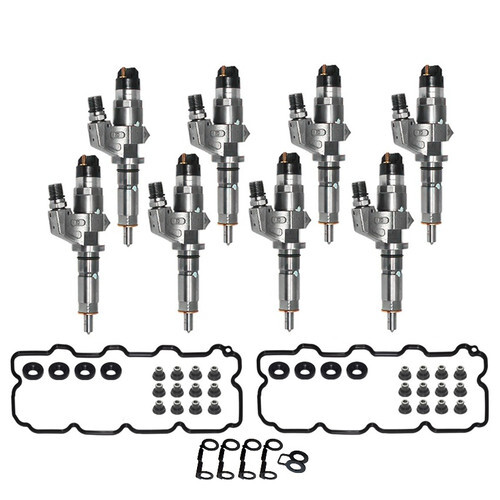
Many LB7 injector jobs are best ordered as a coordinated package: eight DE651 or DE01351 injectors, eight DEC011120 injector cups, two ISK857 seal kits, one set of SK01013 banjo seals, one GK01896 valve cover gasket kit, and (on high mileage trucks where it makes sense) an HPP7303 CP3 pump replacement. The kit approach guarantees that all the parts match, that nothing is forgotten, and that one warranty source covers the entire job.
For pricing, fitment confirmation by VIN, or to place an order, contact Bostech at 1-800-868-0057, by email at customerservice@bostechauto.com, or visit bostechauto.com to browse the full LB7 Duramax catalog. Bostech customer service can help confirm fitment between the LB7 standard pickup applications and the 2003 to 2004 Kodiak/TopKick medium duty variants, which use the same engine but occasionally different part numbers on supporting components.
Frequently Asked Questions
Original factory LB7 injectors typically failed between 60,000 and 120,000 miles, which is why GM issued the 7 year/200,000 mile warranty extension. Updated Bosch injectors and quality reman units built on current production cores typically last 150,000 to 250,000 miles when fuel quality is good and the truck sees regular use. Trucks that run on poor quality fuel, that idle excessively, or that experience repeated water or air intrusion will see shorter injector life.
Technically yes, but it is rarely the right economic choice on a high mileage truck. The labor to remove and reinstall the valve covers is the same whether you replace one injector or eight. On a truck under 75,000 miles since the last full set replacement, partial replacement may make sense. On any truck approaching or past 150,000 miles on the current injector set, replacing all eight saves money in the long run.
No. GM Special Policy Adjustment 04039B covered injector replacement for 7 years or 200,000 miles from the date of original service, whichever came first. The newest covered trucks were 2004 models, so even the latest production LB7s passed the 7 year window in 2011. The vast majority of trucks have also exceeded 200,000 miles. The warranty has expired and current injector replacements are out of pocket cost to the owner.
Check the service history. If the truck has been to a GM dealer and the injectors were replaced under the warranty extension, the work would be documented in the vehicle’s service history (available through Carfax or the dealer). If no service history is available, balance rate readings and return flow testing combined with visual inspection of the dipstick can confirm the current injector condition. Most LB7s on the road today have had the injectors replaced at least once and many have been done twice. What scan tool do I need to read LB7 balance rates? The GM factory Tech 2 and the newer MDI/GDS2 tools read balance rates natively. Aftermarket tools that work include EFI Live (the most popular among Duramax enthusiasts), HP Tuners, and AutoEnginuity. Basic OBD-II readers and generic code scanners cannot access balance rate data; it requires an enhanced GM-specific or professional grade scan tool.
Professional shops typically budget 10 to 12 hours for an experienced technician on a clean truck. First time do it yourself attempts routinely run 16 to 20 hours spread across a weekend. The labor bottlenecks are removing all the accessories that block valve cover access, carefully removing the small hex head bolts on the return lines without stripping them, and properly resealing the upper valve covers during reassembly.
No. The LB7 does not use injector quantity adjustment (IQA) coding like the 2006 LBZ and later Duramax engines. New LB7 injectors install and run with the existing ECM calibration. The ECM applies real time balance rate corrections automatically and no programming step is required after replacement.
Yes, in almost every case. The brass injector cups (sleeves) seal the injector to the cylinder head and isolate the combustion chamber from the oil galleries and from the coolant passages. If a cup is reused and later develops a crack, the consequence can be coolant leaking into a cylinder or combustion gases leaking into the cooling system. The cost of new cups is small compared to the labor of doing the injector job, and replacing all eight cups during any injector job is the standard practice at most experienced diesel shops.
Yes. Diesel fuel destroys the protective film that engine oil provides on bearings, cam lobes, and cylinder walls. A small amount of fuel dilution (under 2 percent on a lab report) is normal for an emissions controlled diesel. Anything over 5 percent is concerning and over 10 percent is actively damaging the engine. If your LB7 oil level is rising between changes and smells of diesel, the injectors should be diagnosed and replaced before continued operation causes bearing or other engine damage.
Bostech offers a complete catalog of reman LB7 Duramax injectors (Silver Series DE651 and Platinum Series DE01351), injector cups (DEC011120), seal kits (ISK857 and ISK118), valve cover gaskets (GK01896), banjo seals (SK01013), and the CP3 reman pump (HPP7303). All reman parts include the 24 month unlimited mileage warranty. Contact Bostech at 1-800-868-0057, by email at customerservice@bostechauto.com, or visit bostechauto.com to confirm fitment by VIN and place an order.
Disclaimer
The information in this guide is provided for educational and reference purposes only. Diesel engine repair involves working with high pressure fuel systems, hot exhaust components, and heavy parts that can cause serious injury or property damage if handled incorrectly. Common rail diesel fuel under high pressure can penetrate skin and cause life threatening injury; always relieve high pressure fuel system pressure before opening any high pressure component, and never work on the high pressure side with the engine running. Engine coolant should be drained before injector removal to prevent coolant intrusion into the combustion chamber if an injector cup pulls out with the injector. Always follow factory service procedures, consult a qualified diesel technician for any repair beyond your skill level, and observe all applicable safety precautions. Specifications, part numbers, and procedures in this article reflect general best practice for the 2001 to 2004 LB7 Duramax at the time of writing and may vary by build date, region, or aftermarket configuration. Always verify part fitment by VIN before purchasing parts, especially for medium duty Kodiak/TopKick variants where part numbers may differ from the pickup applications. Bostech and its affiliates are not responsible for repairs performed using this information.