
6.7L PowerStroke Common Problems: The Complete 2011 to Present Owner Diagnosis and Repair Guide
Aug 11th 2026
Table of Contents
- Introduction: Ford Builds Its Own Diesel
- The 6.7L PowerStroke Across Three Generations
- Problem 1: CP4 High Pressure Fuel Pump Failure
- Problem 2: EGR Cooler and EGR Valve Failure
- Problem 3: Turbocharger Failures by Generation
- Problem 4: Radiator and Cooling System Leaks
- Problem 5: Injector and Fuel System Wear
- Problem 6: DEF, SCR, and NOx Sensor Faults
- Problem 7: Intercooler Condensation and Charge Pipe Failure
- Problem 8: Glow Plug and Cold Start Issues
- Diagnostic Trouble Code Reference
- Model Years to Avoid and Which to Buy
- Preventive Maintenance for a Long Service Life
- Choosing Replacement Parts: OEM, Remanufactured, and Bostech Solutions
- Frequently Asked Questions
- Disclaimer
1. Introduction: Ford Builds Its Own Diesel
When Ford introduced the 6.7L PowerStroke in the 2011 Super Duty, it marked a turning point in the company's diesel history. After three decades of sourcing diesel engines from Navistar International, including the beloved 7.3L, the troubled 6.0L, and the short lived 6.4L, Ford brought diesel engine design in house for the first time. The result was the engine known internally as the Scorpion, a clean sheet 6.7 liter V8 that has now powered Super Duty trucks for more than fifteen years.
The Scorpion nickname came from the engine's unusual architecture. Ford's engineers placed the exhaust manifolds inside the engine valley and the intake runners on the outside, a reverse flow head design that shortens the exhaust path to the turbocharger, reduces turbo lag, and keeps exhaust heat away from the frame rails and cab floor. Combined with a compacted graphite iron block that is stronger and lighter than gray iron, an air to water intercooler, and a high pressure common rail fuel system, the 6.7L was one of the most technically ambitious diesels ever installed in a pickup truck.
Fifteen years and well over a million trucks later, the 6.7L PowerStroke has largely delivered on its promise. It has proven far more reliable than the 6.0L and 6.4L that preceded it, and Ford has methodically improved it through three distinct generations. But no diesel platform is without weaknesses, and the 6.7L has a well documented list of failure points that every owner, buyer, and technician should understand. Some are minor annoyances. At least one, the CP4 high pressure fuel pump, can destroy the entire fuel system in seconds.
This guide covers the eight most common 6.7L PowerStroke problems in depth, organized by system, with symptoms, diagnostic trouble codes, testing procedures, and repair guidance for each. Whether you own a first generation 2011 truck approaching 200,000 miles or a late model High Output F-350, this is the reference we wish every 6.7L owner had in the glovebox.
2. The 6.7L PowerStroke Across Three Generations
Understanding which generation of 6.7L you own matters, because the failure patterns changed meaningfully as Ford revised the engine. The platform breaks down into three broad generations, with smaller running changes inside each.
First Generation: 2011 to 2014
The launch engine was rated at 390 horsepower and 735 lb-ft of torque, but Ford issued a factory recalibration within the first year that raised output to 400 horsepower and 800 lb-ft. First generation trucks used a Garrett GT32 single sequential turbocharger with a dual sided compressor wheel riding on ceramic ball bearings, a Bosch CP4.2 high pressure pump feeding piezoelectric injectors, and the TorqShift six speed automatic. This generation carries the most documented problems: the ceramic bearing turbo, glow plug tip separation on very early engines, EGT sensor failures, and the CP4 pump risk that spans all generations.
Second Generation: 2015 to 2019
For 2015 Ford addressed the turbocharger directly, replacing the GT32 with a larger and far more durable Garrett GT37 with a conventional journal bearing cartridge. Output climbed to 440 horsepower and 860 lb-ft, then 925 lb-ft for 2017 and 450 horsepower with 935 lb-ft for 2018 and 2019. Injector nozzles were refined, the fuel lift pump was updated, and the aluminum body Super Duty arrived for 2017. Second generation trucks are widely considered the sweet spot of the used market: the early turbo problems were solved, while the platform remained mechanically familiar.
Third Generation: 2020 to Present
The 2020 refresh was the deepest revision yet. Steel pistons replaced aluminum, compression dropped slightly to 15.8 to 1, a new 36,000 psi injection calibration arrived, the turbo was updated again, and the TorqShift 10R140 ten speed automatic replaced the six speed. Output jumped to 475 horsepower and 1,050 lb-ft, and from 2023 a High Output version raised the ceiling to 500 horsepower and 1,200 lb-ft, the strongest factory ratings in the segment. Third generation engines have proven robust, though they retain a revised CP4.2 pump and the full modern aftertreatment suite, so fuel quality and emissions maintenance remain critical.
Key Specifications at a Glance
- Displacement: 406 cubic inches (6.7 liters), V8, overhead valve, four valves per cylinder
- Block: compacted graphite iron; heads: aluminum, reverse flow design
- Bore and stroke: 3.897 x 4.251 inches
- Compression ratio: 16.2 to 1 (2011 to 2019), 15.8 to 1 (2020 and later)
- Fuel system: Bosch CP4.2 high pressure pump, piezoelectric common rail injectors, up to 36,000 psi on late engines
- Turbocharger: Garrett GT32 SST (2011 to 2014), Garrett GT37 VGT (2015 to 2019), updated VGT (2020 and later)
- Emissions: EGR, DOC, DPF, and SCR with DEF injection on all model years
- Oil capacity: 13 quarts with filter
With the generational picture established, the sections that follow work through the eight problem areas that generate the most repair orders, starting with the one failure every 6.7L owner needs to take seriously.
3. Problem 1: CP4 High Pressure Fuel Pump Failure
The Bosch CP4.2 high pressure fuel pump is the single most consequential weak point on the 6.7L PowerStroke, not because it fails constantly, but because of what happens when it does. The CP4 was designed around European diesel fuel standards, which specify better lubricity than the ultra low sulfur diesel sold in North America. The pump depends on a thin film of fuel to lubricate the contact point between its cam lobes and roller lifters. When that film breaks down, whether from marginal fuel, water contamination, or a moment of fuel starvation, the roller can skew and skid across the cam instead of rolling.
Once metal to metal contact begins, the pump grinds itself apart from the inside and pushes fine metallic debris downstream under extreme pressure. That debris travels through the fuel rails, into all eight injectors, and back through the return system. By the time the truck sets a code or dies on the road, the entire high pressure fuel system is contaminated. This is why a CP4 failure on a 6.7L is commonly an 8,000 to 12,000 dollar repair at retail: the correct fix is not a pump, it is a complete fuel system replacement.
Symptoms of CP4 Failure
- Sudden no start or stall with no warning, often the first and only symptom of a catastrophic failure
- Extended cranking before start, especially cold, as rail pressure struggles to build
- Rough running, misfires, or a noticeable diesel knock under load
- Low rail pressure codes such as P0087, P0088, P0093, or P008F
- Metallic glitter visible in the fuel filter bowl or on the filter element during a filter change
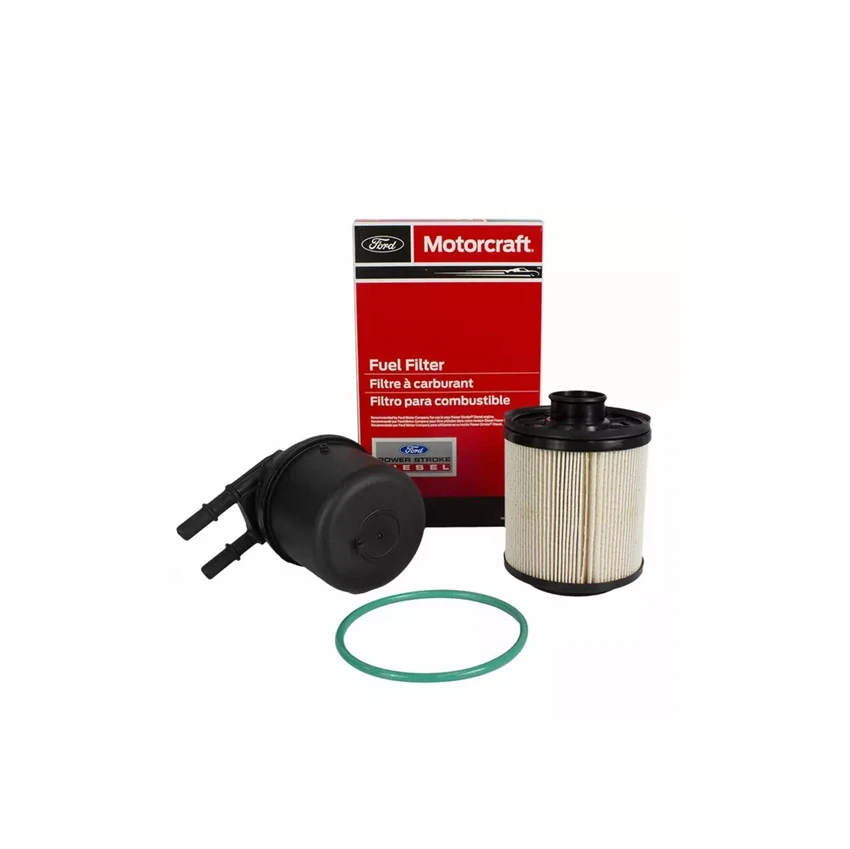
The fuel filter inspection deserves emphasis. During every filter service, cut the old filter open or at least examine the housing bowl under good light. Fine gray or gold metallic dust is the earliest visible warning that the pump is wearing. Catching it at this stage can be the difference between replacing a pump and replacing a fuel system.
The Repair Path: Fuel Contamination Kits
When a CP4 has failed and sent debris through the system, replacing only the pump guarantees a repeat failure, because contaminated injectors and rails will feed metal back through the new pump. The correct repair replaces every wetted high pressure component in one job. Bostech builds complete fuel contamination kits for the 6.7L PowerStroke that package a new or remanufactured high pressure pump, a full set of remanufactured injectors, fuel rails, high pressure lines, filters, and seals in a single part number, which removes the guesswork from a stressful repair. Kits and individual components are listed at bostechauto.com, and the technical team at 1-800-868-0057 can confirm application fitment by VIN before you order.
Prevention Strategies
- Buy fuel from high volume stations and avoid running the tank below a quarter, which keeps the pump supplied and cool
- Change fuel filters on schedule or earlier, and inspect for metal every time
- Consider a lubricity additive with every fill, a low cost habit that directly addresses the CP4's core weakness
- Address water in fuel warnings immediately, since water displaces the lubricating film and accelerates cam and roller wear
- For high mileage or heavily worked trucks, a disaster prevention bypass kit that reroutes pump case debris away from the injectors is a popular safeguard
Why Ford Kept the CP4
Owners reasonably ask why Ford has retained the CP4 across all three generations when GM moved the Duramax back to a Denso pump for the L5P. The answer is that the CP4 delivers the pressure and packaging Ford's calibration strategy requires, and Ford has revised the pump's internals and calibration over the years rather than abandoning the architecture. Later pumps and the 36,000 psi third generation calibration show lower field failure rates than the early years, and Ford extended coverage for certain failure scenarios in response to litigation and customer pressure. None of that changes the ownership math: the pump's fundamental sensitivity to fuel lubricity remains, which is why the prevention habits above apply just as much to a 2025 truck as to a 2011.
It is also worth knowing what a failure looks like from the service side, because it shapes how you should respond to early warnings. A truck that arrives on the hook with a sudden no start and glitter in the filter is a full fuel system job, no shortcuts. A truck that arrives running, with metal caught early at a routine filter change and clean rail pressure data, can sometimes be saved with a pump, thorough low side cleaning, and verification sampling, at a fraction of the cost. The difference between those two invoices is usually nothing more than whether the owner looked at the filter.
For a deeper dive into why this pump fails and what the failure cascade looks like inside the fuel system, see our dedicated guide, CP4 Fuel Pump Failure: Why 6.7L PowerStroke and LML/L5P Duramax Owners Need to Act, on the Bostech blog.
4. Problem 2: EGR Cooler and EGR Valve Failure
Exhaust gas recirculation has been a fixture of diesel emissions control since the mid 2000s, and the 6.7L PowerStroke uses a liquid cooled EGR circuit to lower combustion temperatures and reduce NOx formation. Hot exhaust gas is routed through an EGR cooler, a heat exchanger fed by engine coolant, before being metered back into the intake by the EGR valve. The system works, but it lives in a brutal environment: soot laden exhaust on one side, pressurized coolant on the other, and constant thermal cycling in between.
Two failure modes dominate. The first is clogging. Soot and unburned hydrocarbons progressively coat the cooler's internal passages and the EGR valve pintle, restricting flow until the system can no longer meet commanded EGR rates. The second is internal leakage. Repeated heating and cooling cycles fatigue the cooler's internal welds until coolant seeps into the exhaust stream, where it flashes to steam. Trucks that idle extensively or run short duty cycles clog coolers fastest, while trucks that tow heavy in hot climates are more prone to thermal fatigue leaks.
Symptoms of EGR System Trouble
- White sweet smelling exhaust smoke, especially at idle after warm up, the classic sign of coolant entering the exhaust
- Unexplained coolant loss with no visible external leak
- Check engine light with codes P0401 (insufficient EGR flow), P0402 (excessive flow), P0404 or P0405 (valve position faults), or P045C and related cooler performance codes
- Rough idle, hesitation, or surging as a sticking valve mismeters exhaust gas
- Coolant odor from the exhaust or residue at the cooler to manifold joints
Diagnosis and Testing
Start with the cooling system. Pressure test the system cold and watch for an unexplained pressure drop with no external leak, then pull the EGR valve and inspect for wet, steam cleaned passages, which indicate coolant intrusion. A valve caked in dry soot with sluggish actuation points to clogging rather than leakage. Commanding the valve through its range with a capable scan tool while watching position feedback will expose sticking or dead spots. On higher mileage engines, plan to service the cooler and valve together, because a clogged cooler that restricts flow will quickly foul a new valve.
Repair Guidance
One interaction worth understanding is how EGR health affects the rest of the emissions system. A clogged cooler or lazy valve pushes combustion NOx up, which increases DEF dosing demand downstream, while excessive EGR from a valve hanging open raises soot production, which loads the DPF faster and drives more frequent regenerations. Owners chasing a truck that suddenly regenerates constantly or drinks DEF should put the EGR system on the suspect list even when the codes point elsewhere, because upstream problems on this platform reliably become downstream symptoms.
Cleaning a lightly sooted valve can buy time, but a cooler with internal leakage must be replaced. Bostech supplies both new and remanufactured EGR coolers for Ford PowerStroke applications, built with upgraded internal construction to resist the thermal fatigue that kills original units, along with EGR valves, gaskets, and the related coolant hoses to complete the job properly in one repair. Every reman unit carries the standard Bostech warranty. For the broader theory and a full testing walkthrough that applies across platforms, our article Most Common EGR Failure Modes and Testing Procedures is the companion piece to this section.
5. Problem 3: Turbocharger Failures by Generation
Turbocharger problems on the 6.7L PowerStroke are heavily generation dependent, and the story is really two stories: the fragile ceramic bearing GT32 of 2011 to 2014, and the far tougher GT37 family used from 2015 onward. We cover this topic exhaustively in our dedicated guide, 6.7 PowerStroke Turbo Problems: Diagnosis, Solutions and Replacement Guide, so this section summarizes the essentials and points you there for the full diagnostic procedures.
The Ceramic Bearing Era: 2011 to 2014
The first generation GT32 single sequential turbo used ceramic ball bearings to reduce friction and sharpen response. In practice, the ceramic elements proved brittle under the shock loads and heat of heavy towing. Bearing failure typically announces itself as a high pitched whine or screech that rises with engine speed, followed by shaft play, oil consumption, blue gray smoke, and eventually contact between the compressor wheel and housing. Many first generation trucks have already had the turbo replaced, and the standard fix, then and now, is an updated unit with conventional bearings rather than another original design.
GT37 and Later: 2015 to Present
From 2015 the larger GT37 with journal bearings transformed turbo durability, and outright bearing failures became uncommon. The dominant issues on second and third generation trucks are VGT vane sticking from soot and carbon accumulation, which triggers underboost code P0299 and sluggish spool, and electronic actuator faults that set codes in the P0045 to P0048 range. Boost leaks in the charge air system frequently mimic turbo failure on these trucks, so always pressure test the charge circuit before condemning a turbocharger.
Five Minute Turbo Health Checks
- Listen at cold start and under load: a healthy turbo whistles evenly, while a rising screech or a note that changes pitch suddenly points at bearings
- With the intake tract opened, check the compressor wheel for shaft play, keeping in mind a small amount of in and out movement is normal while side to side contactable play is not
- Inspect the charge piping for oil: a light film is normal crankcase vapor, pooled oil is turbo seal transfer
- Compare commanded and actual vane position with a scan tool sweep at idle, watching for lag or positions that never reach target
- Pressure test the charge air system before condemning any turbo for a P0299, since leaks mimic turbo failure convincingly
When Replacement Is the Answer
A turbo with verified shaft play, wheel contact, or oil transfer into the charge piping is done, and on 2011 to 2014 trucks an upgraded replacement is the only fix worth doing. Bostech stocks PurePower Technologies turbocharger assemblies for PowerStroke applications along with actuators, sensors, installation gasket kits, up pipes, and turbo oil lines, so the entire high heat side of the repair can be sourced together. The full generation by generation diagnostic walkthrough, including actuator testing and DTC interpretation, lives in the dedicated turbo guide on the Bostech blog.
6. Problem 4: Radiator and Cooling System Leaks
The 6.7L PowerStroke uses a dual circuit cooling architecture: a primary circuit for the engine itself and a secondary low temperature circuit serving the air to water intercooler, transmission cooler, and fuel cooler. It is an elegant design that keeps intake air dense and driveline temperatures controlled, but it doubles the amount of cooling hardware that can leak, and the 6.7L has earned a reputation for doing exactly that.
The most common leak points are the primary radiator itself, particularly where the plastic end tanks crimp to the aluminum core, the coolant crossover tube seals at the front of the engine valley, degas bottle caps that fail to hold pressure, and the water pump weep hole as the pump ages. First and second generation trucks are the most affected; Ford revised radiator construction over the years, but plastic end tanks under 16 psi of hot pressurized coolant remain a wear item on any high mileage truck.
Symptoms of Cooling System Problems
- Low coolant warnings or a slowly dropping degas bottle level with no visible puddle, since small end tank seeps often evaporate on hot surfaces
- Sweet coolant smell after a drive, or white crust and dye staining along the radiator tanks and crossover tube
- Rising coolant temperature while towing grades, which points to a clogged or airbound system rather than a simple leak
- Overheating of the secondary circuit, which shows up as elevated charge air and transmission temperatures rather than an engine temp spike
- Water pump weep or bearing growl, most common past 120,000 miles
Diagnosis and Repair
Cooling system diagnosis on this platform is refreshingly conventional: a pressure tester, UV dye, and patience will find nearly every leak. The important discipline is treating repeated coolant loss seriously rather than topping off for months, because chronic low coolant on the secondary circuit cooks the intercooler and invites the condensation problems covered later in this guide, while low primary coolant risks head gasket damage on an engine that is otherwise very resistant to it. When replacing a radiator, do the hoses, cap, and thermostats in the same job on a truck past 100,000 miles.
The Secondary Circuit Deserves Equal Attention
Because the low temperature secondary circuit has its own pump, its own thermostat, and its own degas bottle, it is routinely ignored until it causes symptoms nobody connects to coolant. A weak secondary circuit shows up as higher charge air temperatures, which the PCM answers by pulling timing and fueling, so the owner's complaint is a truck that feels lazy in summer towing rather than anything on the temperature gauge. Elevated transmission temperatures on grades and the condensation problems covered in Problem 7 also trace back here. Check the secondary bottle level at every oil change, use the correct coolant in both circuits, and when diagnosing summer power loss, log charge air temperature before assuming a turbo or fuel problem.
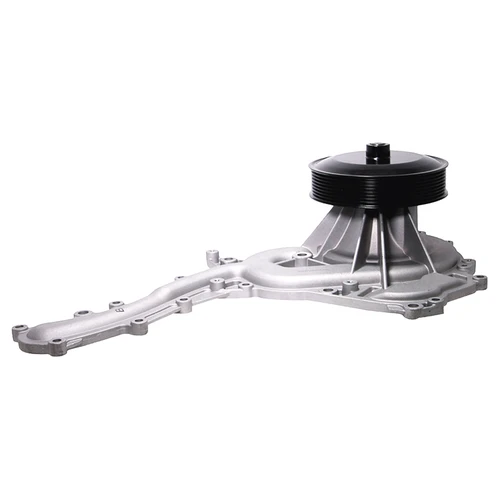
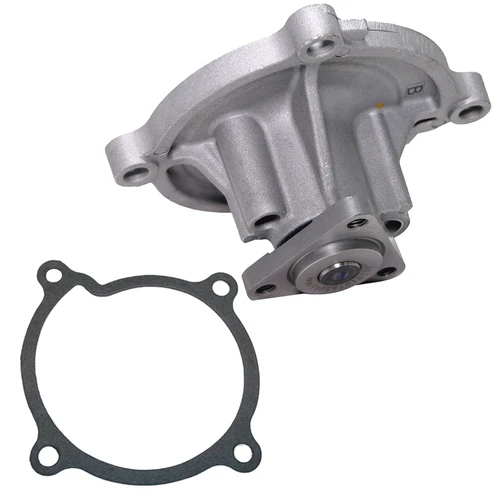
Bostech carries Ford PowerStroke water pumps, coolant system gaskets and seals, sensors, and related cooling hardware, and the catalog at bostechauto.com lists fitment by year and engine so the secondary circuit components are matched correctly to your build date.
7. Problem 5: Injector and Fuel System Wear
Beyond the CP4 pump, the 6.7L's piezoelectric injectors are precision instruments with their own service life. Piezo injectors use a stack of crystal wafers that expand when energized to control the nozzle needle, allowing up to five injection events per combustion cycle with microsecond timing. That precision delivers the 6.7L's quiet idle and strong economy, but it also means the injectors are intolerant of contaminated or poor quality fuel, and they wear measurably as miles accumulate.
Normal wear shows up as nozzle erosion and internal leakage that gradually skew fuel delivery between cylinders. The PCM compensates silently for a long time using cylinder balance corrections, which is why injector wear on a 6.7L rarely announces itself until it is well advanced. Contamination events, whether from a failing CP4, water, or debris, accelerate the process dramatically and usually take out m1ultiple injectors at once.
Symptoms of Injector Trouble
- Cylinder contribution or balance codes P0201 through P0208, or misfire codes P0301 through P0308 tied to specific cylinders
- Hard starting, especially cold, with extended crank times as internal injector leakage bleeds off rail pressure
- White smoke at idle from a cylinder receiving unatomized fuel, or black smoke under load from an injector stuck rich
- Fuel knock, rough idle, or a persistent miss that moves with the injector when swapped between cylinders
- Fuel dilution of the engine oil, visible as a rising oil level or thin oil on the dipstick
Fuel dilution of the oil deserves its own emphasis on this engine, because it has two sources that get conflated. Late post injections during DPF regeneration wash a small amount of fuel past the rings by design, which is why oil life shortens on trucks that regenerate often. A leaking injector adds fuel far faster, thinning the oil until bearing protection suffers. The practical discipline is simple: check the oil level and smell it at every fuel filter change. A level that rises, or oil that smells strongly of diesel well before the drain interval, is a finding that justifies injector return flow testing before it becomes a bearing problem.
Diagnosis
A capable scan tool makes injector diagnosis on this engine mostly a data exercise. Review cylinder balance and fuel trim data at idle and under load, run the PCM's power balance and relative compression tests to separate fuel problems from mechanical ones, and check rail pressure command versus actual during cranking. Rail pressure that will not build points at the pump, the pressure control valves, or gross injector return leakage; a leak back test isolates which. Always rule out the low pressure supply side, including the lift pump and filters, before condemning high pressure components.
Repair Guidance
Replace failed injectors in matched sets whenever the budget allows, because pairing a new injector with seven worn ones guarantees balance complaints and repeat labor. Bostech remanufactured injectors for Ford applications are rebuilt to OEM specification, flow tested and coded, and covered by the standard Bostech warranty, with new seal kits, lines, and connectors available in the same order. If injectors failed because of pump debris, stop and reread the CP4 section: a contamination kit, not a set of injectors, is the correct repair.
8. Problem 6: DEF, SCR, and NOx Sensor Faults
Every 6.7L PowerStroke carries the full modern aftertreatment suite: a diesel oxidation catalyst, a diesel particulate filter, and a selective catalytic reduction system that injects diesel exhaust fluid to convert NOx into nitrogen and water. When it is healthy the system is invisible. When it is not, the truck will nag, derate, and in the worst case count down to a 5 mph limp that strands the vehicle wherever the counter hits zero. Aftertreatment faults are the most common check engine light source on third generation trucks, and among the most misdiagnosed.
The Usual Suspects
- NOx sensors, one upstream and one downstream of the SCR catalyst, which fail electrically or drift out of range and set codes such as P20EE (SCR efficiency below threshold), P2200 series sensor faults, and correlation codes
- DEF injectors that crystallize and restrict, causing genuine low dosing that mimics a bad NOx sensor
- DEF quality and level sensors inside the tank, a frequent failure that triggers warnings even with fresh fluid
- DEF pump and heater faults, especially in cold climates where the system must thaw frozen fluid before dosing
- DPF pressure differential sensors and EGT sensors that misreport and drive unnecessary regenerations
Diagnosis Without Guesswork
The cardinal rule of SCR diagnosis is to verify dosing before replacing sensors. A P20EE efficiency code can be caused by a lazy NOx sensor, but it can equally be caused by a crystallized injector, contaminated DEF, or an exhaust leak upstream of the sensors. Test DEF concentration with a refractometer, inspect the injector tip for crystal buildup, confirm commanded dosing with a scan tool, and check for leaks before spending money on sensors. NOx sensors are not cheap, and replacing them on a system that is genuinely underdosing fixes nothing.
Understanding DPF Regeneration Behavior
The particulate filter side of the system deserves its own explanation, because regeneration behavior is the number one source of owner confusion on this platform. The DPF traps soot continuously, and the PCM burns that soot off through passive regeneration during sustained highway load and through active regeneration, where late injections raise exhaust temperature deliberately. During an active regen the truck idles higher, the fans may run, fuel economy dips, and exhaust smell changes, all of which is normal and none of which should be interrupted.
- Frequent regenerations, more often than roughly every 100 to 200 miles of mixed driving, point to a problem upstream: excessive idling, short trips, EGR faults, or a biased differential pressure sensor
- A regen that never completes because the truck is shut down mid cycle forces the PCM to start over, compounding soot load and oil dilution
- Ash, the incombustible residue of burned soot and oil additives, accumulates permanently and is why high mileage DPFs eventually need professional cleaning or replacement even on healthy engines
- P2463 and P246C codes mean soot or restriction has outrun the regeneration strategy, and forcing repeated manual regens on a restricted filter risks cracking the substrate
Because these components live in a harsh environment and fail on a schedule measured in years rather than decades, fleets in particular benefit from treating them as maintenance items. Our companion article, the Diesel Aftertreatment Maintenance Playbook for Fleets, covers proactive strategies to prevent derates across DPF, DOC, SCR, and DEF systems in much greater depth. Bostech stocks NOx sensors, DPF and EGT sensors, and DEF system components for PowerStroke applications when replacement is the answer.
9. Problem 7: Intercooler Condensation and Charge Pipe Failure
The 6.7L's air to water intercooler is compact and efficient, but it cools charge air so effectively that under light load in humid conditions, moisture in the intake air condenses inside the cooler and pools in the charge air plumbing. Accelerate hard and that slug of water gets ingested at once, producing a stumble, shudder, or brief misfire, sometimes with a puff of white vapor from the exhaust. Owners frequently mistake the event for injector or transmission trouble.
The related failure is mechanical. The molded plastic cold side charge pipe that carries boost from the intercooler to the intake can fatigue and split at its bellows or end fittings, particularly on tuned trucks running elevated boost. A split pipe produces sudden loss of power, a loud whoosh under throttle, and underboost code P0299, and it is one of the most common causes of a P0299 that has nothing to do with the turbocharger itself.
Symptoms and Confirmation
- A momentary shudder or misfire during hard acceleration after extended light load driving in humid weather, classic condensation ingestion
- P0299 underboost with hissing or whooshing under load, pointing to a charge pipe or boost leak rather than the turbo
- Visible oil misted water at the charge pipe connections when inspecting the cold side plumbing
- Repeated misfire codes with no corresponding injector balance fault
Confirmation is straightforward: pressure test the charge air circuit with the system capped and soapy water or a smoke machine at the joints. For condensation, Ford issued revised calibrations and hardware over the years, and simply working the truck harder on a regular basis keeps the cooler dry. For a failed pipe, upgraded replacement pipes resolve the weakness permanently. While you are in the system, inspect the intercooler end tanks and the boots at both ends, and address any oil accumulation, which usually traces back to turbo seal seepage covered in the turbo section.
10. Problem 8: Glow Plug and Cold Start Issues
Diesels rely on compression heat to ignite fuel, and below roughly 50 degrees Fahrenheit the 6.7L leans on its eight glow plugs and intake air heating strategy to light off cleanly. Glow plug problems on this platform range from routine wear to one genuinely serious early defect that every 2011 to 2013 buyer should know about.
The serious one first: a number of very early 6.7L engines suffered glow plug tip separation, where the heated tip of the plug broke off inside the cylinder and hammered the piston, valves, and turbocharger on its way through. Ford addressed the defect with revised plugs early in production, and most surviving early trucks have long since been serviced, but it is the reason technicians insist on OEM quality plugs and careful torque on this engine, and the reason a used 2011 to 2013 truck with unknown history deserves a compression test.
Routine Glow System Wear
- Extended cranking and rough running for the first minute on cold mornings, growing worse as more plugs fail
- White or gray smoke at cold start that clears as the engine warms, unburned fuel from cylinders that did not light cleanly
- Glow plug circuit codes P0671 through P0678 identifying individual failed plugs, or module codes for the glow plug control unit
- A wait to start lamp that no longer illuminates, indicating a control module or wiring fault rather than the plugs themselves
The glow plugs also share cold start duty with the intake air heating strategy and, on cold climates, the block heater. A truck that starts poorly despite eight healthy plugs deserves a look at the intake heater circuit and, below zero, an honest conversation about plugging in overnight, because compression heat is a team effort at those temperatures. Battery condition belongs in the same conversation: two aging batteries that crank slowly rob the engine of the compression speed it needs to light off, and many winter no start complaints on this platform are battery diagnoses wearing a glow plug costume.
Testing and Replacement
Individual plugs test quickly with a multimeter: disconnect and measure resistance to ground, expecting roughly one to two ohms on a healthy plug, with an open circuit confirming failure. The control module can be checked by verifying voltage delivery to each plug during the pre glow cycle. Replace plugs in complete sets on a high mileage engine, use a quality torque wrench, and never run the truck on a broken plug tip suspicion without a borescope inspection. Bostech carries glow plugs, glow plug harnesses, and control modules for PowerStroke applications, all listed by year at bostechauto.com.
11. Diagnostic Trouble Code Reference
The codes below are the ones that appear most often on 6.7L PowerStroke repair orders, grouped by the system they implicate and cross referenced to the sections of this guide. A code identifies a symptom area, not a part; always follow the diagnostic steps in the relevant section before replacing components.
Fuel System Codes
- P0087, P0088: fuel rail pressure too low or too high, the classic CP4 and rail pressure control family, see Problem 1
- P0093: large fuel leak detected, high pressure side leakage or gross injector return flow
- P008F: fuel and engine temperature correlation, often set alongside pressure codes during pump failure events
- P0201 to P0208: injector circuit faults by cylinder, see Problem 5
- P0301 to P0308: cylinder specific misfires, fuel or mechanical, see Problems 5 and 7
Air, Boost, and EGR Codes
- P0299: turbocharger underboost, caused by VGT sticking, actuator faults, or charge air leaks, see Problems 3 and 7
- P0045 to P0048: turbo boost control circuit and actuator faults, see Problem 3
- P0234: overboost condition, typically a stuck VGT mechanism
- P0401, P0402: EGR flow insufficient or excessive, see Problem 2
- P0404, P0405: EGR valve position and circuit faults, see Problem 2
Aftertreatment Codes
- P20EE: SCR NOx efficiency below threshold, verify dosing before replacing sensors, see Problem 6
- P2200 series: NOx sensor circuit and performance faults, upstream and downstream, see Problem 6
- P204F: reductant system performance, the DEF side counterpart to P20EE
- P2463: DPF soot accumulation excessive, incomplete regeneration or biased pressure sensor
- P246C: DPF restriction, severe soot or ash loading requiring cleaning or replacement
Glow and Cold Start Codes
- P0671 to P0678: glow plug circuit faults by cylinder, see Problem 8
- P064C: glow plug control module performance
12. Model Years to Avoid and Which to Buy
With fifteen years of production behind it, the 6.7L PowerStroke used market spans everything from tired first year work trucks to nearly new High Output haulers. The generational failure patterns covered in this guide translate directly into buying advice.
Years That Deserve Extra Scrutiny
The 2011 to 2014 trucks carry the most documented risk: the ceramic bearing GT32 turbo, the early glow plug defect on 2011 to 2013 engines, more frequent EGT sensor failures, and the same CP4 exposure as every other year. None of this makes a first generation truck a bad purchase, and many have had the turbo and glow plugs addressed long ago, but the asking price should reflect the history. A 2011 to 2014 truck with an original turbo and no service records is a truck you price with a turbo replacement in mind.
The Sweet Spot
The 2015 to 2019 second generation is the value pick of the platform. The GT37 turbo eliminated the signature first generation failure, the fuel system and injectors were refined, and prices sit well below third generation trucks. Within the range, 2017 to 2019 aluminum body trucks add the stronger 925 to 935 lb-ft ratings and a more modern cab. The CP4 pump remains the one systemic risk, which is true of every year, so fuel history and filter condition matter more than the badge year.
Late Model Strength
The 2020 and newer third generation brings steel pistons, the ten speed, and the strongest ratings, and it has been notably reliable in the field. The tradeoffs are price and aftertreatment complexity: these trucks are the most dependent on healthy DEF and SCR systems, and sensor level faults are their most common complaint. On any candidate truck of any year, pull codes before the test drive, inspect the fuel filter for metal, verify coolant level and color, and treat a seller's reluctance to allow a scan tool as the answer to your question.
A Note on Chassis Cabs and Commercial Trucks
The 6.7L in F-350 through F-750 chassis cab and medium duty applications runs deliberately derated calibrations, commonly around 300 to 330 horsepower with correspondingly reduced torque, in exchange for longevity under commercial duty cycles. These trucks often show high engine hours relative to miles from PTO and idle time, so judge them by hours and maintenance records rather than the odometer alone. A derated commercial engine with documented service is frequently a better mechanical bet than a higher rated pickup that towed at maximum ratings its whole life.
13. Preventive Maintenance for a Long Service Life
The 6.7L PowerStroke rewards disciplined maintenance more than almost any modern diesel, because its two most expensive failure modes, the CP4 pump and the aftertreatment system, are both heavily influenced by how the truck is fueled, serviced, and driven. A quarter million miles is a realistic expectation for a well kept 6.7L, and the habits below are what separate the trucks that get there from the ones that do not.
Fuel System Discipline
- Change both fuel filters every 15,000 miles or sooner under hard use, and inspect for metallic debris at every change
- Run a lubricity additive with every tank to compensate for ultra low sulfur diesel, the cheapest insurance available for a CP4 equipped truck
- Fuel at busy, high turnover stations and keep the tank above a quarter to protect the pump from starvation and heat
- Drain the water separator whenever the lamp requests it, and immediately investigate repeated water warnings
Oil, Coolant, and Air
- Change oil on the intelligent oil life monitor or 7,500 miles, whichever comes first, using the correct CK-4 or FA-4 specification, and shorten the interval if regenerations are frequent, since regens dilute oil with fuel
- Test coolant condition annually and maintain the correct Ford specification fluid in both circuits, replacing it on schedule rather than on failure
- Replace the air filter by restriction gauge rather than mileage, and inspect the charge air boots and cold side pipe for oil misting and cracking at every service
Aftertreatment and Driving Habits
- Buy DEF from high turnover sources, keep it sealed and cool, and never top the tank with anything else
- Allow active regenerations to complete rather than shutting down mid cycle, and give a mostly idle or short trip truck a sustained highway run at least weekly
- Address check engine lights promptly, because most aftertreatment derates are the end stage of a fault the truck reported weeks earlier
Habits for Trucks That Tow
- Let the engine idle two to three minutes after a hard pull before shutdown so the turbo center section cools with oil flowing rather than heat soaking
- Use tow haul mode and the exhaust brake on grades, which manages transmission heat and keeps the VGT mechanism exercised, a genuine anti carbon measure
- Watch charge air and transmission temperatures on hot climbs, and treat rising trends across a season as a cooling stack inspection prompt rather than background noise
- After deep water, dust, or off pavement work, inspect the cooling stack faces and clean debris from between the coolers, since a packed stack overheats both circuits at once
14. Choosing Replacement Parts: OEM, Remanufactured, and Bostech Solutions
When a repair on this list arrives, the parts decision usually comes down to three paths: new OEM components at dealer pricing, unknown provenance economy parts, or professionally remanufactured components built to OEM specification. For a platform as widely deployed as the 6.7L PowerStroke, remanufacturing is often the strongest value, because cores are plentiful, the failure modes are thoroughly understood, and a quality reman process corrects known weaknesses rather than simply restoring them.
Remanufacturing done right is a manufacturing process, not a cleanup. Cores are fully disassembled, every wear component is replaced rather than inspected and reused, machined surfaces are restored to specification, and the finished unit is tested against the same functional standards as a new part. For injectors that means individual flow testing and matching; for coolers it means pressure and leak verification; for turbochargers it means balanced rotating assemblies. That process discipline, plus a warranty that stands behind it, is what separates a remanufactured component from a used part with fresh paint.
Bostech has supplied remanufactured and new diesel components to shops and owners for decades, and the 6.7L PowerStroke catalog covers the systems in this guide end to end: fuel contamination kits and remanufactured injectors for CP4 events, new and remanufactured EGR coolers and valves, PurePower Technologies turbocharger assemblies with actuators and installation kits, water pumps and cooling components, sensors across the engine and aftertreatment, and glow system parts. Every remanufactured component is built and tested to OEM specification and backed by the Bostech warranty.
- Browse the full Ford PowerStroke catalog with year and engine fitment at bostechauto.com
- Call the technical sales team at 1-800-868-0057 for VIN level fitment confirmation before ordering
- Email customerservice@bostechauto.com for quotes, core return questions, and warranty support
The difference between a repair that lasts and a repeat failure is usually the quality of the parts and the completeness of the job. Whichever path you choose, replace related seals and hardware while the system is open, and insist on components with a real warranty behind them.
15. Frequently Asked Questions
By repair frequency, EGR and aftertreatment faults generate the most check engine lights, while the CP4 high pressure fuel pump is the most serious single failure because it contaminates the entire fuel system. On 2011 to 2014 trucks specifically, the ceramic bearing turbocharger is the signature problem of the generation.
Estimates vary, but failures are the exception rather than the rule, affecting a small single digit percentage of engines. The concern is severity, not frequency: when the pump fails, the average repair runs 8,000 to 12,000 dollars because the full fuel system must be replaced. Fuel quality habits and filter inspections meaningfully reduce the risk.
No year is unbuyable, but 2011 to 2014 trucks carry the ceramic bearing turbo and early glow plug history, so they deserve the closest inspection and the most conservative pricing. The 2015 to 2019 trucks are the used market sweet spot, and 2020 and newer trucks have been the most trouble free, at the highest cost of entry.
Parts for a quality new or remanufactured cooler typically run several hundred dollars, and shop labor commonly brings the total to between 1,200 and 2,500 dollars depending on region and whether the valve, gaskets, and hoses are done in the same job, which they should be.
P0299 is an underboost code: the PCM commanded more boost than it measured. On 2015 and newer trucks the most common causes are VGT vane sticking, actuator faults, and charge air leaks, including the well known cold side charge pipe failure. Pressure test the charge circuit before condemning the turbocharger.
With disciplined fuel and maintenance habits, 250,000 to 350,000 miles is a realistic service life, and well cared for examples exceed 400,000. The engines that fall short usually trace their failures to fuel contamination, chronic overheating, or deferred aftertreatment repairs rather than the core engine.
For high mileage trucks, heavy towing use, or owners who simply want the exposure closed, yes. These kits reroute the pump case return so that debris from a failing pump drains back to the tank side instead of feeding the injectors, converting a fuel system catastrophe into a pump replacement. It is inexpensive insurance relative to the failure it mitigates.
First generation trucks, 2011 to 2014, have the GT32 ceramic bearing turbo and the earliest calibrations. Second generation, 2015 to 2019, brings the durable GT37 turbo, refined injectors, and higher ratings. Third generation, 2020 onward, adds steel pistons, a 36,000 psi fuel calibration, an updated turbo, and the ten speed transmission, with 2023 and later offering the 500 horsepower High Output option.
Removing or defeating emissions equipment on a road driven truck is illegal under federal law regardless of state, and enforcement against both shops and owners has increased sharply. Beyond legality, a healthy aftertreatment system on a maintained truck is far less troublesome than its reputation suggests. Maintenance, not removal, is the answer this guide recommends.
Any time you are pricing a fuel system, EGR, turbocharger, cooling, sensor, or glow system repair and want OEM specification parts with a warranty behind them. The team can confirm fitment by VIN, explain contamination kit contents, and handle core returns. Reach them at 1-800-868-0057, at customerservice@bostechauto.com, or through bostechauto.com.
16. Disclaimer
This guide is provided for general informational purposes only and does not constitute professional mechanical advice for any specific vehicle. Diesel fuel systems operate at extreme pressures and repairs described here can cause injury or vehicle damage if performed incorrectly. Always consult factory service information and a qualified diesel technician before performing diagnosis or repair. Bostech is not responsible for damages resulting from the use of this information. Product availability, specifications, and warranty terms are subject to change; confirm current details at bostechauto.com or by calling 1-800-868-0057.