
6.7L Cummins Common Problems: 2007.5 to Present Diagnosis and Repair Guide
May 26th 2026
Table of Contents
- Introduction: The Modern Cummins Story
- The 6.7L Cummins Across Three Generations
- Problem 1: EGR Cooler Failure
- Problem 2: EGR Valve Clogging and Sticking
- Problem 3: DPF Clogging and Regeneration Trouble
- Problem 4: VGT Turbo Vane Sticking and Actuator Failure
- Problem 5: Grid Heater Bolt Failure (The Killer Bolt)
- Problem 6: Cracked Exhaust Manifold
- Problem 7: Fuel Injector Failure and Fuel Dilution
- Problem 8: CP4 Fuel Pump Failure (2019 to 2020 Only)
- Problem 9: DEF System Failures on 2013 and Newer Trucks
- Problem 10: Head Gasket Failure
- Problem 11: Cooling System, Water Pump, and Fan Clutch
- Problem 12: CCV Filter and Crankcase Blow-By
- Generation by Generation Reliability Summary
- Maintenance Recommendations to Protect Your 6.7
- Bostech Solutions for the 6.7L Cummins
- Frequently Asked Questions
- Disclaimer
The 6.7L Cummins is one of the most capable diesel engines ever installed in a pickup truck. Since 2007.5 it has powered the Ram 2500, 3500, 4500, and 5500 with up to 1,075 pound feet of torque, an iron block and head, and the inline six design that earned the previous 5.9L Cummins its legendary reputation. The bottom end is genuinely tough and the engine routinely runs past 400,000 miles in commercial use when properly maintained. That said, the 6.7L is a thoroughly modern emissions controlled diesel, and most of its problems live in the systems that surround the core engine. EGR cooler failures, DPF clogging, VGT turbo vane sticking, the infamous grid heater killer bolt, cracked exhaust manifolds, and (on the unlucky 2019 to 2020 model years) CP4 fuel pump failures account for the bulk of repair shop visits. This guide covers the twelve most common 6.7L Cummins problems from 2007.5 through current production, with diagnostic steps, repair guidance, and a breakdown of which model years are most affected by which issues.
Introduction: The Modern Cummins Story
When the 6.7L Cummins debuted in 2007.5, Cummins faced a difficult challenge. The 5.9L it replaced had earned a near mythical reputation for reliability in light truck applications. The 2007 EPA emissions standards required diesel manufacturers to add particulate filtration, exhaust gas recirculation, and (within a few years) selective catalytic reduction. The 6.7L had to make more power than the 5.9L, last just as long, meet stricter emissions rules, and fit between the frame rails of the same Ram trucks.
Cummins largely succeeded. The 6.7L produces substantially more torque than the 5.9L ever did, the bottom end is essentially as strong, and most engine internals are upgraded versions of proven designs. What changed dramatically is the emissions hardware bolted around the engine. The DPF, EGR system, variable geometry turbocharger, and (from 2013 onward) SCR and DEF system all add complexity and failure points.
Owners who treat the 6.7L like a 5.9L often end up disappointed. Owners who understand that the engine is modern, emissions sensitive, and rewards proper maintenance generally get very long service lives. The trouble spots are well documented and most have proven, repeatable fixes.
The 6.7L Cummins Across Three Generations
The 6.7L Cummins has gone through three distinct generations since 2007.5, and the problems differ significantly between them. Knowing which generation you have is the starting point for any diagnosis.
First generation (2007.5 through 2012): introduced the DPF and EGR system but did not yet use DEF. To control NOx without DEF, these trucks run rich during regeneration cycles, leading to in cylinder fuel dilution of the engine oil. Power output started at 350 horsepower and 650 pound feet of torque and rose to 350 horsepower and 800 pound feet by the end of the generation. The 2007.5 through 2009 trucks use a different EGR cooler than the 2010 through 2012 trucks. Grid heater bolt failures began surfacing at around 100,000 miles.
Second generation (2013 through 2018): the addition of selective catalytic reduction and DEF. The SCR system handles most NOx reduction downstream of the engine, which let Cummins lean out combustion and reduce in cylinder fuel dilution. This generation is widely considered the most reliable of the three because of the DEF assist and the proven Bosch CP3 high pressure fuel pump. Power output rose to 385 horsepower and 865 pound feet by mid generation. The HE300VG variable geometry turbo replaced the earlier HE351VE on most pickup applications.
Third generation (2019 to present): updated emissions hardware, higher output ratings, and (for 2019 and 2020 only) the troubled Bosch CP4.2 high pressure fuel pump. Cummins reverted to the CP3 from 2021 onward. Power output reached 420 horsepower and 1,075 pound feet of torque in current high output configurations. The high output variant uses the heavier duty Aisin AS69RC transmission rather than the 68RFE in standard output trucks.
Across all three generations, the chassis cab variants (Ram 3500, 4500, and 5500 cab and chassis) sometimes use different parts than the pickup variants. EGR coolers, turbos, and injectors can carry different part numbers. Always confirm fitment by VIN before ordering parts.
Problem 1: EGR Cooler Failure
The EGR cooler is a coolant fed heat exchanger that drops exhaust gas temperature from over 1,000 degrees Fahrenheit to roughly 300 degrees before that gas reenters the intake manifold. On the 6.7L Cummins it sits on the driver side of the engine, mounted between the exhaust manifold and the intake horn. The cooler runs in hot, sooty exhaust gas with coolant on the other side of the wall, and over time the thermal cycling combined with carbon buildup leads to internal fatigue.
EGR cooler failure is the second most common emissions related problem after DPF clogging, and on first generation trucks (2007.5 through 2012) it is arguably the most common. When the cooler ruptures internally, coolant enters the exhaust gas stream and gets drawn back into the intake manifold. Symptoms are unmistakable:
- White smoke or steam from the tailpipe, especially after the engine warms up. The white smoke is vaporized coolant flashing to steam.
- A sweet smell from the exhaust during the white smoke event (the smell of glycol burning).
- Slow coolant loss from the overflow bottle with no visible external leak.
- Coolant pressurizing the system and pushing past the overflow cap.
- In severe cases, coolant pooling in the intake manifold, visible when the intake elbow is removed.
- Engine misfire or rough running on cylinders nearest the coolant intrusion.
Diagnosis is straightforward. Pull the EGR valve off the top of the cooler and look inside. Dry, sooty residue means the cooler is intact. Wet residue, visible coolant, or pooled liquid means the cooler is leaking and needs to come out. A pressure test with shop air will confirm a leak in minutes.
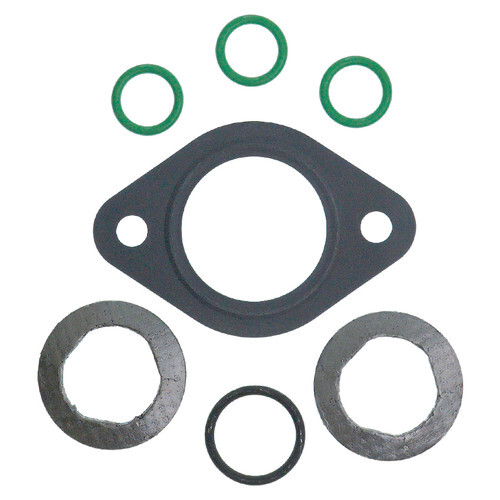
Replacement is a moderately involved job but very doable in a home shop with the right tools. The intake horn, EGR valve, EGR delivery tube, and several coolant connections all come off. Most experienced shops budget six to eight hours for the job. The single most important rule is to replace the cooler with a quality unit that has been redesigned to address the original failure mode. The Bostech reman EGR cooler line uses 304 stainless steel tubing in the core, which provides better heat transfer and substantially better fatigue resistance than the OEM design. The EGR104182R-K1 covers 2010 through 2024 ISB applications with the gasket kit included, and the EGR104072R-K1 covers 2011 through 2022 ISB and Paccar PX-7 applications.
Some owners install an EGR delete kit instead. Delete kits remove the failure point, lower intake temperatures, and slightly improve fuel economy, but they are illegal for emissions inspected vehicles in many jurisdictions, void any remaining warranty, and require tuning to suppress fault codes. For owners who plan to keep the truck on the road legally, a quality replacement cooler is the better long term answer.
Problem 2: EGR Valve Clogging and Sticking
The EGR valve sits on top of the EGR cooler outlet and meters how much cooled exhaust gas enters the intake manifold. It is an electrically actuated valve with a position sensor that reports back to the engine control module. The valve runs in dirty exhaust gas and accumulates carbon buildup over time, just like the EGR coolers it feeds. Two failure modes dominate: the valve sticks open (dumping too much exhaust into the intake, causing rough running and reduced power), or sticks closed (preventing proper EGR flow, triggering a check engine light and on later trucks limp mode). Common signs include:
- Rough idle that improves when the EGR valve is disconnected.
- Hesitation, sag, or surging on light throttle acceleration.
- Diagnostic codes for EGR flow insufficient (such as P0401) or EGR position sensor performance (P0404 family).
- Increased visible soot output, especially at idle.
- Heavy carbon buildup visible at the back of the intake manifold and on the valve poppet when removed.
- Limp mode events triggered by EGR flow faults, especially common on 2013 and newer trucks.
Cummins recommends a regular EGR system cleaning interval. For 2007.5 through 2018 model year engines the interval is every 67,500 miles. For 2019 and newer the interval rises to 75,000 miles. The procedure involves removing the valve, soaking the poppet and seat in carbon cleaner, and cleaning the intake passages around the valve. If the valve cleans up and the spring and motor still work freely, it can go back on for additional service life. If the poppet shows scoring, the motor draws abnormal current, or the position sensor is faulty, replace it. Trucks that idle heavily load the EGR system far faster than highway trucks; on those trucks, the cleaning interval may need to be cut in half. Reducing idle time is one of the most effective ways to extend EGR system service life.
Problem 3: DPF Clogging and Regeneration Trouble
The diesel particulate filter sits in the exhaust downstream of the turbocharger and traps soot particles before they can leave the tailpipe. As the filter accumulates soot, the engine control module periodically commands a regeneration cycle that raises exhaust temperatures high enough to burn the trapped soot into ash. On a healthy 6.7L driven on the highway, this process happens automatically and the driver may never notice. On a truck used for short trips, heavy idling, or city driving, regenerations either fail to complete or fail to initiate at all, and the DPF gradually plugs up. A clogged DPF generates a recognizable set of symptoms:
- Frequent regeneration events that the dashboard messaging makes obvious.
- Regeneration events that take longer than usual or never seem to complete.
- Reduced power and sluggish throttle response, especially as the DPF gets fuller.
- Reduced fuel economy as the engine compensates for restricted exhaust flow.
- High exhaust gas temperatures, sometimes high enough to trigger turbo or EGT related codes.
- Reduced Engine Power warnings or limp mode events when the DPF reaches critical loading.
- Diagnostic codes such as P2002 (DPF efficiency below threshold), P2463 (DPF restriction or soot accumulation), or P244A/P244B (DPF differential pressure faults).
The first thing to check on a struggling DPF is the rest of the engine. A truck that produces more soot than designed will load the DPF faster than designed, and several upstream issues can cause that. A leaking EGR cooler putting coolant into the combustion stream produces excessive soot. A failed turbo or stuck VGT vanes that change boost behavior also change combustion and increase soot. Worn injectors that spray late or spray poorly dump extra soot. Replacing the DPF without addressing what made it plug up is a recipe for repeat failure within months.
If the rest of the engine checks out and the DPF is simply ash loaded from miles, three options exist. A forced regeneration with a capable scan tool can sometimes clear a partially loaded DPF. A professional DPF cleaning service can chemically and thermally clean the filter for several hundred dollars, restoring most of its capacity. DPF replacement is the last resort, with OEM filters running $1,500 to $2,500. The single most effective preventive measure for DPF longevity is regular highway use, with at least one 30 minute or longer drive per week to allow complete regeneration cycles.
Problem 4: VGT Turbo Vane Sticking and Actuator Failure
The 6.7L Cummins uses a Holset variable geometry turbocharger from the factory. On 2007.5 through 2012 pickup applications it is the HE351VE, on 2013 through 2018 pickup applications it is the HE300VG, and current generation trucks use updated versions of the same family. All of these turbos use electronically controlled vanes inside the turbine housing that change the effective aspect ratio of the turbo on the fly. At low engine speed the vanes close down to spool the turbo quickly, and at high engine speed they open up to let exhaust flow through more freely.
The trouble is that diesel exhaust is dirty. Soot, carbon, and a small amount of oil mist all collect on the vanes, the unison ring, and the sliding nozzle mechanism. Over time the buildup glues the vanes in one position. Sometimes they get stuck closed, which causes overboost and high exhaust gas temperature. More commonly they get stuck open, which causes underboost and a loss of low end power. Trucks that idle heavily and rarely see hard throttle are especially prone, because the soot just sits and bakes onto the parts. Symptoms of a sticking VGT or failing actuator include:
- Diagnostic codes such as P0299 (turbo underboost), P003A (turbo control position not learned), or P132B (turbo control position performance).
- A whistling, squeaking, chattering, or grinding noise from the turbo at startup or at idle.
- Loss of power on acceleration, sometimes resolving suddenly as the unison ring frees up.
- Higher than normal exhaust gas temperature when the vanes stick closed under load.
- Reduced exhaust braking effectiveness, since the VGT is used as the braking element in the engine brake system.
- Slow turbo response and lagging boost ramp under throttle.
Diagnosis often starts with the actuator rather than the turbo itself. The VGT actuator is the electric motor and gear assembly on the side of the turbo that drives the vane mechanism. The actuator is a known wear item and many trucks throw VGT codes that are actually actuator failures rather than vane sticking. A scan tool that can command the actuator through its full sweep is useful here. If the actuator does not move smoothly through its range or stalls under command, the actuator itself is suspect.
When the actuator is healthy and the vanes are simply gummed up, cleaning the turbo can often restore normal operation without replacement. The procedure involves removing the turbo, splitting the housing, and cleaning the unison ring, vanes, and seat with a brass brush, scotch brite, and quality solvent. Inspect the unison ring closely; a deeply grooved seat or sloppy fit means the ring should be replaced rather than just cleaned. After cleaning, the truck typically needs a VGT relearn procedure. When the turbo is past saving, quality reman HE351VE or HE300VG turbos are widely available with new actuators included.
Problem 5: Grid Heater Bolt Failure (The Killer Bolt)
The 6.7L Cummins has no glow plugs. Instead, it uses an intake air grid heater, a resistive heating element mounted in the intake manifold that warms incoming air to help cold starts. When the truck is cold, the engine control module energizes the grid heater drawing up to 200 amps directly from the batteries through a single heavy gauge cable. That cable bolts to a stud on top of the intake manifold, and the stud passes through the manifold wall to the heating element inside. Inside the intake tract, the stud is secured by a small bolt or nut underneath the manifold ceiling.
This is where the trouble starts. Over years of thermal cycling at 200 amps, combined with soot accumulation on the internal threaded connection from EGR flow, the small bolt holding the stud in place can corrode, loosen, and ultimately drop into the intake manifold. Once loose, the bolt gets pulled down the intake runner on the next strong intake stroke. It usually ends up in cylinder six (the cylinder closest to the bolt location on this inline six engine) where it bounces around between the piston crown and the cylinder head until something gives. The damage typically includes a broken piston, scored cylinder wall, bent valves, damaged cylinder head, and sometimes a destroyed turbo as debris exits through the exhaust.
The repair almost always requires a long block replacement. Repair costs range from $14,000 to $30,000 depending on parts choices, labor rates, and how much damage extends beyond the basic engine. The condition has earned the nickname the killer bolt and the failure can occur with zero check engine light warning. Affected model years span the entire 6.7L Cummins production run from 2007.5 to current. Documented failures cluster in the 100,000 to 200,000 mile range but have occurred earlier and later.
The wiggle test catches a loosening bolt before it falls in:
- Disconnect both negative battery cables for safety.
- Locate the heavy positive cable bolted to the top of the intake manifold (driver side, near the dipstick).
- Remove the nut and washer holding the cable to the external stud.
- With a gloved hand, lightly grip the external stud and try to wiggle it side to side.
- A healthy stud is rigidly fixed in the manifold and has zero lateral movement. Any side to side play, even a fraction of a millimeter, means the internal nut is loose and the assembly is at risk.
A second method uses a borescope. Remove the manifold absolute pressure sensor from the top rear of the intake manifold and snake a small borescope down toward the grid heater stud. The internal nut should be visible against a clean stud thread. Any visible looseness, missing nut, or heavy corrosion is a red flag and warrants immediate action.
Catching the problem in time has two solutions. The cheaper fix is to remove the intake horn, retighten the internal nut, replace any corroded hardware, and reinstall everything to factory torque spec. This is a temporary fix because the underlying thermal cycling continues. The more permanent fix is an aftermarket grid heater replacement that eliminates the killer bolt design entirely. Several manufacturers offer redesigned grid heater assemblies that connect the electrical bus directly to the heating element with self locking thread designs that cannot drop hardware into the intake. These kits are emissions compliant, retain factory cold start performance, and typically cost $400 to $700 plus a few hours of installation labor. Cheap insurance against a $14,000 engine teardown.
Problem 6: Cracked Exhaust Manifold
The factory exhaust manifold on the 6.7L Cummins is a single piece cast iron unit that bolts to the cylinder head and feeds into the turbo. Cast iron is the right material for the application, but the manifold thermal cycles between ambient temperature and over 1,200 degrees Fahrenheit during heavy load operation, and the casting eventually fatigues. Cracks tend to develop at the runner junctions where the metal is thinnest and the thermal stress is highest. A cracked exhaust manifold creates a pre turbo exhaust leak that robs the turbo of drive pressure and creates a distinctive ticking or chuffing noise that increases with engine speed and load. Other symptoms include:
- Audible exhaust leak from the passenger side of the engine, often described as a ticking that grows louder under throttle.
- Loss of low end torque and slow turbo spool.
- Diagnostic codes related to underboost (P0299) or turbo performance.
- Higher than normal exhaust gas temperatures because the turbo cannot pull heat out of the exhaust stream as effectively.
- Black or brown soot residue around the crack location, visible after cleaning the area.
- Bolts that have loosened or sheared at the manifold to head joint.
Diagnosis usually starts by listening with the engine running. A pre turbo exhaust leak has a distinct sharp ticking quality that is hard to mistake. A propane or soapy water test along the manifold seams can confirm the leak location. If the leak is at the manifold to head joint rather than from a casting crack, the fix may be as simple as new gaskets and properly torqued studs, but a true crack requires replacement. Replacement options range from OEM cast iron to aftermarket pulse divided or T4 flanged manifolds. The OEM unit works adequately on stock trucks; aftermarket pulse divided manifolds reduce thermal stress, improve turbo response, and are far less likely to crack in service. Manifold bolt stretch is another concern, so replace the factory studs and nuts with high quality fasteners whenever the manifold is off.
Problem 7: Fuel Injector Failure and Fuel Dilution
The 6.7L Cummins uses Bosch common rail solenoid fuel injectors. Rail pressure ranges from roughly 5,000 PSI at idle to over 26,000 PSI at wide open throttle. The injectors fire several times per combustion event on modern calibrations, with pilot, main, and post injections all happening within milliseconds. Under normal operation with clean fuel and proper maintenance, a 6.7L Cummins injector set typically lasts 150,000 to 250,000 miles. Injector failure generally shows up as one of several patterns:
- Rough idle, especially when cold, that smooths out as the engine warms.
- White smoke at startup or under load, indicating raw fuel that is not burning correctly.
- Cylinder misfire codes, often clustered on one or two cylinders.
- Hard starting, both hot and cold, when several injectors are worn.
- Reduced fuel economy.
- Fuel in the engine oil (oil level rising between changes, diesel smell from the dipstick).
- A diesel knock that is louder or more pronounced than the engine’s normal sound.
Fuel dilution deserves special attention on the 6.7L Cummins. All emissions controlled diesels see some fuel dilution from regen cycles, where the engine injects extra fuel late in the combustion event to raise exhaust temperatures and burn off soot in the DPF. On the 6.7L, especially on 2007.5 through 2012 trucks without DEF, that late post injection can wash fuel down the cylinder walls and into the crankcase. A small amount is normal. Excessive dilution destroys oil film strength, increases bearing wear, and ultimately damages the engine. A leaking injector that drips fuel into the cylinder accelerates dilution dramatically. If oil level rises between changes or the oil smells strongly of diesel, send an oil sample to a lab. Reports over 5 percent fuel in oil are concerning and reports over 10 percent indicate active injector leakage that needs immediate attention.
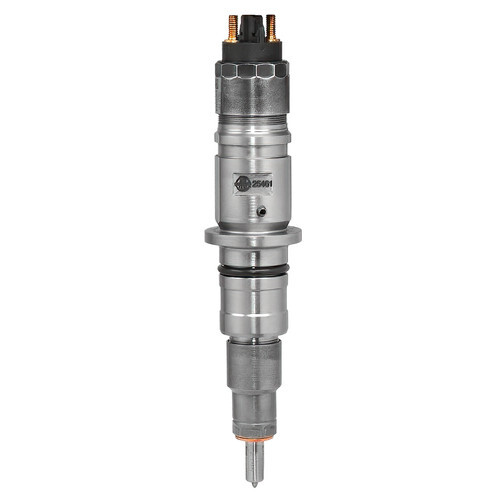
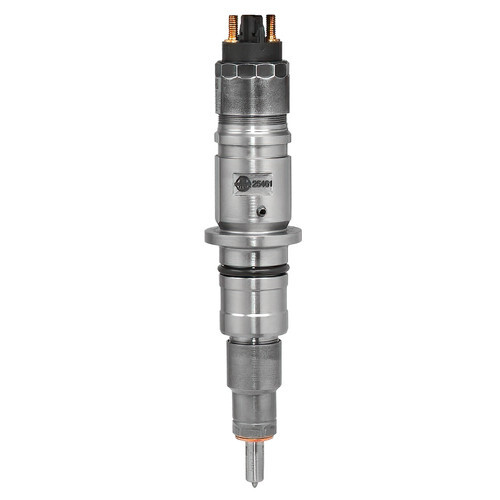
When injector replacement becomes necessary, do all six at once. Replacing one or two on a high mileage engine is a common shortcut that often backfires within months as the remaining injectors fail in turn. The labor to remove the valve cover, the rocker assembly, and access the injectors is the same whether you change one or six, and a fresh balanced set runs better than a mixed set. Use quality reman or new injectors from a reputable source and have the injector quantity adjustment (IQA) codes properly programmed into the engine control module for the new units.
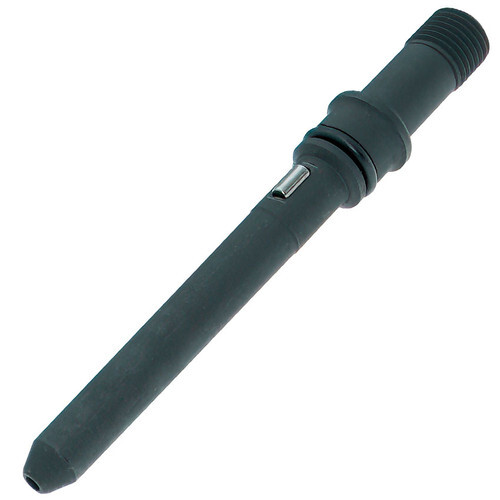
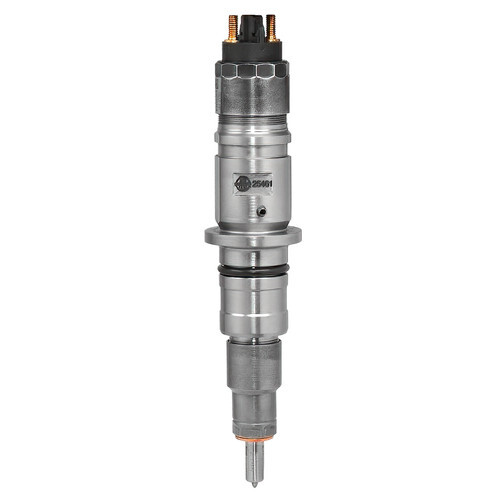
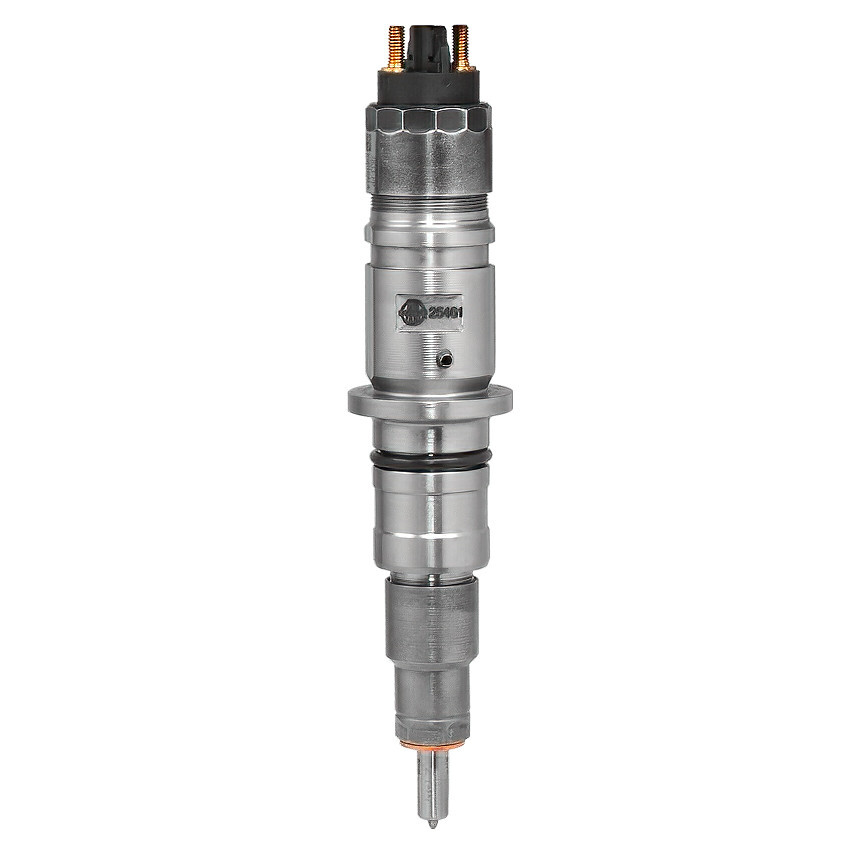
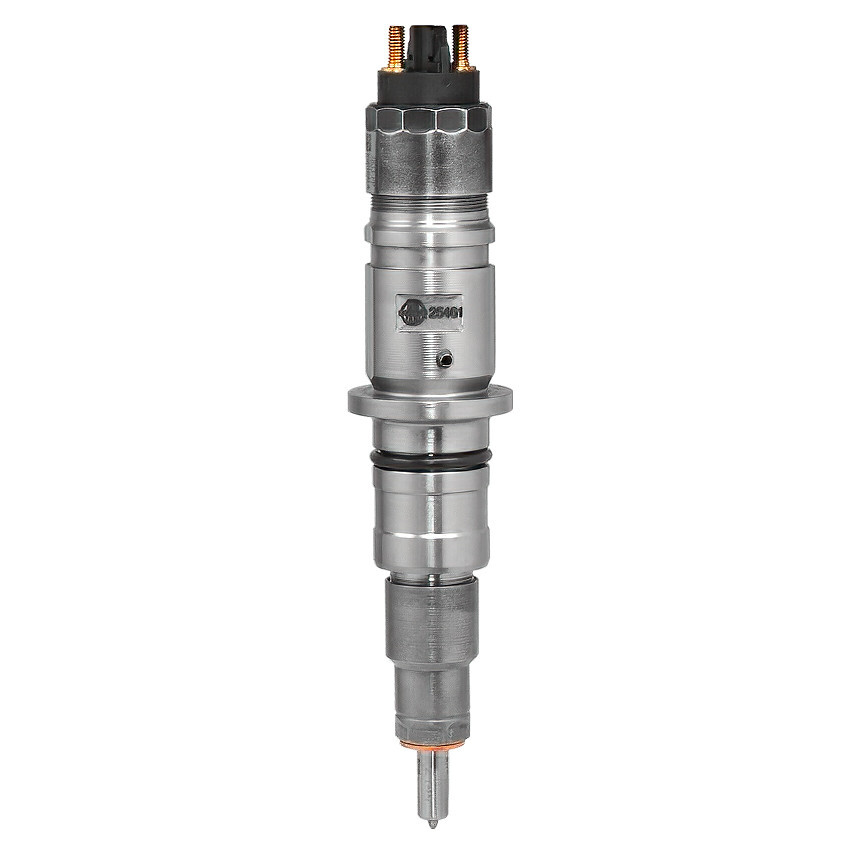
Bostech offers reman 6.7L Cummins injectors in two service tiers. The Silver Series DE802 covers 2007.5 through 2012 pickup applications and the DE808 covers 2011 through 2012 cab and chassis applications. The Platinum Series DE03388 covers the cab and chassis application with new nozzles, new valves, and new electrical solenoids installed in each rebuilt unit, backed by a 24 month unlimited mileage warranty. For owners who want a step up in reliability or who tow heavily, the Platinum Series is the recommended choice. Bostech also offers the DEC031335 reman injector supply tube for 2007.5 through 2013 trucks, which is a common companion replacement during injector service.
Problem 8: CP4 Fuel Pump Failure (2019 to 2020 Only)
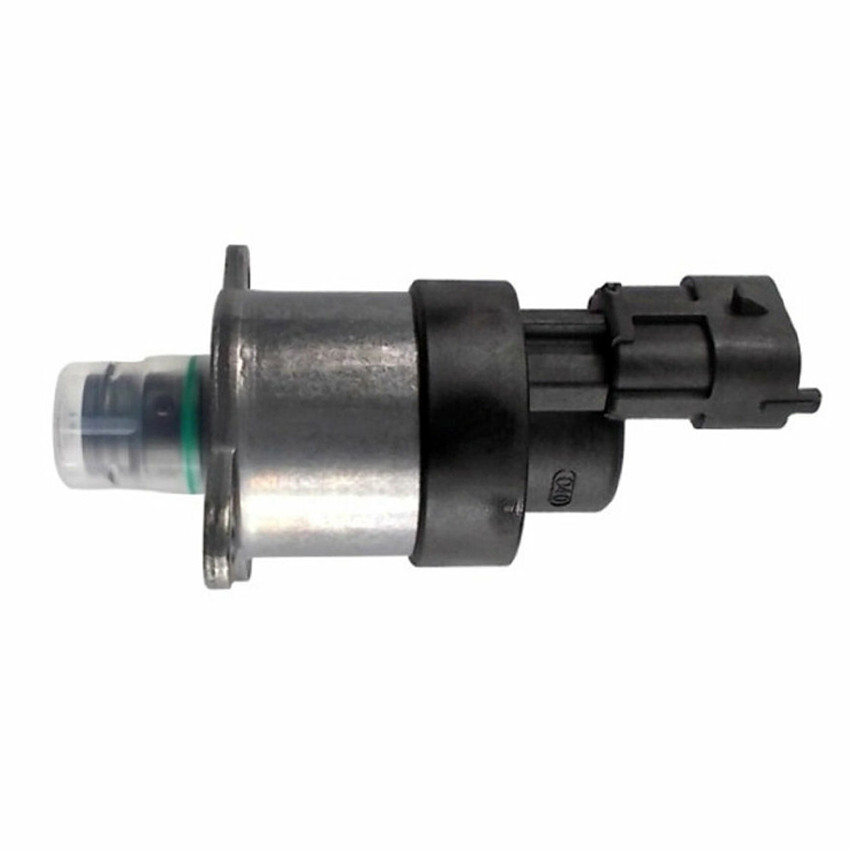
For 2019 and 2020 model years only, Cummins replaced the proven Bosch CP3 high pressure fuel pump with the Bosch CP4.2. The CP4 failure pattern well documented on Ford 6.7L PowerStroke and GM LML Duramax engines turned out to repeat on the 6.7L Cummins. Ram reversed course quickly, returning to the CP3 for 2021 and all subsequent model years.
If you own a 2019 or 2020 Ram 2500, 3500, 4500, or 5500 with the 6.7L Cummins, you have a CP4 and you should know the failure risk. The mechanism is identical to other CP4 platforms: the pump is fuel lubricated, North American ULSD does not provide adequate lubricity at the pump’s tight internal tolerances, and over time the cam, roller followers, or plungers wear and shed metal into the high pressure fuel system. Once metal enters the high pressure side, it travels with the fuel to the rails, regulators, and injectors, contaminating everything it touches. The repair after a confirmed contamination event involves replacing the pump, fuel rails, all six injectors, high pressure lines, return lines, fuel filter, and a thorough flush of the supply side and tank.
Symptoms follow the same progression as on other CP4 platforms. Early warnings include hard cold start, hard hot start, reduced power, and intermittent P0087 (fuel rail pressure too low) codes. Critical warnings include metallic glitter in the primary fuel filter at filter change time, metallic ticking from the engine valley, and persistent P0087 with limp mode events. Late stage failure is sudden total power loss and a no start condition.
The single most important inspection on a 2019 or 2020 6.7L Cummins is the fuel filter check. Pull the primary fuel filter, drain the fuel into a clear glass container, and look at the bottom under bright light for any silver or gray metallic glitter. Wipe the inside of the filter housing with a white towel and inspect for any metallic residue. A clean filter and clean fuel mean the pump is healthy. Any metal means the pump is shedding material and the truck should not be driven further. Prevention options mirror those for the LML Duramax: lubricity additives, disaster prevention bypass kits, or a CP3 conversion that returns the truck to factory 2018 or 2021 spec.
Ram has issued various warranty extensions and customer satisfaction programs related to 2019 and 2020 6.7L Cummins CP4 failures. Coverage details have changed over time and depend on VIN, mileage, and specific build. Always check warranty status at a Ram dealer before paying out of pocket. The dedicated CP4 article in this series covers the full diagnostic and repair playbook in greater depth.
Problem 9: DEF System Failures on 2013 and Newer Trucks
Starting with the 2013 model year, the 6.7L Cummins added selective catalytic reduction with diesel exhaust fluid to meet stricter NOx emissions limits. The DEF system pulls fluid from the DEF tank, pressurizes it through the DEF pump, and injects a metered spray into the exhaust stream upstream of the SCR catalyst. Inside the catalyst, the urea in the DEF reacts with NOx to produce nitrogen and water vapor. When the system works, it is invisible to the driver. When it fails, it is one of the more annoying drivability problems on the truck. Common DEF system failures include:
- DEF pump failure or pressure faults, generating codes like P20E9 (reductant pressure too low) or P2BAC (reductant circuit performance).
- DEF doser or injector failures, generating P2048 (reductant injector circuit faults).
- DEF crystallization around the doser tip, the SCR inlet, or the pump diaphragm, often visible as white powdery deposits.
- DEF heater failures during winter (the system heats DEF to keep it from freezing).
- NOx sensor failures upstream or downstream of the SCR catalyst.
- SCR catalyst efficiency below threshold codes (P20EE family).
- Bad batches of DEF (off spec urea concentration or contaminated fluid) damaging system components.
The frustrating part of DEF system trouble is the way the truck enforces it. Emissions regulations require manufacturers to derate the engine if the DEF system is non functional. The 6.7L Cummins typically gives a series of warnings (DEF system service warning, distance to derate countdown, then eventual 5 mph speed limit) before forcing a derate. Owners who ignore early DEF warnings can find themselves stranded with a truck that will not move faster than walking speed.
Most DEF problems trace to one of three causes. First, low quality or contaminated DEF damages internal pump and doser components. Always use API certified DEF from sealed containers, and never use DEF that has been sitting open for more than a few months. Second, crystallized DEF clogs the doser and pump. The fix is usually cleaning the affected component, though severe crystallization sometimes requires replacement. Third, normal wear on the DEF pump or sensors after high mileage use. Diagnosis requires a scan tool that can read DEF system parameters. Replacing components without proper diagnosis is expensive and often leads to repeat failures. A $15 connector cleaning has solved many supposed pump failures, and a $30 doser cleaning has prevented many $1,900 pump replacements.
Problem 10: Head Gasket Failure
The 6.7L Cummins uses a cast iron block with a cast iron head, the same robust architecture that made the 5.9L so durable. The factory head bolts are sized appropriately for the engine’s factory power level, which is up to 1,075 pound feet of torque on current high output engines. Within those factory parameters, head gasket failures are uncommon. Trucks running their entire service lives at stock power often go past 400,000 miles without a head gasket issue.
Head gasket failures almost always trace to one of two situations. The first is aftermarket tuning that pushes peak cylinder pressure beyond what the factory head bolts can clamp. The second is severe overheating, which can warp the head and lift the gasket. Both situations are preventable. When a head gasket does fail, the symptoms are recognizable:
- Coolant loss with no visible external leak, especially if accompanied by white smoke from the exhaust.
- Bubbles or pressure in the coolant overflow bottle when the engine is running.
- Oil and coolant mixing, visible as a milky deposit on the oil cap or dipstick.
- Overheating that worsens under load.
- A loss of compression on one or more cylinders.
- Coolant pressurizing the system enough to push past the overflow cap.
The proper repair is to remove the head, machine the surfaces if needed, install a new head gasket, and torque everything correctly. The single most important decision is whether to upgrade to ARP head studs. The factory bolts are torque to yield and cannot be reused. ARP 247-4202 head studs are rated at much higher tensile strength than the factory bolts, can be reused, and provide consistent clamping force. For any 6.7L that has been tuned, is going to be tuned, or that the owner plans to keep long term, head studs at the time of head gasket service are smart insurance. Stock trucks can often be returned to service on new TTY bolts, but most experienced shops recommend the stud upgrade regardless because the labor to do it later is the same.
Problem 11: Cooling System, Water Pump, and Fan Clutch
The cooling system on a 6.7L Cummins has a lot of work to do. It cools the engine, the EGR cooler, the transmission cooler (on most configurations), the cab heater, and the engine oil. The system uses extended life coolant from the factory and is generally robust, but several components do wear out and start causing trouble at higher mileage.
The water pump is gear driven off the front of the engine and is generally durable. Failures typically show up after 150,000 miles as either coolant leaks from the weep hole at the bottom of the pump (indicating a failed shaft seal) or a grinding bearing noise that worsens with engine speed. Replacement is moderately involved because the fan, fan shroud, and several accessory belts have to come off.
The viscous fan clutch is another wear item. The clutch engages the engine cooling fan based on coolant temperature, and over time the silicone fluid inside the clutch breaks down or leaks out. Symptoms include:
- Engine coolant temperature climbs under load, especially when towing or going up grades.
- The fan does not roar when the engine is hot, indicating the clutch is not engaging.
- Conversely, the fan runs constantly even when the engine is cold (less common but does happen).
- Visible silicone fluid leaking from the clutch housing.
- Hot weather overheating that does not appear in cool weather.
Fan clutch replacement is straightforward. A quality replacement clutch runs $300 to $500 and the job takes a couple of hours. Skipping this replacement on an aging truck risks overheating events that can cascade into head gasket damage. A few other cooling system items deserve attention on higher mileage trucks: replace the thermostat if it has not been done within 150,000 miles, inspect coolant hoses for swelling, and perform a cooling system flush every 100,000 miles to refresh the corrosion inhibitor package.
Problem 12: CCV Filter and Crankcase Blow-By
The crankcase ventilation system on the 6.7L Cummins uses a closed crankcase ventilation (CCV) filter mounted on the valve cover. The filter captures oil mist from crankcase pressure and returns the cleaned air to the intake tract. Cummins recommends replacing it every 60,000 to 67,500 miles. When the filter gets clogged, several problems develop.
A clogged CCV filter creates excess crankcase pressure. The pressure has to escape somewhere, so it pushes past oil seals and gaskets, causing oil leaks from the rear main seal, the front timing cover, the valve cover gasket, or the dipstick tube. Owners often blame these leaks on the seals themselves and replace them, only to have the leaks return because the actual cause is the clogged CCV filter. Symptoms include:
- Oil leaks from multiple locations on the engine simultaneously.
- Visible oil weeping from the valve cover gasket area.
- Oil mist or oil spitting from the dipstick tube.
- Excessive engine blow-by visible at the oil filler cap.
- Reduced engine performance, since excess crankcase pressure works against piston ring sealing.
The CCV filter is a $40 to $80 part and replacement takes about 30 minutes. Adding it to the regular maintenance schedule prevents most of the secondary oil leak problems and protects the engine’s gaskets and seals from premature failure. On a higher mileage 6.7L, persistent excess blow-by even with a fresh CCV filter can indicate worn piston rings or cylinder bore wear. A leakdown test or compression test confirms whether the engine itself is the cause.
Generation by Generation Reliability Summary
Owners shopping for a used 6.7L Cummins or trying to understand what their existing truck is likely to need next benefit from a quick generation summary. The 6.7L is generally reliable across all generations, but each has distinctive weaknesses.
2007.5 through 2012 (first generation, no DEF): Strengths include the proven Bosch CP3 high pressure fuel pump and simpler emissions architecture. Weaknesses include in cylinder regeneration fuel dilution, the original EGR cooler design (highest failure rate of any generation), and the HE351VE turbo (more vane sticking prone than later variants). Grid heater bolt failures became common at around 100,000 miles. These are the cheapest used 6.7L Cummins trucks to buy and can be excellent values if you know what to inspect.
2013 through 2018 (second generation, with DEF): Widely considered the most reliable 6.7L Cummins generation. The addition of DEF leaned out combustion and reduced fuel dilution and DPF loading. The CP3 fuel pump continued. The HE300VG turbo replaced the HE351VE on most applications. EGR coolers improved over the first generation design. The main new failure point is the DEF system itself. Grid heater bolt failures continue. These are often the best used buys for owners who want maximum reliability with reasonable parts availability.
2019 through current (third generation): Higher output ratings, updated emissions hardware, and (for 2019 and 2020 only) the CP4 fuel pump that should be a major caution flag for those two model years specifically. From 2021 onward Ram returned to the CP3 and these trucks appear to be on track to match or exceed second generation reliability. Grid heater bolt failures continue. The high output variant uses an Aisin transmission that has shown better long term durability than the 68RFE.
Across all three generations, the 68RFE transmission found in standard output trucks is a known weak point that deserves attention. Heavy towing, tuning, or hard use can cause torque converter shudder, slipping, and eventual failure. Fluid coolers, deeper pan kits, and converter upgrades from reputable transmission specialists significantly extend service life.
Maintenance Recommendations to Protect Your 6.7
The 6.7L Cummins is fundamentally a long lasting engine, but it rewards disciplined maintenance far more than the older mechanical Cummins designs did. The emissions hardware in particular wears faster and runs better when serviced on schedule. The following intervals are conservative and well aligned with how serious 6.7L Cummins owners care for their trucks:
- Engine oil and filter every 7,500 miles or six months, with a high quality 15W-40 or 5W-40 full synthetic CK-4 spec oil. Shorten to 5,000 miles on trucks that idle heavily or see frequent short trips.
- Fuel filters (both primary and secondary) every 15,000 to 20,000 miles. Use only Cummins or equivalent quality OEM filters.
- CCV filter every 60,000 to 67,500 miles per Cummins recommendation.
- Air filter inspection every oil change, replacement every 30,000 miles or sooner in dusty conditions.
- EGR system cleaning every 67,500 miles for 2007.5 through 2018 trucks, every 75,000 miles for 2019 and newer. Cut this interval in half on trucks that idle heavily.
- Coolant flush and refill every 100,000 miles with the correct extended life coolant specification.
- Transmission fluid and filter every 60,000 miles for the 68RFE, every 100,000 miles for the Aisin.
- DEF tank fill with API certified fluid only. Avoid bulk DEF unless quality is verified.
- Quarterly grid heater bolt inspection using the wiggle test on any 6.7L Cummins with over 75,000 miles.
- Periodic fuel filter inspection for metallic debris, especially on 2019 to 2020 CP4 era trucks.
Driving habits matter as much as scheduled maintenance. The single biggest controllable variable in 6.7L longevity is idle time. A truck that idles 50 percent of its operating hours will load the DPF, the EGR system, and the injectors with soot at several times the rate of a truck that runs highway miles. Driving the truck through complete regeneration cycles (at least one 30 minute highway drive per week minimum) keeps the entire emissions system functioning the way Cummins designed it.
Bostech Solutions for the 6.7L Cummins
Bostech specializes in remanufactured diesel engine components for the 6.7L Cummins. The reman process uses 304 stainless steel core tubing in EGR coolers, full bench testing on injectors, and quality controls designed to address the original design weaknesses on this engine. The most relevant Bostech parts for 6.7L Cummins owners include:
- Bostech EGR699 Reman EGR Cooler for 2007.5 through 2009 Dodge 6.7L Cummins (including Cab and Chassis configurations), built with upgraded stainless steel core construction.
- Bostech EGR104072R-K1 Reman EGR Cooler with Gasket Kit for 2011 through 2022 Cummins 6.7L ISB and Paccar PX-7 applications, includes the gasket kit needed for installation.
- Bostech EGR104182R-K1 Reman EGR Cooler with Gasket Kit for 2010 through 2024 Cummins 6.7L ISB applications, the broad coverage option for second and third generation pickup and chassis cab configurations.
- Bostech EGR04072 EGR Cooler for 2013 through 2022 Dodge Cummins 6.7L applications.
- Bostech EGR04879 Reman EGR Cooler for 2017 through 2021 Ram 6.7L Cummins.
- Bostech DE802 Silver Series Reman Fuel Injector for 2007.5 through 2012 Dodge Ram 6.7L Cummins (six required for full set).
- Bostech DE808 Silver Series Reman Fuel Injector for 2011 through 2012 Dodge Ram 6.7L Cummins Cab and Chassis applications.
- Bostech DE03388 Platinum Series Reman Fuel Injector for 2011 through 2012 Cab and Chassis applications, built with new nozzles, valves, and solenoids in each rebuilt unit.
- Bostech DEC031335 Reman Injector Supply Tube for 2007.5 through 2013 Dodge Ram 6.7L Cummins, the recommended companion replacement during injector service.
- BT-Power BT2504072 EGR Cooler Gasket Kit for 2011 through 2017 Cummins 6.7L ISB.
- BT-Power BT2504182 EGR Cooler Gasket Kit for 2010 through 2022 Dodge Ram 6.7L Cummins.
All Bostech reman parts come with a 24 month unlimited mileage warranty. For pricing, fitment confirmation by VIN, or to place an order, contact Bostech at 1-800-868-0057, by email at customerservice@bostechauto.com, or visit bostechauto.com. Bostech also offers a wide range of additional sensors, gaskets, fuel components, and supporting parts for the 6.7L Cummins beyond the items listed here, and customer service can help confirm correct fitment for chassis cab variants where part numbers differ.
Frequently Asked Questions
Yes, with qualifications. The core engine (block, crankshaft, rods, head) is genuinely durable and routinely runs past 400,000 miles in commercial use. The emissions hardware around the engine (EGR system, DPF, DEF system on 2013 and newer) requires more attention than the older 5.9L Cummins did and is responsible for most repair shop visits. Owners who maintain the emissions systems and avoid heavy idle time generally get excellent service life. The grid heater bolt risk applies to every generation and warrants periodic inspection.
2013 through 2018 trucks have the best overall reliability reputation. The addition of DEF in 2013 reduced soot loading on the DPF and EGR system, the CP3 fuel pump remained from the previous generation, and the HE300VG turbo has slightly better long term durability than the earlier HE351VE. The 2019 to 2020 trucks are the weakest specifically because of the CP4 fuel pump, which was abandoned for 2021. The 2007.5 through 2012 trucks have higher EGR system failure rates but simpler emissions hardware overall.
The killer bolt is the small internal fastener that holds the grid heater stud in place inside the intake manifold of every 6.7L Cummins. Over years of high current cycling and EGR soot exposure, the bolt can corrode and loosen, eventually dropping into the intake and getting drawn into a cylinder where it destroys the piston and head. Check for it with the wiggle test: disconnect the batteries, remove the external cable from the grid heater stud, and try to wiggle the stud side to side. Zero movement is healthy. Any lateral play means the internal bolt is loose and the truck needs immediate attention. A redesigned aftermarket grid heater that eliminates the failure mode is the most reliable long term fix.
EGR and DPF deletes remove two major failure points and slightly improve fuel economy. The downsides are that deletes are illegal for emissions inspected vehicles in many states and provinces, they void any remaining warranty, they require tuning to suppress fault codes, and they can affect resale value. They are most commonly used on dedicated off road, competition, or agricultural trucks. For road legal vehicles, replacement of failed emissions components with quality reman parts is the better long term answer.
Frequent regeneration is almost always a symptom of excessive soot production rather than a DPF problem on its own. Common upstream causes include a leaking EGR cooler putting coolant into the combustion stream, stuck VGT vanes that change boost behavior, worn or improperly calibrated injectors, intake or boost leaks, and operating habits that prevent regens from completing. Diagnose upstream causes before condemning the DPF. A truck driven mostly on the highway should regen only every few hundred miles, not every drive cycle.
A complete EGR cooler replacement using a quality reman cooler, new gaskets, and shop labor typically runs $1,200 to $2,000 at an independent diesel shop. The parts themselves are $400 to $700 for a reman cooler plus $50 to $100 for the gasket kit. A DIY owner who supplies their own labor can complete the job for the cost of parts. Dealer pricing on the same repair runs significantly higher, often $3,000 to $4,000.
Both are reman direct fit injectors for the 6.7L Cummins. The Silver Series is the standard reman product, fully disassembled, inspected, polished, and tested to OE specification with new seals and O-rings. The Platinum Series goes further by installing new nozzles, new valves, and new electrical solenoids in every rebuilt unit, and is backed by a 24 month unlimited mileage warranty. Platinum Series is the recommended choice for trucks that tow heavily or run hard.
Not strictly. The factory head bolts hold up well at stock power output and head gasket failures on unmodified 6.7L Cummins engines are uncommon when cooling is properly maintained. Studs become important when the truck is tuned for additional power, when it sees heavy towing at high cylinder pressures, or when head gasket service becomes necessary for any other reason. Once the head is off for any repair, installing studs adds modest cost on top of the work already being done and significantly improves long term margin.
The most reliable early indicator is metallic glitter in the primary fuel filter at filter change. Drain a sample of fuel from the filter into a clear container and look at the bottom under bright light. Healthy fuel is clear. Any silver or gray particles, even tiny ones, mean the pump is shedding metal and the truck should be towed rather than driven. Other early warnings include P0087 codes that recur under load, hard cold or hot start, and ticking or rattling sounds from the front of the engine. A failing CP4 caught early may need only a pump replacement. A failing CP4 caught late requires a full fuel system replacement at $8,000 to $15,000.
Bostech offers a comprehensive catalog of remanufactured EGR coolers, fuel injectors, supply tubes, gaskets, and related parts covering all three generations of the 6.7L Cummins. All reman parts include a 24 month unlimited mileage warranty. Contact Bostech at 1-800-868-0057, by email at customerservice@bostechauto.com, or visit bostechauto.com to confirm fitment by VIN and place an order.
Disclaimer
The information in this guide is provided for educational and reference purposes only. Diesel engine repair involves working with high pressure fuel and oil systems, hot exhaust components, high amperage electrical connections, and heavy parts that can cause serious injury or property damage if handled incorrectly. Fuel under high pressure can penetrate skin and cause life threatening injury. The grid heater wiggle test involves working near a direct unfused connection to the positive battery terminal and requires disconnecting both batteries before any handling. Always follow factory service procedures, relieve high pressure fuel system pressure before opening any high pressure component, consult a qualified technician for repairs beyond your skill level, and observe all applicable safety precautions. Specifications, part numbers, and procedures in this article reflect general best practice for the 2007.5 to current Ram 6.7L Cummins at the time of writing and may vary by build date, region, or aftermarket configuration. Always verify part fitment by VIN before purchasing, especially for chassis cab variants. Bostech and its affiliates are not responsible for repairs performed using this information, and emissions equipment modifications may be illegal in some jurisdictions.