
5.9L Cummins Common Problems: A Diagnostic Guide Across Four Generations (1989 to 2007)
Jun 30th 2026
Table of Contents
- Introduction: The 5.9L Cummins Across Four Generations
- Generation Overview: 12V VE, 12V P7100, 24V VP44, and Common Rail
- The Killer Dowel Pin (KDP): 1989 to 2002
- P7100 Overflow Valve Failure: 1994 to 1998
- VE Pump Seal Deterioration: 1989 to 1993
- VP44 Injection Pump Failure: 1998.5 to 2002
- Factory Lift Pump Failure on 24 Valve Trucks
- The 53 Block Cracking Issue: 1999 to 2001
- APPS (Accelerator Pedal Position Sensor) Failure: 24 Valve
- CP3 Pump and Fuel Control Actuator (FCA) Issues: 2003 to 2007
- Common Rail Injector Wear: 2003 to 2007
- Fuel Pressure Relief Valve Failure: Common Rail
- Exhaust Manifold Cracks: All Generations
- Valve Cover and Front Main Seal Leaks
- Heater Grid and Cold Start Issues
- 47RE and 48RE Transmission Weakness
- Generation Reliability Summary and Which Year to Buy
- Maintenance Recommendations to Protect Your 5.9L
- Bostech Solutions for the 5.9L Cummins
- Frequently Asked Questions
- Disclaimer
The 5.9L Cummins is one of the most iconic diesel engines ever installed in a North American pickup truck. Produced from 1989 through 2007 across four distinct generations of fuel system architecture, the engine earned a reputation for million mile durability, simple inline six configuration, and the kind of mechanical honesty that diesel enthusiasts still chase. Dodge Ram 2500 and 3500 trucks equipped with the 5.9L Cummins remain among the most sought after used diesel pickups on the market, with many examples on the road today having crossed 300,000, 500,000, or even 1,000,000 miles in original condition.
That long production run and that durability also mean the 5.9L Cummins is no longer a simple platform to discuss. The 1st generation 12 valve (1989 to 1993) with its Bosch VE rotary pump is a very different animal from the 2nd generation 12 valve (1994 to 1998) with its legendary Bosch P7100 inline pump, and both are different from the 24 valve (1998.5 to 2002) with its electronic VP44 pump, which is in turn different from the common rail (2003 to 2007) with its Bosch CP3. Each era has its own set of common problems, and an owner who understands which generation they have can make better decisions about what to expect, what to inspect, and what to upgrade.
This guide walks through the most common problems across all four 5.9L Cummins generations, from the famous killer dowel pin that affects every engine from 1989 through 2002 to the modern injector wear patterns on the 2003 to 2007 common rail trucks.
1. Introduction: The 5.9L Cummins Across Four Generations
When Cummins partnered with Dodge in 1989 to put the 6BT inline six diesel into the Ram pickup, it changed the American light duty diesel market overnight. Before the 5.9L Cummins arrived, the Dodge Ram diesel options had been forgettable. The Cummins changed everything. The inline six configuration delivered a 1,000,000 mile commercial truck reputation in a pickup, with 160 horsepower and 400 pound feet of torque at introduction, climbing eventually to 325 horsepower and 610 pound feet by the end of the common rail era in 2007. The basic block, head, crank, and rod architecture proved durable enough to support all of that growth without a fundamental redesign.
The 5.9L Cummins also became the standard against which every other diesel was measured. Ford’s 7.3L PowerStroke is sometimes called the most reliable diesel ever, but most diesel enthusiasts give the 5.9L Cummins (especially the 12 valve P-pumped era) the top spot. The combination of simplicity, strength, and longevity made the engine a legend.
But the 5.9L Cummins is not a single engine. Across its 1989 to 2007 production run, it went through four distinct fuel system architectures: the 1st generation 12 valve with the Bosch VE rotary pump, the 2nd generation 12 valve with the Bosch P7100 inline pump, the 24 valve with the electronically controlled Bosch VP44, and the 2003 to 2007 common rail with the Bosch CP3. Each era has lessons.
2. Generation Overview: 12V VE, 12V P7100, 24V VP44, and Common Rail
Identifying which generation of 5.9L Cummins you own is the first step in understanding what to expect and what to inspect. The four generations can be summarized as follows:
1st Generation 12 Valve (1989 to 1993)
The original 5.9L Cummins used the Bosch VE rotary distributor injection pump, mounted on the driver side of the engine. The two valve head delivered 160 to 180 horsepower depending on year and configuration. Trucks of this era used the classic first generation Dodge body style (boxy, with traditional grille). The VE pump is smaller, simpler, and less capable of supporting major horsepower modifications than its successor, but it is also durable and easy to service. These trucks are now collector items and command premium prices for clean examples.
2nd Generation 12 Valve (1994 to 1998)
Mid 1994 brought the Bosch P7100 inline injection pump, often simply called the P-pump. This is the engine that built the 5.9L Cummins reputation. The P-pump is fully mechanical (no electronics anywhere on the fuel system), uses individual plungers for each cylinder, and is essentially indestructible. Factory ratings climbed from 160 to 215 horsepower across the production run, but the bigger story was that the P7100 can be tuned mechanically to support 600 to 1,000 plus horsepower with the right components. The body style updated to the second generation Dodge Ram in 1994 (smoother, more modern). The 12 valve head architecture remained two valves per cylinder.
24 Valve (1998.5 to 2002)
Mid 1998 introduced the ISB (Interact System B-series), which Cummins itself referred to as ISB but enthusiasts simply call the 24 valve. The cylinder head went to four valves per cylinder (24 valves total) for improved breathing, and the Bosch VP44 electronically controlled distributor pump replaced the mechanical P7100. The VP44 brought precision injection timing, easier emissions compliance, and the ability to use plug in electronic tuning modules. Power climbed to 235 horsepower at introduction and 245 horsepower by 2002. The truck remained on the second generation Dodge body until early 2002, with the 3rd generation body arriving for the 2003 model year.
Common Rail (2003 to 2007)
The 2003 model year brought the Bosch CP3 high pressure injection pump and a common rail fuel injection system, replacing the VP44. Rail pressures climbed to 24,000 PSI and the injectors became electronically controlled Bosch piezo solenoid units capable of multiple injection events per combustion cycle. Power output reached 305 horsepower for 2003 to 2004 trucks and 325 horsepower for 2004.5 to 2007 trucks. This is the most refined and most powerful 5.9L Cummins generation, and arguably the most reliable from a fuel system durability standpoint, though the modern injectors do wear out at high mileage and the cost of injector replacement is higher than on the earlier mechanical platforms.
The 6.7L Cummins replaced the 5.9L for the 2007.5 model year, bringing increased displacement, modern emissions equipment (DPF, EGR, eventually SCR), and a fundamentally different ownership experience. Many 5.9L Cummins owners specifically prefer the 5.9L precisely because it avoids the emissions complexity that the 6.7L introduced.
3. The Killer Dowel Pin (KDP): 1989 to 2002
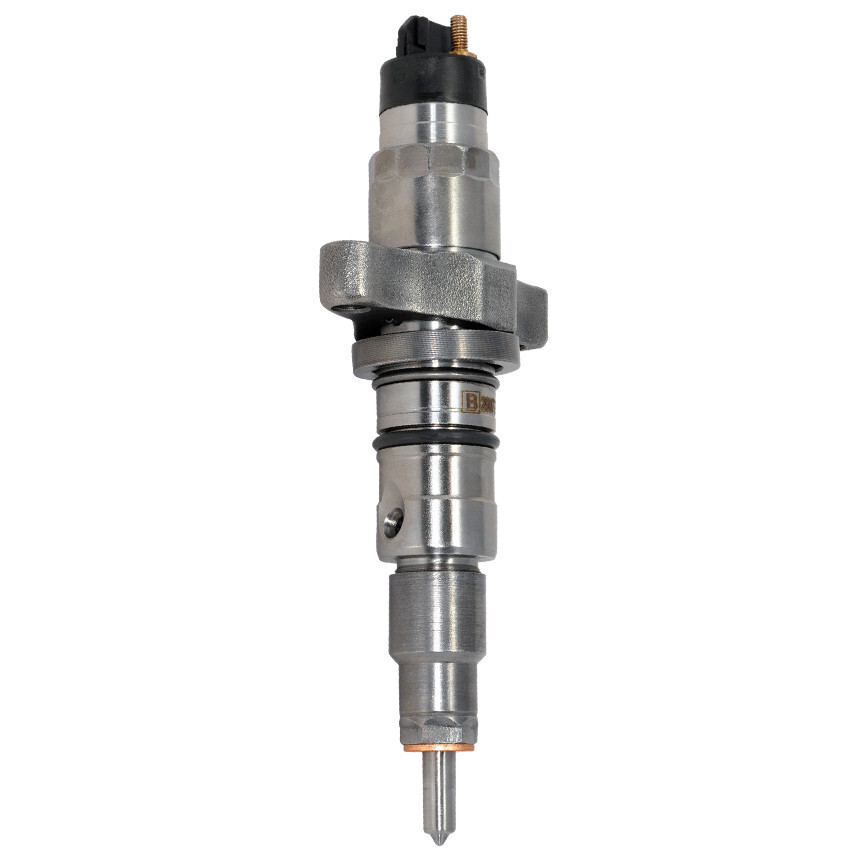
The single most famous problem on any 5.9L Cummins is the killer dowel pin, universally known as the KDP. The KDP is a 5/16 inch diameter alignment dowel pressed into the front of the engine block during assembly to locate the timing gear housing. The dowel does its job at assembly and is then theoretically redundant, but over time engine vibration can work it loose. When it loosens enough, it can either fall harmlessly into the oil pan or, in the worst case, drop into the timing gears where it can shatter gear teeth, destroy the camshaft, damage the injection pump drive, or break the timing gear housing itself. Catastrophic engine damage is the worst case outcome.
The KDP affects every 12 valve and 24 valve 5.9L Cummins from 1989 through 2002. The 2003 and later common rail engines used a different timing gear housing design and are not affected. The problem is somewhat random; some trucks reach 500,000 miles with the original dowel still seated firmly, while others have the dowel work loose at 100,000 miles. There is no reliable way to predict which trucks will have the problem, which is why standard practice is to fix it preventively on any pre-2003 5.9L Cummins.
The fix uses an aftermarket KDP tab kit, a small metal tab that bolts to the timing gear housing and physically holds the dowel in its bore. Kits typically include the tab, mounting hardware, a new timing gear housing gasket, and sometimes a new front crankshaft seal. Prices range from $70 to $200. Accessing the dowel requires removing the cooling fan, fan shroud, harmonic balancer, and front timing gear cover. Total labor is typically half a day for an experienced mechanic. The job is universally recommended on any pre-2003 5.9L Cummins, especially one with unknown service history. Pairing the KDP fix with a front crankshaft seal replacement is standard practice and adds little to the labor.
4. P7100 Overflow Valve Failure: 1994 to 1998
The 2nd generation 12 valve 5.9L Cummins with the Bosch P7100 inline injection pump is arguably the most reliable diesel fuel system ever installed in a light duty pickup. The P-pump itself is so robust that million mile examples are documented. But there is one specific component on the P7100 that does fail, and it has produced more hard start and low power complaints than any other single issue on the 1994 to 1998 trucks: the overflow valve.
The overflow valve is a small pressure regulating valve mounted on the side of the P7100. Its job is to maintain a specific fuel pressure inside the injection pump housing for proper plunger lubrication. When the overflow valve works correctly, the pump maintains a stable internal pressure of around 22 PSI. The factory valve uses a ball and seat design where a spring loaded ball seals against a precision machined seat. Over years of pressure cycling, the ball wears a groove in the seat, allowing fuel to bypass at lower pressures than designed, and the steel spring inside the valve gradually loses its tension. Either failure reduces internal pump pressure and produces recognizable symptoms:
- Hard starting, especially when hot.
- Reduced peak power output, sometimes 20 to 30 horsepower below stock.
- Increased exhaust smoke, particularly under acceleration.
- A gradual loss of throttle response and economy.
- In severe cases, a no start condition when the pump cannot maintain any internal pressure.
The standard replacement is the Tork Teknology adjustable overflow valve, which uses an improved spring, a more durable seat design, and an external adjuster that allows the owner to tune internal pump pressure. Pricing is typically $100 to $150 and installation takes 30 minutes. The OEM Bosch valve is also available and works, but the Tork Teknology version is widely preferred for its adjustability. For any 1994 to 1998 truck showing hard start, reduced power, or unusual smoke patterns, the overflow valve should be the first suspect in the fuel system.
5. VE Pump Seal Deterioration: 1989 to 1993
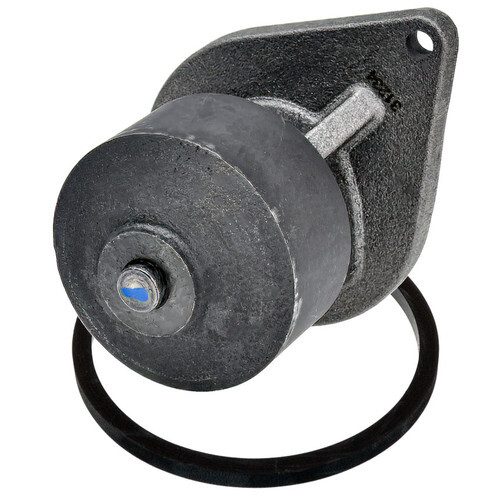
The 1st generation 12 valve 5.9L Cummins used the Bosch VE rotary distributor injection pump. The VE pump is fundamentally simpler than the P7100 that replaced it: it has a single pumping plunger that rotates to distribute fuel to each cylinder in sequence. The VE is smaller, lighter, and adequate for the modest power output of the 1989 to 1993 trucks, but it does not support the kind of horsepower modifications that the P7100 enables. For owners keeping their 1st gen truck near factory output, the VE pump is a reliable unit.
The most common VE pump issue on aging 1989 to 1993 trucks is seal deterioration. The VE has multiple internal seals that gradually harden, shrink, and lose their sealing function. Specific symptoms include:
- External fuel leaks at the shaft seal, often visible as fuel weeping where the pump bolts to the gear housing.
- Timing drift, where the pump’s internal timing piston cannot hold position consistently.
- Irregular idle and difficulty maintaining smooth low speed operation.
- Air intrusion through internal seals, causing hard starting after the truck sits.
- Internal fuel return to the inlet side, reducing pump output and power.
Repair options scale with budget. For trucks staying near factory power, a quality VE pump rebuild (typically $800 to $1,500 at a Bosch certified shop) restores like new operation. For trucks where the owner wants more horsepower potential, swapping the VE pump for a P7100 from a 1994 to 1998 truck is a common modification, though it requires changing the timing gear housing, the front cover, and several supporting components and is best done as part of a more comprehensive build. Done as a contractor job, the P-pump swap can run $3,000 to $5,000 plus the donor pump. For owners simply wanting to keep the original VE running reliably, a quality rebuild plus replacement of the external O-rings and fuel return lines covers most failure modes.
6. VP44 Injection Pump Failure: 1998.5 to 2002
The Bosch VP44 electronic injection pump is the most expensive and most consequential failure point on the entire 24 valve 5.9L Cummins platform. The VP44 is an electronically controlled rotary distributor injection pump mounted on the driver side of the engine, mechanically driven by the camshaft and electronically commanded by the ECM. It allowed Cummins to meet emissions requirements that the mechanical P7100 could not while also supporting electronic tuning. The technical achievement is real, but the failure rate of the VP44 is also real, and a failed VP44 has stranded more 24 valve Cummins owners than any other single component.
The VP44 fails for two main reasons. The mechanical failure mode is internal rotor wear, where the precision parts inside the pump wear past tolerance, typically showing up at 150,000 to 250,000 miles. The electronic failure mode is the onboard pump control electronics (the PSG, mounted directly on top of the VP44) overheating and failing. The PSG cannot be serviced independently of the pump; a failed PSG means a failed pump.
The root cause of both failure modes traces back to inadequate fuel supply pressure from the factory Carter lift pump (covered in the next section). The VP44 relies on fuel pressure to lubricate and cool its internal parts; when the lift pump weakens, the VP44 runs hot and dry and accelerates its own demise. This is why VP44 replacement without addressing the fuel supply is essentially guaranteed to result in another failed VP44 within months. Symptoms of impending VP44 failure include:
- Hard starting that develops gradually over weeks or months.
- Loss of power, especially under load.
- Surging or unstable idle.
- Occasional dead pedal where the throttle stops responding momentarily.
- Diagnostic codes including P0216 (injection timing fault), P0251 (lift pump circuit), or P1689 (no communication with PSG).
- Complete no start when the pump fails fully.
Replacement cost for a quality reman VP44 is typically $1,000 to $1,500 plus core, with another few hours of labor. Only remanufactured units are available since the original Bosch new production ended years ago. The conversion to a P7100 mechanical pump is also possible and eliminates the VP44 problem entirely, but it is expensive ($5,000 to $8,000), removes electronic tuning capability, and requires substantial mechanical knowledge.
7. Factory Lift Pump Failure on 24 Valve Trucks
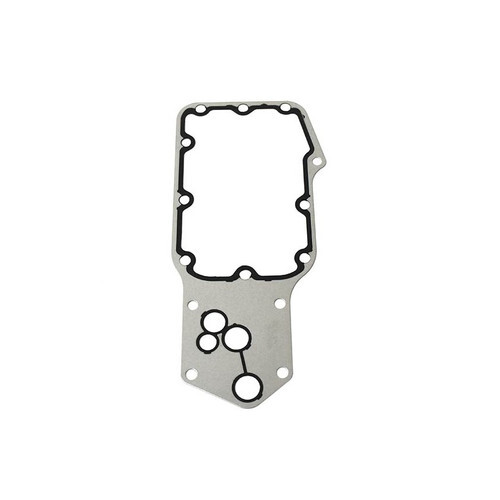
The factory fuel supply system on 1998.5 to 2002 24 valve 5.9L Cummins trucks is the single biggest weakness on the platform, and it is intimately connected to the VP44 failure problem. The factory configuration uses an electric Carter lift pump mounted directly on the engine block, drawing fuel from the tank through the chassis fuel lines and pushing it forward to the VP44 inlet. The arrangement turned out to have several problems: the engine mounted location exposes the lift pump to constant vibration that shortens motor and seal life; the pump pulls fuel through a long suction line that is prone to losing prime and air intrusion; and the factory specification only required around 10 PSI of supply pressure with no margin for degradation.
As the lift pump weakens, supply pressure to the VP44 drops below the threshold needed to keep the injection pump lubricated, and the expensive VP44 begins to die. Symptoms of a failing factory lift pump include:
- Hard starting, especially after the truck has sat.
- Loss of power under load.
- Surging or rough running at idle.
- Diagnostic code P0251 (lift pump circuit fault) on later trucks.
- Pump motor audibly running when key is on but no fuel flow.
- Complete fuel starvation requiring a tow.
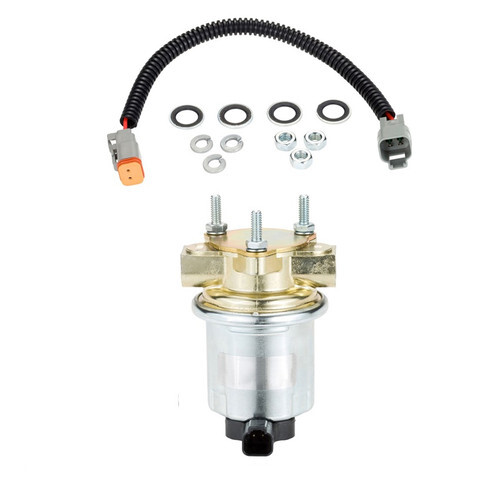
Chrysler offered an in-tank lift pump replacement during the warranty era, but the aftermarket solution is now considered superior. The standard upgrade is a high capacity frame mounted electric lift pump, typically from FASS, AirDog, or Fuelab, that pulls fuel from the tank, separates water and air, and delivers 15 PSI or more of clean fuel to the VP44 across all operating conditions. The Fleece Performance PowerFlo in-tank lift pump is another popular option that puts the pump physically in the fuel tank. Installation runs $400 to $800 in parts plus a few hours of labor. Most 24 valve owners also install an in cab fuel pressure gauge as part of the upgrade. The combination is essentially required equipment for protecting the VP44 over the long term.
8. The 53 Block Cracking Issue: 1999 to 2001
The 53 block is one of the more notorious problems on the 24 valve 5.9L Cummins. Between approximately 1999 and 2001, Cummins outsourced a portion of its engine block casting to a Brazilian foundry called TUPY. Roughly 100,000 of these blocks were cast with thinner water jacket walls than the Cummins specification called for, particularly in the area on the passenger side of the block just below the freeze plugs. Under conditions like heavy towing, high cylinder pressure from tuning, or coolant overheating, the block can crack along the water jacket wall. A cracked 53 block produces:
- Slow coolant loss with no visible external leak elsewhere on the engine.
- Coolant seepage along the passenger side block wall, sometimes visible as a wet area between the freeze plugs.
- A milky deposit on the inside of the radiator cap or in the overflow bottle.
- White smoke from the exhaust under load (if the crack reaches a cylinder).
- Overheating under load as the cooling system loses capacity.
Identifying a 53 block is straightforward. The casting number is visible on the driver side front of the block, just under the injection pump area. Look for the digit 53 cast into the metal. Not every 53 block cracks, and many have served for hundreds of thousands of miles without issue, especially in lightly loaded service. The risk increases dramatically with heavy towing, with aftermarket tuning that increases cylinder pressure, and with cooling system overheating. A 53 block in a stock truck that has been gently driven and well maintained may never crack.
When a 53 block does crack, repair options are limited. Block replacement is the only permanent fix and typically costs $5,000 to $10,000. Many owners take advantage of the block replacement to also do head gasket work and install upgraded head studs. The replacement block can be a new Cummins unit or a quality used block from a 1998.5, 2002, or any year non-53 casting. Later blocks (cast by Mexico’s Teskid foundry) are reported to have thicker water jacket walls and are considered the strongest replacement option. The Lock-N-Stitch process uses threaded steel inserts to stitch the crack and prevent further propagation, extending block life for a while but not considered a permanent fix. For owners shopping a 1999 to 2001 24 valve, checking the block casting number should be the first inspection step.
9. APPS (Accelerator Pedal Position Sensor) Failure: 24 Valve
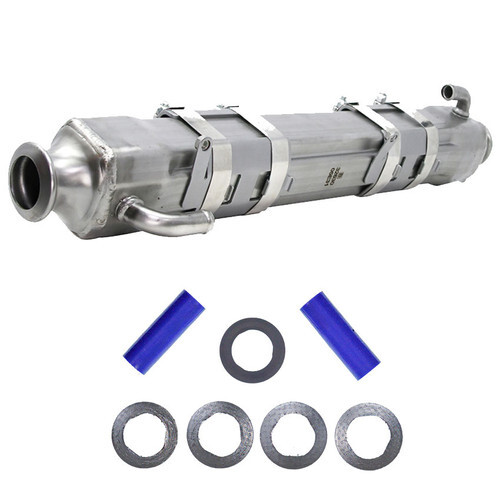
The accelerator pedal position sensor, almost always called the APPS, is another notable failure point on the 1998.5 to 2002 24 valve 5.9L Cummins. The APPS on these trucks is integrated with the bell crank assembly on the engine, not with the accelerator pedal itself. A mechanical throttle cable runs from the foot pedal to the bell crank, and the APPS rotates with the bell crank to tell the ECM where the throttle is positioned. The APPS uses internal resistive elements that wear over time, producing erratic signals. Symptoms include:
- Surging or hunting at idle that comes and goes.
- Dead pedal moments where the throttle does not respond for a fraction of a second.
- Cruise control that engages and then drops out unpredictably.
- Sudden unexpected loss of power, sometimes followed by self recovery.
- Diagnostic codes including P0121 (throttle position sensor circuit), P0122 (TPS low), or P0123 (TPS high).
Diagnosis is reasonably straightforward. A scan tool that can read APPS voltage shows the sensor cycling through its range as the bell crank rotates. A failing APPS shows dropouts, spikes, or dead zones. Replacement is straightforward but the part is expensive. The APPS assembly typically runs $200 to $400 for a quality unit, with installation taking about an hour. The fix is essentially a wear item replacement at 150,000 to 250,000 miles on most trucks. Like the lift pump, this is a known wear item to budget for on any 1998.5 to 2002 24 valve.
10. CP3 Pump and Fuel Control Actuator (FCA) Issues: 2003 to 2007
The 2003 to 2007 common rail 5.9L Cummins uses the Bosch CP3 high pressure injection pump, mounted on the driver side of the engine where the VP44 used to be. The CP3 is dramatically more durable than the VP44 it replaced. Outright CP3 failure is rare under 300,000 miles. When CP3 problems do appear, they almost always trace to the small electronic actuator mounted on the back of the pump.
The fuel control actuator, almost universally called the FCA, is a solenoid valve mounted on the back of the CP3. The FCA regulates how much fuel enters the high pressure pumping chambers based on commands from the ECM. When the ECM wants high rail pressure, it opens the FCA more to admit more fuel. When the ECM wants lower rail pressure, it closes the FCA partially. The FCA is the primary control mechanism for rail pressure regulation. FCA failure produces:
- Rough idle, especially with a hunting or surging quality.
- Loss of power under load.
- Deviation between commanded rail pressure and actual rail pressure on a scan tool.
- Hard starting, sometimes producing a no start condition.
- Diagnostic codes including P0090 (FCA circuit), P0091 (FCA low), or P0192 (rail pressure sensor low).
The FCA is one of the more affordable repairs on the 5.9L common rail. The Bostech DEC031245 Fuel Control Actuator covers the 2003 to 2007 5.9L Cummins application. Pricing is typically under $150 for a quality unit and installation takes 15 to 30 minutes. The FCA mounts to the back of the CP3 with three small bolts. Care must be taken on installation to keep the actuator straight in its bore so the O-rings seat properly without damage.
For trucks where the CP3 itself has failed (typically after 300,000 plus miles or after running on bad fuel), a quality reman CP3 pump is the correct repair. The Bosch reman CP3 (part number 0986437304) with new FCA installed is the standard option, with pricing typically in the $700 to $1,200 range plus core. The CP3 must be timed properly during installation to avoid injector cackle. Most experienced diesel shops handle CP3 replacement routinely.
11. Common Rail Injector Wear: 2003 to 2007
The Bosch common rail injectors used on the 2003 to 2007 5.9L Cummins are dramatically more sophisticated than the simple mechanical pop-off injectors used on the 12 valve and 24 valve trucks. They use a precision solenoid valve to control multiple injection events per combustion cycle, operate at rail pressures up to 24,000 PSI, and deliver substantially improved emissions and power. The trade off is that they are wear items with a finite service life, and replacement is much more expensive than rebuilding a mechanical injector.
Bosch common rail injectors on the 5.9L typically last 200,000 to 300,000 miles when fuel quality is good. Failure modes are wear based: the nozzle holes wear larger and lose their spray pattern, the control valve seat erodes and allows excessive return flow, and the internal seals harden. The result is gradually worsening performance. Symptoms include:
- Rough idle with a shake or shudder, particularly noticeable when standing next to the open driver door.
- Increased smoke output, often a haze rather than visible smoke but more than the truck used to produce.
- A noticeable ticking or knocking sound from the injectors, sometimes called injector cackle.
- Reduced fuel economy of 2 to 4 MPG over a long period.
- Loss of throttle response and slower power delivery.
- In severe cases, white smoke during cranking or starting trouble due to excessive return flow.
Diagnosis uses the injector return flow test. For 2006 to 2007 trucks, maximum allowable leakage for all six injectors combined is 160 ml in 30 seconds during the High Pressure Fuel System Override test, with coolant temperature above 180 degrees Fahrenheit. For 2003 to 2005 trucks, maximum allowable leakage is 180 ml in one minute at idle, with any individual injector contributing more than 40 ml considered excessive. A no start return test allows maximum 40 ml per 10 seconds at 200 RPM cranking speed for all years.
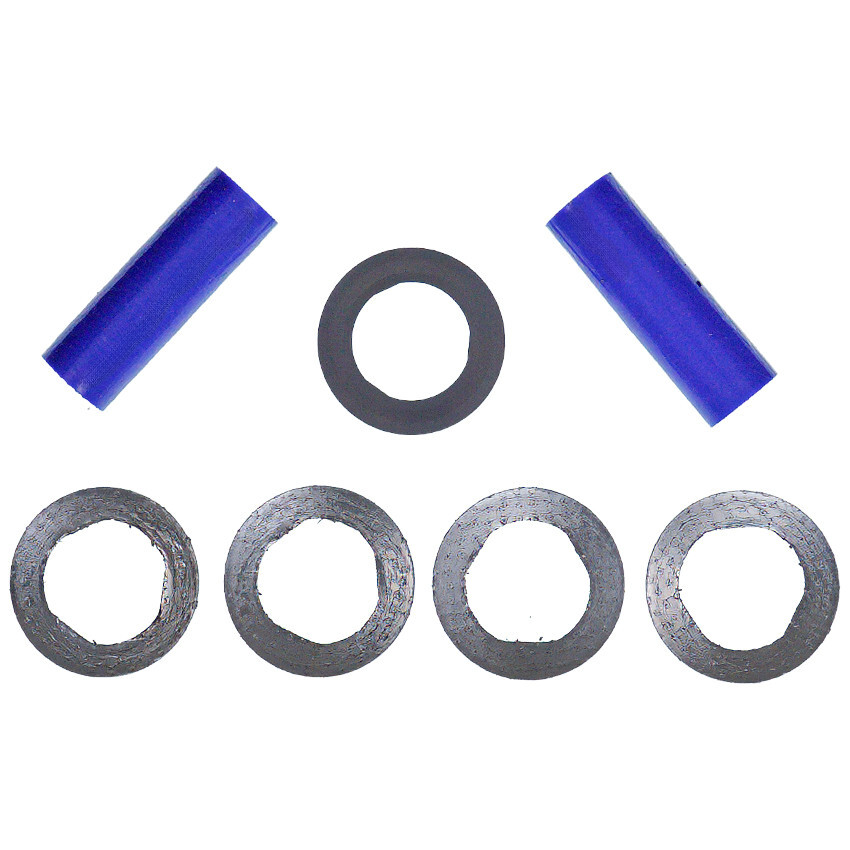
Bosch reman injectors typically run $300 to $400 each plus core, with a complete six injector set landing in the $1,800 to $2,400 range. New Bosch injectors are $400 to $500 each. Bostech offers Silver Series reman fuel injectors for the 2004.5 to 2007 5.9L Cummins as a quality reman option with full bench testing. Companion parts should include new injector connector tubes (the Bostech DEC031874 covers 2003 to 2009 applications) and new high pressure injector lines on high mileage trucks. The valve cover gasket with integrated harness pigtails should also be replaced during any injector job.
12. Fuel Pressure Relief Valve Failure: Common Rail
The fuel pressure relief valve (sometimes called the rail pressure relief valve or limit valve) is a small mechanical valve mounted on the end of the fuel rail. Its job is to vent excess fuel pressure back to the tank if rail pressure exceeds a safe threshold. Under normal operation the valve stays closed and rail pressure is regulated entirely by the FCA on the CP3. The relief valve is a backup safety device.
On aging 5.9L common rail trucks, the relief valve can fail in a partially open condition, usually from debris contamination of the seating surface. When the valve cannot fully close, fuel that the CP3 has pressurized simply bleeds back to the tank, never getting to the injectors. Rail pressure cannot build, and the engine either runs poorly or will not start. Symptoms include:
- Hard starting or extended cranking with a no start.
- Low rail pressure that does not climb to commanded levels.
- Loss of power under load.
- A truck that starts but quickly dies as rail pressure bleeds off.
- No code set, since the valve failure may not trigger any specific diagnostic.
Diagnosis involves capping the return line from the relief valve and observing whether rail pressure now builds normally. If capping the return line allows the truck to start and run, the relief valve is leaking. The valve is a simple mechanical part, typically $50 to $100 for a quality replacement, with installation taking 15 minutes. Many performance-oriented owners replace the factory valve with an upgraded shim or a billet plug at the same time as an injector or CP3 service.
13. Exhaust Manifold Cracks: All Generations
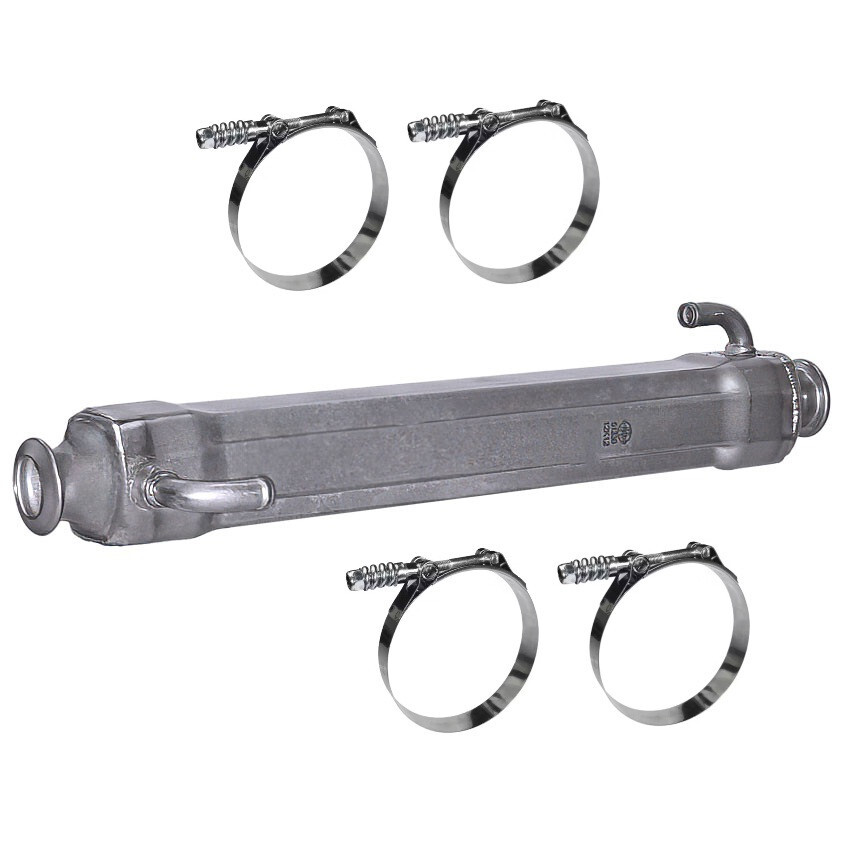
The cast iron exhaust manifold on the 5.9L Cummins is a known weak point across all generations from 1989 through 2007. The manifold spans all six cylinders on the passenger side of the engine and sees enormous thermal cycling between cool and 1,200+ degree Fahrenheit exhaust temperatures. Over years of heat cycling, the manifold develops fatigue cracks, most commonly at the junctions between cylinders or at the mounting flange. Symptoms include:
- A ticking or chuffing sound from the engine, especially on cold start, that may fade as the engine warms.
- Soot trails along the manifold to head sealing surface, visible during routine inspection.
- Slow turbo spool because exhaust energy escapes through the crack instead of driving the turbo.
- Reduced low end power and slower throttle response.
- Higher than normal exhaust gas temperatures.
Replacement is the only correct repair for a cracked manifold; welding cast iron manifolds rarely holds up to the thermal cycling. The factory cast iron manifold is still available, but many owners upgrade to a stainless steel or HD ductile iron aftermarket manifold during replacement. Aftermarket options typically run $200 to $500 and offer better durability. Installation requires removing the turbo, the up-pipe (on later trucks), and the existing manifold; total labor is typically 4 to 8 hours.
14. Valve Cover and Front Main Seal Leaks
Aging 5.9L Cummins engines develop two common oil leak patterns that warrant attention. The valve cover gasket and the front main crankshaft seal are both rubber components that age out after 15 to 20 plus years of service.
Valve cover gasket leaks are easy to spot. Oil weeps from the joint between the valve cover and the cylinder head, runs down the side of the engine, and pools on the manifold or drips onto the chassis. The factory gasket eventually hardens, shrinks, and loses its sealing function. Replacement is straightforward on the 12 valve and 24 valve trucks: a new gasket, fresh sealant, and reasonable torque on the cover bolts. The job takes an hour or two. On 2003 to 2007 common rail trucks, the valve cover gasket also includes the integrated injector wiring harness, which makes the replacement more involved but still well within DIY capability. The Bostech GK03928K valve cover gasket and harness kit covers 2007 to 2018 5.9L/6.7L Cummins applications with the integrated harness; separate gasket parts cover earlier 5.9L applications.
Front main seal leaks are more common as trucks age past 200,000 miles. Symptoms include oil dripping from behind the harmonic balancer or accumulating on the lower front of the engine. The seal can usually be replaced without major engine disassembly, but accessing it requires removing the cooling fan, fan shroud, harmonic balancer, and front crankshaft cover. This makes the front main seal replacement an ideal job to combine with the KDP fix on pre-2003 trucks; the access work is identical. Parts cost for the seal is minimal ($20 to $40); labor is the dominant cost. A few other small oil leaks affect aging 5.9L Cummins engines: the rear main seal, the oil filter head O-ring, and the oil pan gasket on very high mileage trucks.
15. Heater Grid and Cold Start Issues
Unlike most other diesel pickups that use glow plugs for cold start preheat, the 5.9L Cummins uses a grid heater in the intake manifold. The heater is a high current resistive element that warms incoming air before it enters the combustion chamber. The system is generally reliable but does develop a few known issues at high mileage:
- Burned out heater element, which produces hard cold starting at low temperatures.
- Failed heater grid relay, which prevents the grid from getting power at all.
- Corroded heater grid bus bar or wiring connections, which can produce intermittent operation.
- On rare occasions, the grid element can short to ground and blow fuses or even cause secondary electrical damage.
Diagnosis is straightforward with a voltmeter at the grid terminal during the preheat cycle. The wait to start light should illuminate, the relay should click, and 12 volts should appear at the grid for 10 to 30 seconds depending on intake air temperature. Heater grid relays are typically $30 to $80, with installation taking 15 to 30 minutes. The grid element itself is more involved to replace because it sits inside the intake horn. For owners who rarely see truly cold weather, a non-functional heater grid is not necessarily a deal breaker; the engine will still start at moderate temperatures with cranking alone.
16. 47RE and 48RE Transmission Weakness
The 5.9L Cummins engine itself is famously durable, but the automatic transmissions paired with it on second and third generation Ram trucks are the platform’s weak link. The 47RE (used on 1996 to 2002 trucks) and the 48RE (used on 2003 to 2007 trucks) are both based on the Chrysler 727 three speed torque converter automatic with an overdrive unit added. They are stout for a half ton truck transmission, but they are marginal behind a Cummins making 600 plus pound feet of torque and progressively more inadequate as power output climbs. Common transmission complaints include:
- Slipping or harsh shifts when towing heavy loads.
- Torque converter shudder under acceleration, especially after the converter has heated up.
- Premature overdrive band failure, particularly on tuned trucks.
- Solenoid pack failures producing erratic shifting.
- Valve body wear producing slow or harsh shifts.
- Burnt fluid that smells overheated even after a recent fluid change.
For stock trucks driven gently, the 47RE and 48RE can last 200,000+ miles with routine fluid and filter service. For tuned trucks, trucks used for heavy towing, or trucks left in original condition at high mileage, transmission failure is essentially inevitable. The standard response is a quality rebuild with upgraded components ($3,000 to $6,000) or conversion to a manual transmission (the Getrag G56 or NV5600). For any 5.9L Cummins truck purchase, the transmission deserves equal scrutiny to the engine.
17. Generation Reliability Summary and Which Year to Buy
Putting all of the above together, the question of which generation 5.9L Cummins to buy depends on what the owner wants. Each era has clear strengths and clear weaknesses.
The 1989 to 1993 1st generation 12 valve is the simplest and most collectible. The VE pump limits horsepower potential, and the truck overall is more of a weekend driver or restoration project than a daily work truck. KDP needs to be addressed.
The 1994 to 1998 2nd generation 12 valve with the P7100 is the high water mark of mechanical diesel engineering. The P-pump supports essentially unlimited horsepower potential, the engine is durable beyond reason, and the mechanical fuel system has no electronics to fail. The trade off is no electronic tuning capability, limited modern features, and the need to address KDP and overflow valve. For owners who want the most durable diesel truck possible without modern emissions complexity, this is the gold standard era.
The 1998.5 to 2002 24 valve VP44 is the most problematic era. The VP44 itself, the factory lift pump, the 53 block issue, and the APPS sensor all combine to make this the riskiest generation to buy. Trucks from this era can still be excellent ownership experiences once the lift pump is upgraded, the VP44 is reman or freshly replaced, the 53 block has been verified, and the APPS has been replaced, but the upfront sorting out is substantial. Pricing reflects this.
The 2003 to 2007 common rail era is generally regarded as the best balance of modern features and proven reliability. The CP3 pump is dramatically more durable than the VP44, the common rail injection system supports far higher horsepower with electronic tuning, the 53 block issue is gone, and the trucks have modern features. The trade off is the higher cost of injector replacement when injectors eventually wear out. The 2003 model year is sometimes considered a gray zone with early common rail teething issues; many buyers prefer 2004 and later. The 2004.5 to 2007 trucks with the 325 horsepower rating are arguably the sweet spot of the entire 5.9L Cummins production run.
18. Maintenance Recommendations to Protect Your 5.9L
The 5.9L Cummins is famously low maintenance compared to modern emissions controlled diesels, but it still rewards consistent attention. Recommended intervals include:
- Engine oil and filter every 5,000 to 7,500 miles using a quality 15W-40 CK-4 or CJ-4 diesel rated oil.
- Fuel filter every 15,000 miles or sooner if water in fuel is suspected. On common rail trucks, water and dirt destroy injectors directly.
- Air filter inspection at every oil change, replacement every 30,000 miles.
- Coolant flush every 50,000 miles with proper diesel grade coolant.
- Transmission fluid and filter every 30,000 miles with quality ATF+4. Sooner under heavy towing.
- Differential and transfer case fluid every 30,000 to 60,000 miles depending on use.
- On pre-2003 trucks, KDP fix as a priority preventive maintenance item if not already done.
- On 1994 to 1998 trucks, overflow valve inspection or upgrade to Tork Teknology unit as a preventive measure.
- On 24 valve trucks, aftermarket lift pump installation and fuel pressure gauge as soon as possible if not already done.
- On common rail trucks, regular use of quality diesel fuel and a quality fuel additive in cold weather.
- Periodic inspection for exhaust manifold cracks at every brake service or major maintenance interval.
Beyond scheduled maintenance, the most important habit is paying attention to small changes. A 5.9L Cummins owner who notices a slight change in idle quality, a new noise, a small drip on the driveway, or a change in fuel economy can usually catch problems early before they become expensive.
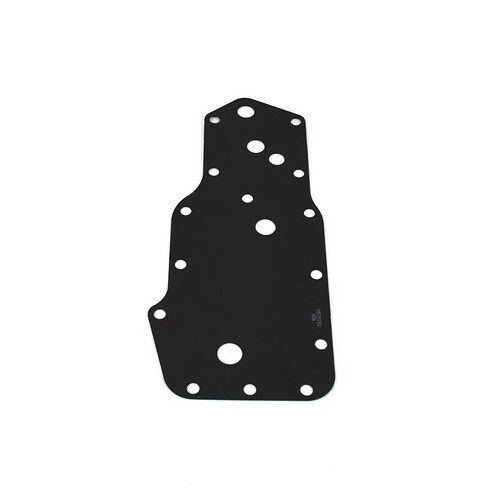
19. Bostech Solutions for the 5.9L Cummins
Bostech offers a range of remanufactured and new replacement components for the 5.9L Cummins, particularly for the 2003 to 2007 common rail platform where fuel system service is most often required. The relevant Bostech parts for 5.9L Cummins service include:
- Bostech DEC031245 Fuel Control Actuator (FCA) for Dodge 5.9L Cummins 2003 to 2007. The fuel pressure regulator metering unit (also called FCA or MPROP) that mounts to the back of the CP3 and regulates rail pressure. Backed by 24 month unlimited mileage warranty.
- Bostech Silver Series Reman Fuel Injector for 2004.5 to 2007 Dodge 5.9L Cummins. Fully disassembled, inspected, polished, certified to original specifications, with new seals and O-rings, individually bench tested. Sold individually; six required for a complete set.
- Bostech DEC031874 Reman Injector Inlet Connector Tube (Feed Tube) for Dodge 5.9L Cummins 2003 to 2009. The high pressure connector tube that delivers fuel from the rail to the injector. Recommended replacement during any injector service to prevent contamination of new injectors.
- Bostech GK03928K Valve Cover Gasket Kit with Integrated Harness for 2007 to 2018 5.9L and 6.7L Cummins. The complete gasket with integrated injector wiring harness. Includes WH03027 harness pigtail. For earlier 5.9L common rail applications, separate gasket and harness parts are available.
- Bostech valve cover gasket pigtail (BT-Power WH03027) for 5.9L and 6.7L Cummins. The harness connection that can be replaced separately when only the pigtail has failed, rather than replacing the full gasket harness.
For a complete common rail injector replacement job on a 2004.5 to 2007 5.9L Cummins, the coordinated kit approach typically includes six Bostech Silver Series reman injectors, six DEC031874 connector tubes, a valve cover gasket and harness assembly, and a fresh set of high pressure injection lines. This ensures all the components that touch the injection event are fresh and clean, preventing the contamination that ends new injector service life prematurely. On trucks where the CP3 is also showing wear, adding a quality reman CP3 with new FCA to the package addresses the entire high pressure fuel system at once.
For trucks with simpler service needs, individual component replacement works well. A single failed FCA is a 15 minute job with the Bostech DEC031245. A leaking valve cover gasket on a high mileage truck is a one to two hour job with a quality replacement gasket. A worn connector tube on a single cylinder can be addressed with a single Bostech DEC031874 plus appropriate care during installation.
For pricing, fitment confirmation by VIN, or to place an order, contact Bostech at 1-800-868-0057, by email at customerservice@bostechauto.com, or visit bostechauto.com to browse the full 5.9L Cummins catalog. Bostech customer service can help confirm fitment across the various 5.9L Cummins production years and configurations.
20. Frequently Asked Questions
The mechanical engine itself routinely runs 500,000 to 1,000,000 miles with proper maintenance. The fuel system components, transmission, and supporting electronics typically wear out before the engine block, head, crank, or rods. Many 5.9L Cummins owners are on their second or third transmission, second VP44 or third injector set, and original engine. With consistent oil changes, regular cooling system service, and attention to the platform’s known weaknesses, the engine can outlast multiple sets of tires and several transmission rebuilds.
The 1994 to 1998 12 valve with the Bosch P7100 mechanical injection pump is generally considered the most reliable from a fuel system standpoint, with the 2003 to 2007 common rail era close behind for its combination of modern features and the durable CP3 pump. The 1998.5 to 2002 24 valve era is the most problematic because of the VP44, the factory lift pump, and the 53 block issue. The 1st generation 12 valve VE pump trucks are reliable but limited in modern usability.
The killer dowel pin (KDP) is a 5/16 inch alignment dowel pressed into the front of the engine block on 1989 through 2002 5.9L Cummins engines. Over time it can vibrate loose and drop into the timing gears, causing catastrophic engine damage. Yes, you should fix it on any pre-2003 truck. The fix uses a KDP tab kit that locks the dowel in place permanently. Total cost is typically $70 to $200 in parts plus half a day of labor. 2003 and later common rail engines use a different timing gear housing and are not affected.
Look on the driver side front of the block, just below the injection pump and near the power steering pump. The block casting number is cast into the metal in that area. If you see the digit 53, you have one of the Brazilian TUPY blocks that are prone to cracking on the passenger side under the freeze plugs. Not every 53 block cracks (many last hundreds of thousands of miles without issue), but the risk is real, especially under heavy towing or with aftermarket tuning. The 53 block issue affects approximately 1999 to 2001 model year 24 valve trucks primarily.
The VP44 fails primarily because of inadequate fuel supply pressure from the factory Carter lift pump. When supply pressure drops below the threshold needed to lubricate and cool the VP44 internals, the pump runs hot and wears out internally, often within tens of thousands of miles of when the lift pump weakens. Prevention is to install a high-capacity aftermarket lift pump (FASS, AirDog, Fuelab, or Fleece PowerFlo) that delivers 15 PSI of clean fuel reliably, plus an in-cab fuel pressure gauge for early warning of any future issue. With proper fuel supply, the VP44 can last 250,000+ miles. Without it, failure can occur at 100,000 miles or less.
Bosch common rail injectors on the 2003 to 2007 5.9L Cummins typically last 200,000 to 300,000 miles when fuel quality is good and the truck sees regular use. The wear pattern is gradual rather than catastrophic; nozzle hole erosion, control valve seat wear, and seal hardening combine to produce slowly declining performance. Replacing a set of six injectors with quality reman units typically runs $1,800 to $3,000 in parts plus labor, making this one of the more expensive maintenance items on the common rail trucks.
For most buyers, the 2004.5 to 2007 5.9L common rail trucks offer the best combination of modern features, proven reliability, and parts availability. These trucks have the 325 horsepower rating, the proven CP3 pump, the 48RE automatic (or G56 manual), and no emissions equipment beyond a basic catalyst. Avoid 53 blocks if shopping a 1999 to 2001 truck. For maximum durability without modern electronics, the 1994 to 1998 12 valve P7100 trucks are excellent if the body and chassis are sound.
The 5.9L Cummins is fortunate to have essentially no emissions equipment to delete. There is no DPF, no DEF system, and no EGR cooler to fail. Even the 2003 to 2007 trucks have only a basic catalyst and no urea injection. This is one of the main reasons 5.9L trucks remain in such demand; the platform avoids the emissions complexity that affects later 6.7L Cummins. The few electronic emissions controls present on 24 valve and common rail trucks are not commonly removed because the benefit is minimal and the regulatory exposure is real.
Bostech offers a catalog of 5.9L Cummins parts including reman Silver Series fuel injectors for 2004.5 to 2007 applications, the DEC031245 fuel control actuator for 2003 to 2007, DEC031874 injector connector tubes for 2003 to 2009, and valve cover gasket and harness kits including GK03928K for 2007 to 2018 5.9L/6.7L applications. All reman parts include the 24 month unlimited mileage warranty. Contact Bostech at 1-800-868-0057, by email at customerservice@bostechauto.com, or visit bostechauto.com to confirm fitment by VIN and place an order.
Maintenance costs on a 5.9L Cummins are generally modest compared to modern diesels. Routine maintenance (oil, filters, coolant, fluids) runs $400 to $800 per year for a driven truck. Major service items appear less frequently: a transmission rebuild at $3,000 to $6,000 once or twice in the truck’s lifetime, an injector set at $2,000 to $3,000 on the common rail trucks every 200,000+ miles, a VP44 replacement at $1,200 to $1,800 on 24 valve trucks every 200,000+ miles, and a KDP fix once on pre-2003 trucks. The absence of DPF, DEF, EGR, and other emissions equipment makes long-term ownership substantially less expensive than equivalent modern emissions-controlled diesels.
21. Disclaimer
The information in this guide is provided for educational and reference purposes only. Diesel engine repair involves working with high pressure fuel systems, hot exhaust components, and heavy parts that can cause serious injury or property damage if handled incorrectly. Common rail diesel fuel under high pressure (up to 24,000 PSI on the 2003 to 2007 5.9L Cummins) can penetrate skin and cause life threatening injury; always relieve high pressure fuel system pressure before opening any high pressure component, and never work on the high pressure side with the engine running. The VP44 and CP3 pumps contain precision components that can be damaged by contamination during service; cleanliness during fuel system work is essential. Always follow factory service procedures, consult a qualified diesel technician for repairs beyond your skill level, and observe all applicable safety precautions. Specifications, part numbers, and procedures in this article reflect general best practice for the 1989 to 2007 5.9L Cummins at the time of writing and may vary by build date, region, or aftermarket configuration. Always verify part fitment by VIN before purchasing, especially across the four distinct generations of fuel system architecture where many parts are not interchangeable. Bostech and its affiliates are not responsible for repairs performed using this information.