
Turbo Actuator Failure: Symptoms, Testing & Replacement Guide
Feb 28th 2026
Table of Contents
- What Is a Turbo Actuator and Why Does It Matter
- Actuator Types by Platform
- Symptoms of Turbo Actuator Failure
- Actuator vs. Turbo Failure: How to Tell the Difference
- Testing Procedures
- Common Causes of Actuator Failure
- Replacement Process by Platform
- OEM vs. Aftermarket Actuators: What to Consider
- Bostech Turbo Actuator and VGT Solenoid Solutions
- Frequently Asked Questions
What Is a Turbo Actuator and Why Does It Matter
Every modern diesel turbocharger relies on precise airflow control to deliver the right amount of boost at the right time. In variable geometry turbocharger (VGT) systems, that control falls to a single critical component: the turbo actuator. Whether it takes the form of an electric motor, an oil pressure controlled solenoid, or an electronically driven gear assembly, the actuator is the device that physically moves the turbo's internal vanes or sliding nozzle ring to change the effective size of the turbine housing.
When the engine control module (ECM) commands a specific boost level, the actuator translates that electronic signal into mechanical movement. At low engine speeds, the actuator closes the vanes to concentrate exhaust flow across the turbine wheel, creating rapid spool and strong low end torque. At higher rpm, it opens the vanes to allow greater exhaust volume through the turbine, preventing overboost while supporting top end airflow. This constant adjustment happens hundreds of times during a single drive cycle, making the actuator one of the hardest working components in the entire turbocharger system.
The critical distinction that many diesel owners miss is that the actuator and the turbocharger are separate components with separate failure modes. A turbo actuator failure does not necessarily mean the turbocharger itself is damaged. Replacing just the actuator typically costs between $200 and $1,100 depending on the platform and actuator type, while a complete turbocharger replacement can run $2,500 to $4,000 or more with labor. Proper diagnosis can save thousands of dollars and days of unnecessary downtime, which is exactly why understanding how these actuators work across different diesel platforms is so important.
Actuator Types by Platform
Not all turbo actuators are created equal. The three major diesel platforms used in pickup trucks each employ a fundamentally different approach to VGT control, which means the failure patterns, testing procedures, and replacement processes vary significantly from one platform to the next.
GM Duramax: Oil Controlled VGT Solenoid (2004.5 to 2016)
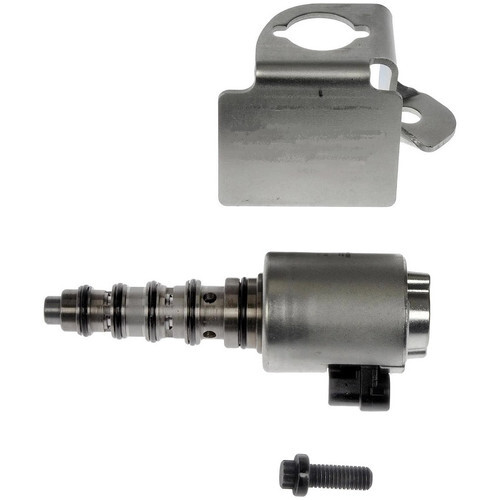
The Garrett turbochargers used on the 6.6L Duramax from the LLY through LML generations use an oil pressure controlled solenoid to actuate the VGT vanes. The ECM sends a pulse width modulated (PWM) signal to the solenoid, which meters the flow of engine oil into and out of a piston cavity inside the turbo's bearing housing. That oil pressure moves an actuator piston, which in turn rotates the unison ring and adjusts the vane angle inside the turbine housing.
This hydraulic approach is relatively simple and mechanically reliable. The solenoid itself is a small, externally mounted component secured to the bearing housing by a single bracket and retaining bolt. When the solenoid fails, it typically defaults to the open vane position, resulting in slow boost buildup and poor low speed performance. The coil resistance specification for a properly functioning Duramax VGT solenoid is between 3.42 and 4.18 ohms at 73 degrees Fahrenheit, providing a straightforward bench test for technicians. This same basic solenoid design is also shared with the Ford 6.0L Power Stroke, since both platforms use Garrett VGT turbochargers.
The newer L5P Duramax (2017 and later) transitioned to an electronically controlled actuator with a position feedback sensor, making it more similar to the Cummins approach. These L5P actuators require calibration after replacement and have shown their own failure patterns, particularly generating P003A and P0046 trouble codes.
Ford Power Stroke: Oil Controlled Solenoid (6.0L and 6.7L)
The 6.0L Power Stroke (2003 to 2007) shares the Garrett VGT platform with the Duramax and uses the same oil pressure controlled solenoid design. The solenoid protrudes from the center bearing housing of the turbocharger and controls vane position by regulating oil flow to the actuator piston. Like the IPR valve on the same engine, the VGT solenoid is driven by a 12 volt pulse width modulated signal from the PCM.
On the 6.7L Power Stroke (2011 and later), Ford continued using a Garrett based VGT with an oil controlled solenoid actuator, though the turbocharger design itself evolved significantly across generations. The solenoid on the 6.7L serves the same function, metering oil pressure to control vane position, and can be tested and replaced using the same general methodology as the 6.0L solenoid. One important consideration on both Power Stroke platforms is that a failed VGT solenoid can produce symptoms nearly identical to mechanically stuck vanes, which is why proper diagnostic separation is essential before ordering parts.
Ram Cummins: Electronic Motor Actuator (2007.5 to Present)
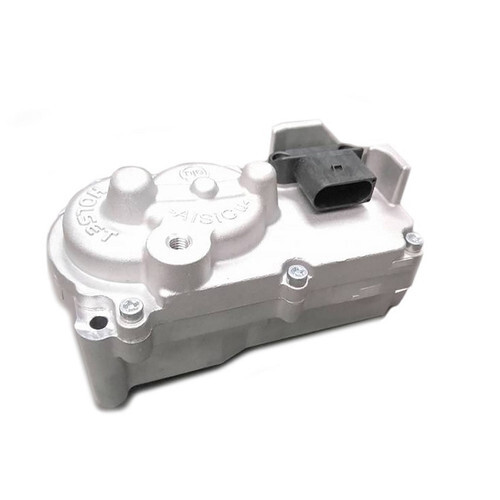
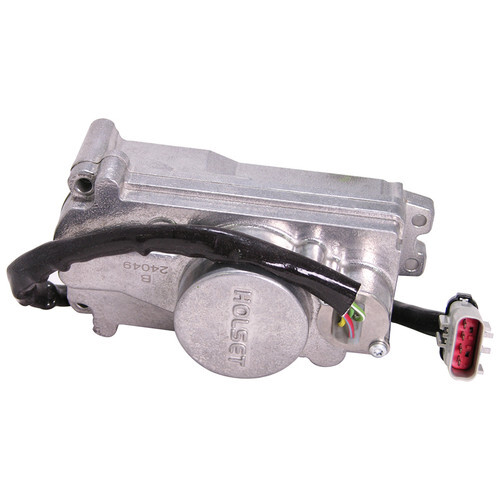
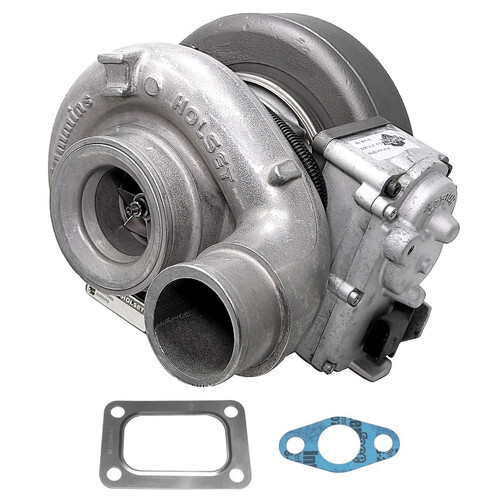
The 6.7L Cummins takes a fundamentally different approach. The Holset HE351VE (2007.5 to 2012) and HE300VG (2013 and later) turbochargers use a large, externally mounted electronic motor actuator that directly drives the turbo's sliding nozzle mechanism through a gear assembly. Unlike the oil controlled solenoids on Duramax and Power Stroke platforms, the Cummins actuator is a self contained smart device that communicates with the ECM over a CAN bus data link.
The Cummins actuator circuit includes a 12 volt power supply wire, a ground wire, and two CAN bus communication wires. The actuator contains its own internal position sensor and can perform self diagnostics, reporting its status back to the ECM. This design makes the actuator more capable but also more complex and more expensive to replace. The Cummins actuator is also the most failure prone of the three platforms, which is why Cummins actually specifies a cleaning interval for the turbo actuator in the owner's manual. The accumulation of soot and carbon from the EGR system is a primary contributor to actuator failures on Ram trucks, especially when the recommended cleaning schedule is not followed.
A critical difference with the Cummins actuator is that it requires calibration any time it is removed from or installed on the turbocharger. This calibration teaches the actuator the physical limits of travel so it can accurately position the nozzle ring when commanded by the ECM. Calibration can be performed with dealer tools like Cummins INSITE, aftermarket scan tools such as Snap On, Matco, and Autel units, or dedicated calibration tools that are available for rental or purchase.
Symptoms of Turbo Actuator Failure
Turbo actuator failure produces a range of symptoms that can vary from barely noticeable performance changes to complete loss of turbocharger function. Recognizing these symptoms early can prevent secondary damage to the turbocharger and engine while also helping you avoid unnecessary component replacements.
Performance Symptoms
- Excessive turbo lag: The most common early symptom is a noticeable increase in turbo lag, particularly during low speed acceleration. If the actuator cannot close the vanes properly, the turbo behaves like an oversized fixed geometry unit, taking significantly longer to build boost off idle.
- Loss of power under load: When the actuator fails to adjust vane position correctly, the turbo cannot optimize boost pressure for the engine's current operating conditions. This often manifests as sluggish acceleration when towing or climbing grades.
- Reduced or absent exhaust brake function: On the 6.7L Cummins in particular, the VGT actuator controls the exhaust brake by closing the vanes to create exhaust backpressure. A failed actuator will cause the exhaust brake to stop working entirely or to engage inconsistently, which is often one of the first symptoms owners notice.
- Excessive black smoke: When the vanes are stuck in a partially closed position, the turbo can overboosting at high rpm while underboosting at low rpm. The resulting poor air to fuel ratio at certain operating points produces visible black smoke from the exhaust.
- High exhaust gas temperatures: An actuator that holds the vanes in the wrong position disrupts the ideal air to fuel ratio, causing combustion temperatures to rise. Sustained high EGT readings can lead to turbocharger damage and even engine harm if left uncorrected.
Electronic Symptoms
- Check engine light and diagnostic trouble codes: Actuator failures almost always trigger one or more DTCs. Common codes include P0299 (turbocharger underboost), P0046 (boost control circuit performance), P003A (boost control position exceeded learning limit), P00AF (boost control module performance), P2262 (turbo boost pressure not detected or mechanical failure), and U010C (lost communication with turbocharger control module).
- Limp mode activation: When the ECM detects that the turbocharger is not responding to commands, it may enter a reduced power mode to protect the engine. This is especially common with P003A and U010C codes on the Cummins platform, where the ECM will cease VGT actuation entirely.
- Erratic VGT percentage readings: When monitored with a scan tool, a failing actuator may show VGT duty cycle or position readings that fluctuate rapidly, fail to match commanded values, or jump between extremes rather than moving smoothly to the target position.
Actuator vs. Turbo Failure: How to Tell the Difference
This is the most important diagnostic distinction in VGT troubleshooting, and getting it wrong can cost thousands of dollars in unnecessary repairs. Many diesel owners and even some shops replace the entire turbocharger when only the actuator has failed, or conversely, they replace the actuator only to discover that the turbo's internal components were the real problem all along.
The single most effective diagnostic step is to physically separate the two components. Remove the actuator from the turbocharger and manually check the vane movement by hand. On the Duramax and Power Stroke, this means removing the VGT solenoid and then checking whether the actuator piston or plunger moves freely in its bore. On the Cummins, you unbolt the electronic actuator and check whether the turbo's internal gear and nozzle ring rotate smoothly from stop to stop.
Signs That Point to Actuator Failure
- The turbo vanes move freely by hand when the actuator is removed, with no binding, sticking, or excessive resistance throughout the full range of travel.
- The solenoid fails a resistance test (readings outside the 3.42 to 4.18 ohm specification on Duramax and Power Stroke platforms).
- The electronic actuator (Cummins) does not respond when powered, clicks erratically, or fails to complete its self calibration cycle.
- Communication codes such as U010C are present, indicating the ECM cannot exchange data with the actuator.
- Wiring harness inspection reveals damaged, corroded, or shorted conductors at the actuator connector.
Signs That Point to Turbo Failure
- The vanes or unison ring are mechanically stuck and cannot be moved by hand, even with the actuator removed. Carbon and soot buildup on the vane surfaces is the most common cause.
- Excessive shaft play in the turbocharger center section, indicating worn bearings that may have allowed the turbine or compressor wheel to contact the housing.
- Visible damage to the turbine wheel, compressor wheel, or VGT vane mechanism when inspected through the turbine housing.
- Oil leaking from the turbocharger seals into the intake or exhaust tract.
Cost Implications
The financial difference between these two diagnoses is substantial. A replacement VGT solenoid for the Duramax or Power Stroke typically costs between $50 and $200 for the part, with minimal labor required for installation. A Cummins electronic actuator runs between $400 and $1,100 depending on whether you choose new, remanufactured, or aftermarket options, plus the cost of calibration tools or a shop visit. Compare those figures to a complete turbocharger replacement at $2,500 to $4,000 or more including labor, and the value of accurate diagnosis becomes clear.
Testing Procedures
Systematic testing is the key to avoiding misdiagnosis. The following procedures are organized by platform to account for the different actuator designs used across Duramax, Power Stroke, and Cummins applications.
Duramax and Power Stroke VGT Solenoid Testing
Start by using a scan tool to command the VGT solenoid between the open and closed positions while the engine is running. Monitor the manifold absolute pressure (MAP) sensor reading and listen for an audible change in turbo pitch as the vanes move. If MAP changes and you hear the turbo pitch shift, the solenoid and the mechanical components are both working correctly. If there is no change in MAP and no audible difference, the problem is either the solenoid or the mechanical vane assembly.
Next, disconnect the VGT solenoid electrical connector and measure the coil resistance across the two pins using a digital multimeter. The specification is 3.42 to 4.18 ohms at 73 degrees Fahrenheit. If the resistance is out of specification, replace the solenoid. If the solenoid tests within specification but the vanes did not respond to scan tool commands, the problem is most likely mechanical. Remove the solenoid and check whether the actuator plunger moves freely in its bore. On the 6.0L Power Stroke, you can also apply 12 volts directly to the solenoid briefly and listen for a click to verify the solenoid's electromagnetic function.
Cummins Electronic Actuator Testing
Testing the Cummins actuator begins with a visual and auditory check during key on. The actuator should cycle through its initialization routine when the ignition is turned on but before the engine is started. Listen for the actuator motor sweeping through its range. If there is no sound or if the actuator clicks erratically, this suggests an electronic failure.
Using a scan tool, monitor the VGT actual position versus the commanded position during driving. The two values should track closely with only minor deviations. If the actual position cannot reach the commanded position, or if there is a significant lag between the two values, the actuator or the turbo internals are restricting movement. Pull the relevant fault codes, paying particular attention to P003A (exceeded learning limit), P00AF (module performance), P2262 (mechanical failure), and U010C (lost communication).
To isolate the actuator from the turbo, remove the actuator from the turbocharger and check the turbo's internal gear mechanism. The gear and nozzle ring should rotate smoothly from full open to full closed with no binding. If the turbo moves freely, the actuator is the likely culprit. If the turbo is stiff or stuck, the internal components need cleaning or the turbo needs replacement regardless of actuator condition.
Wiring and Connector Inspection
On all platforms, inspect the actuator wiring harness and connector before condemning the actuator itself. Look for corroded pins, damaged insulation, melted connectors (common due to the extreme heat environment near the turbocharger), and loose or backed out terminals. On the Cummins platform, verify that the 12 volt power supply, ground, and both CAN bus wires have proper continuity. A short to ground on the power supply wire can damage the actuator, while CAN bus wiring faults prevent the ECM from communicating with the actuator and will set U010C codes.
Common Causes of Actuator Failure
Understanding why turbo actuators fail is just as important as knowing how to diagnose them. Addressing the root cause during replacement prevents repeat failures and extends the life of the new component.
- Soot and carbon buildup: This is the number one cause of VGT actuator problems across all diesel platforms. Exhaust gas recirculation (EGR) systems introduce soot laden exhaust back into the intake, and some of that soot deposits on the turbo's internal vane mechanism. Over time, this buildup restricts vane movement, which forces the actuator to work harder to achieve the commanded position. On oil controlled systems, the increased resistance can cause the solenoid to overheat. On the Cummins electronic actuator, the additional load can burn out the drive motor or strip the internal gears.
- Stuck vanes causing motor burnout: When carbon buildup seizes the vanes or unison ring completely, the actuator continues trying to move them to the commanded position. On the Cummins platform, the electronic motor draws excessive current as it fights against the stuck mechanism, eventually overheating and failing. This is why actuator replacement without turbo cleaning often leads to premature failure of the new actuator.
- Wiring and connector damage: The turbocharger environment exposes wiring to extreme heat, vibration, and oil contamination. Over time, connector pins corrode, insulation becomes brittle and cracks, and wires can chafe against engine components. Intermittent contact in the wiring circuit can cause erratic actuator behavior that mimics a failing actuator, making it essential to inspect the harness before replacing parts.
- Electrical faults: Voltage spikes, short circuits, and ground faults can damage the electronic components inside the actuator. On the Cummins platform, issues with other devices on the J1939 CAN bus network (such as a failing NOx sensor) can disrupt communication with the actuator and trigger fault codes even when the actuator itself is functioning correctly.
- Excessive oil contamination: On the Duramax and Power Stroke platforms, the VGT solenoid relies on clean engine oil to actuate the vane mechanism. Degraded oil, extended oil change intervals, or oil contaminated with fuel or coolant can cause the solenoid's internal valving to stick or the actuator piston to move sluggishly, resulting in poor VGT response.
- Normal wear and tear: Like any mechanical and electronic component, actuators have a finite service life. The Cummins HE351VE actuator in particular is known for electronic board failures that occur regardless of maintenance practices, typically between 100,000 and 200,000 miles depending on driving conditions and duty cycle.
Replacement Process by Platform
Duramax VGT Solenoid Replacement (LLY, LBZ, LMM, LML)
The Duramax VGT solenoid is one of the simplest turbo actuator replacements in the diesel world. The solenoid is externally mounted on the passenger side of the turbocharger bearing housing and can typically be accessed without removing any major components.
- Remove the air intake resonator to improve access to the solenoid on the turbocharger.
- Disconnect the VGT solenoid electrical connector.
- Remove the turbocharger oil feed line banjo bolt to create clearance. Discard the copper crush washer, as it must be replaced with a new one during reassembly.
- Remove the single retaining bolt (8mm, 12 point socket) that secures the solenoid mounting bracket.
- Pull the solenoid straight outward while twisting slightly. Expect moderate resistance from the o ring seals, and have a rag ready because the solenoid will be coated in engine oil.
- Soak the new solenoid's valve and o rings in fresh 15W 40 motor oil for several minutes before installation.
- Install the new solenoid using the included bracket and hardware. Do not reuse the old bracket or bolt.
- Reinstall the oil feed line with a new crush washer, reconnect the electrical connector, and reinstall the resonator.
No electronic calibration is required after solenoid replacement on the LLY through LML Duramax. However, the ECM may need several drive cycles to re map the VGT schedule, during which turbo performance may feel slightly different than normal. Running the TC Learn procedure through a scan tool (with the engine idling, coolant above 104 degrees Fahrenheit, A/C off, and transmission in park) can accelerate this process.
Power Stroke VGT Solenoid Replacement (6.0L and 6.7L)
The 6.0L Power Stroke solenoid replacement follows nearly the same procedure as the Duramax, since both engines use Garrett turbochargers with the same oil controlled solenoid design. The solenoid is located on the center bearing housing of the turbo. Access can be more challenging on the 6.0L due to the engine's packaging under the cab, but the solenoid itself can typically be reached from above with basic hand tools.
On the 6.7L Power Stroke, the VGT solenoid is similarly mounted but located within the engine valley turbocharger configuration. Access may require removal of some intake components depending on the model year. The replacement procedure is the same: disconnect the connector, remove the bracket bolt, extract the old solenoid, oil the new one, and install. No electronic relearn is required on either Power Stroke platform, though the PCM will go through a KAM (keep alive memory) relearning process over several drive cycles.
Cummins Electronic Actuator Replacement (6.7L)
The Cummins actuator replacement is more involved due to the electronic calibration requirement. The actuator is a large assembly bolted to the compressor housing side of the turbocharger, connected by both a mechanical gear interface and an electrical harness.
- Disconnect the negative battery cable and the actuator electrical connector.
- Remove the mounting bolts securing the actuator to the turbocharger housing.
- Carefully pull the actuator away from the turbo, noting the orientation of the drive gear. Before installing the new actuator, verify that the turbo's internal gear mechanism moves freely from stop to stop.
- Install the new actuator, ensuring the drive gear meshes properly with the turbo's internal gear.
- Reconnect the electrical connector and battery.
- Perform the actuator calibration using one of the following methods: Cummins INSITE software, a compatible Snap On, Matco, or Autel scan tool, or a dedicated Holset calibration tool available for rental from several aftermarket suppliers.
The calibration process prompts the actuator to cycle through its full range of motion, learning the open and closed limit positions so it can accurately respond to ECM commands. Without proper calibration, the actuator cannot position the nozzle ring correctly, and the ECM will have no reference points for VGT control. Some aftermarket actuators are available in pre calibrated configurations that do not require a separate calibration step, which can be a significant advantage for DIY owners who do not have access to professional scan tools.
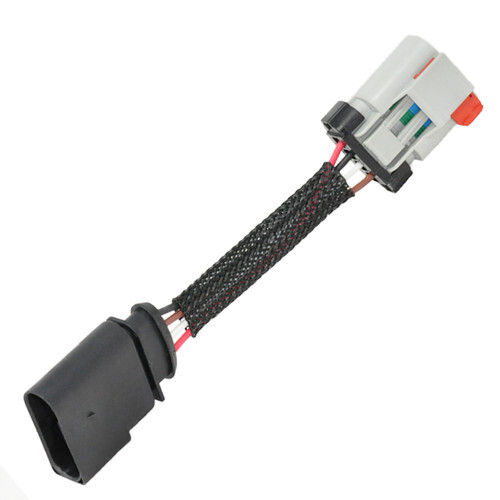
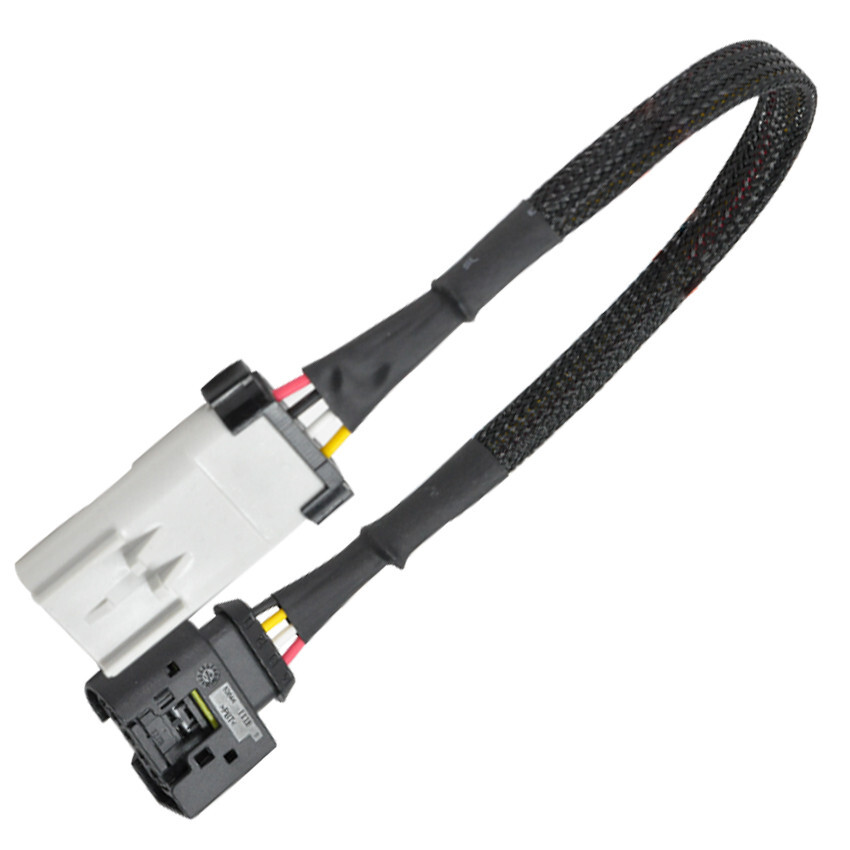
For 2007.5 to 2012 trucks with the HE351VE turbo and 2013 and later trucks with the HE300VG, the actuator connector and mounting are different, so make sure the replacement matches your specific turbocharger model. Adapter harnesses are available for owners who want to upgrade from the older HE351VE actuator to the newer HE300VG design.
OEM vs. Aftermarket Actuators: What to Consider
When it comes time to replace a turbo actuator, diesel owners face a choice between OEM components, remanufactured units, and new aftermarket replacements. Each option has tradeoffs in terms of cost, quality, warranty coverage, and calibration requirements.
OEM Actuators
Genuine OEM actuators from Garrett (Duramax and Power Stroke) or Holset/Cummins (Ram) offer guaranteed fitment and performance specifications, but they come at a premium price. An OEM Holset actuator for the 6.7L Cummins can run $800 to $1,200 from a dealer, while a genuine Garrett VGT solenoid for the Duramax or Power Stroke is considerably less expensive at $100 to $250. OEM parts may be the right choice for trucks still under factory or extended warranty, but the cost difference opens the door for high quality aftermarket alternatives.
Remanufactured Actuators
Remanufactured Cummins actuators are popular because they offer OEM level quality at a reduced price point, typically $350 to $600 with a core exchange. These units are disassembled, inspected, fitted with new electronic components where needed, tested, and calibrated before shipping. The quality of remanufactured actuators varies significantly between suppliers, so choosing a reputable remanufacturer with a solid warranty is essential.
Aftermarket New Actuators
Aftermarket replacements manufactured to OEM specifications provide a balance of quality and affordability. The key factors to evaluate in any aftermarket actuator include material quality, multi point testing during production, proper resistance or calibration specifications, and warranty coverage. Look for actuators backed by a meaningful warranty period, as this reflects the manufacturer's confidence in the product's durability.
For the Duramax and Power Stroke oil controlled solenoids, aftermarket options are widely available and generally offer reliable performance. The simpler design of these solenoids means there is less variation in quality between manufacturers compared to the more complex Cummins electronic actuators. Regardless of which brand you choose, always verify fitment for your specific engine and turbocharger model before purchasing.
Bostech Turbo Actuator and VGT Solenoid Solutions
Bostech Auto offers turbo actuator and VGT solenoid products engineered to meet or exceed OEM specifications across multiple diesel platforms. Every Bostech turbocharger component is manufactured from high quality materials and undergoes multi point testing to ensure reliable performance under the demanding conditions found in diesel turbocharger applications.
Ford and GM VGT Actuator Solenoid (Bostech TBC0166268)
The Bostech TBC0166268 is a direct replacement variable geometry turbocharger control solenoid designed for the Ford 6.0L Power Stroke and GM 6.6L Duramax platforms. This new (not remanufactured) solenoid restores proper VGT function by providing precise oil flow control to the turbocharger's vane actuation system. It is a direct fit replacement that installs using the original hardware location and electrical connector, requiring no modifications or electronic calibration.
GM Duramax Turbocharger Vane Position Solenoid (Bostech TBC0166710)
For 2006 to 2019 Duramax applications, the Bostech TBC0166710 turbocharger vane position solenoid is manufactured to OE specifications for precise fit and function. This component provides a cost effective alternative to dealer pricing while maintaining the quality and reliability required for consistent VGT operation. Like all Bostech turbocharger components, it is built with high quality materials and multi point tested to withstand extreme working conditions.
Supporting Components and Wiring Solutions
Bostech also offers complementary products that support turbo actuator replacements, including wiring pigtails for the VGT solenoid connector (part number WH02618 for Ford and GM applications). Corroded or damaged wiring connectors are a common contributing cause of actuator failure, and replacing the pigtail during solenoid service helps ensure a reliable electrical connection and can prevent repeat failures caused by poor contact at the connector.
Warranty and Support
All Bostech turbocharger actuators and solenoids are backed by a 24 month unlimited mileage warranty covering material and workmanship defects. Technical support is available by contacting Bostech Customer Service at 1 800 868 0057 or by email at customerservice@bostechauto.com. Browse the complete selection of Bostech turbo actuator products by vehicle application at bostechauto.com.
Frequently Asked Questions
The most reliable method is to remove the actuator from the turbocharger and check the turbo's internal vane mechanism by hand. If the vanes move freely through their full range of travel, the turbo is likely fine and the actuator is the problem. If the vanes are stuck or binding, the turbo needs service regardless of actuator condition. Always test the actuator electrically as well: check solenoid resistance on Duramax and Power Stroke platforms, and verify electronic function on the Cummins.
P0299 indicates a turbocharger underboost condition, meaning the ECM detected that boost pressure was lower than expected for the current operating conditions. While a failing actuator is one common cause, P0299 can also result from boost leaks in the charge piping, a failed MAP or boost pressure sensor, a mechanically stuck VGT, or even a clogged air filter. Systematic diagnosis is required to identify the specific root cause.
On Duramax and Power Stroke platforms, the VGT solenoid replacement is a straightforward job that most mechanically inclined owners can complete in 30 to 60 minutes with basic hand tools. The Cummins electronic actuator is also physically simple to install, but the calibration requirement adds complexity. If you have access to a compatible scan tool or a rental calibration tool, DIY replacement is feasible. If not, you will need a shop visit for the calibration step.
Costs vary significantly by platform. A VGT solenoid for the Duramax or Power Stroke typically runs $50 to $200 for the part, with minimal labor if done at a shop. A Cummins electronic actuator ranges from $400 to $1,100 for the part, plus $100 to $300 for calibration if done at a shop. Compare these costs to a complete turbocharger replacement at $2,500 to $4,000 or more, and the value of proper diagnosis becomes obvious.
It depends on the platform. Duramax VGT solenoids (LLY through LML) and Power Stroke VGT solenoids do not require electronic calibration after replacement, though the ECM may need a few drive cycles to optimize the VGT schedule. Cummins electronic actuators require calibration every time they are removed from or installed on the turbocharger. The L5P Duramax (2017 and later) also requires calibration after actuator replacement.
The most common cause is soot and carbon buildup from the EGR system accumulating on the turbo's internal nozzle mechanism. When the nozzle ring becomes restricted, the actuator motor works harder to achieve the commanded position, eventually overheating and failing. Regular exercise of the exhaust brake and following the manufacturer's turbo actuator cleaning interval can help extend actuator life. Electronic board failures from heat exposure are also common.
The coil resistance of a properly functioning VGT solenoid on the Duramax (and 6.0L Power Stroke) should measure between 3.42 and 4.18 ohms when tested at 73 degrees Fahrenheit. This reading is taken across the two pins of the solenoid connector with the electrical connector disconnected. Readings outside this range indicate a failed solenoid that should be replaced.
Yes. Adapter harnesses are available that allow 2007.5 to 2012 trucks with the HE351VE turbo to use the newer HE300VG actuator. The HE300VG actuator is generally considered more robust and is used on 2013 and later Cummins trucks. This upgrade requires the appropriate wiring adapter and a calibration tool or scan tool to complete the installation.
Cummins includes a turbo actuator cleaning interval in the owner's manual for 6.7L trucks, though many owners are unaware of this recommendation. As a general practice, exercising the exhaust brake regularly during normal driving helps keep the vane mechanism moving and prevents carbon from cementing the vanes in place. For trucks that see heavy duty cycles or frequent short trips, inspecting and cleaning the turbo vanes every 50,000 to 75,000 miles is a reasonable preventive measure.
Bostech offers VGT solenoid actuators for the Ford 6.0L Power Stroke and GM 6.6L Duramax platforms (Bostech TBC0166268), as well as a turbocharger vane position solenoid for 2006 to 2019 Duramax applications (Bostech TBC0166710). All Bostech turbo actuator products come with a 24 month unlimited mileage warranty. Visit bostechauto.com to search by vehicle application and find the right part for your truck.
Disclaimer: This article is provided for informational and educational purposes only. Always consult a qualified diesel technician for diagnosis and repair. Bostech Auto is not responsible for any damages resulting from the application of information contained in this article. Product specifications, availability, and pricing are subject to change without notice.