
6.0L PowerStroke Common Problems: The Complete 2003 to 2007 Owner’s Repair Guide
Apr 30th 2026
Table of Contents
- Introduction: Why the 6.0L Has the Reputation It Does
- The 6.0L PowerStroke Platform at a Glance
- Problem 1: Oil Cooler Failure
- Problem 2: EGR Cooler Failure
- Problem 3: Head Gasket Failure and Stretched Head Bolts
- Problem 4: HEUI Injector Stiction and Failure
- Problem 5: FICM Failure and Voltage Drop
- Problem 6: HPOP and High Pressure Oil System Issues
- Problem 7: VGT Turbocharger Sticking and Underboost
- Problem 8: Fuel Pressure Regulator and the Blue Spring Story
- Problem 9: Standpipes, Dummy Plugs, and the STC Fitting
- Problem 10: Water Pump and Cooling System Issues
- Problem 11: EGR Valve Sticking and Failure
- Problem 12: Sensor Failures: ICP, IPR, MAP, and EBP
- The Bulletproofing Strategy: A Smart Repair Sequence
- Maintenance Recommendations to Protect Your 6.0L
- Choosing OEM, Remanufactured, or Aftermarket Parts
- Bostech Solutions for the 6.0L PowerStroke
- Frequently Asked Questions
- Disclaimer
The 6.0L PowerStroke is one of the most polarizing diesel engines Ford ever sold. From 2003 through early 2007 it powered nearly every Super Duty F-250, F-350, F-450, F-550, Excursion, and E-Series van that left a Ford lot. Owners love the low end torque and the way these trucks pull a trailer. They also know the engine has a long list of failure points that drain a wallet fast if ignored. The good news is that nearly every problem is well documented, well understood, and fixable with the right parts and a clear repair sequence.
This guide walks through the twelve most common 6.0L PowerStroke problems in the order most owners encounter them, explains how each failure cascades into the next, and lays out a smart repair strategy that stops the cycle for good.
1. Introduction: Why the 6.0L Has the Reputation It Does
When Ford launched the 6.0L PowerStroke in 2003, it was meant to be a serious step up from the legendary 7.3L. The new engine made 325 horsepower and 560 pound feet of torque, used a variable geometry turbocharger, added a second generation HEUI injection system with four valves per cylinder, and met the tightening 2004 emissions rules. Wards Auto named it one of the ten best engines of 2003.
The reality was different. The 6.0L was the first PowerStroke to combine a high pressure oil fuel injection system with full emissions hardware including a cooled EGR system. That combination put unprecedented thermal stress on the engine’s cooling and oiling systems, and a handful of factory design choices turned out to be marginal under that stress. The undersized oil cooler, the sooty EGR system, the torque to yield head bolts, and the HEUI injectors all became famous for failing within the first hundred thousand miles.
The key insight is that 6.0L problems are not random. They follow a predictable chain: the oil cooler clogs first, that starves the EGR cooler of coolant, the EGR cooler ruptures, exhaust pressure pushes coolant into the cylinders, the head gaskets lift, and now the truck needs a multi thousand dollar repair. Understanding that chain is the difference between fighting fires for years and fixing the truck once. This guide is built around that chain.
2. The 6.0L PowerStroke Platform at a Glance
Before diving into the failures, it helps to know what you are working with. The 6.0L PowerStroke is a 365 cubic inch, 90 degree V8 diesel built by Navistar International for Ford. It uses a cast iron block, cast iron heads with four valves per cylinder, forged steel connecting rods, and a bedplate style main bearing support. The bottom end is genuinely tough. Most of the trouble lives above the deck. Production years and platforms break down like this:
- Ford F-250 and F-350 Super Duty pickups, 2003 model year through early 2007
- Ford F-450 and F-550 Super Duty cab and chassis, 2003 through early 2008 in some configurations
- Ford Excursion full size SUV, 2003 through 2005
- Ford E-350 and E-450 Econoline vans, 2004 through 2010
- International medium duty trucks badged as the VT365, which is the same engine in commercial form
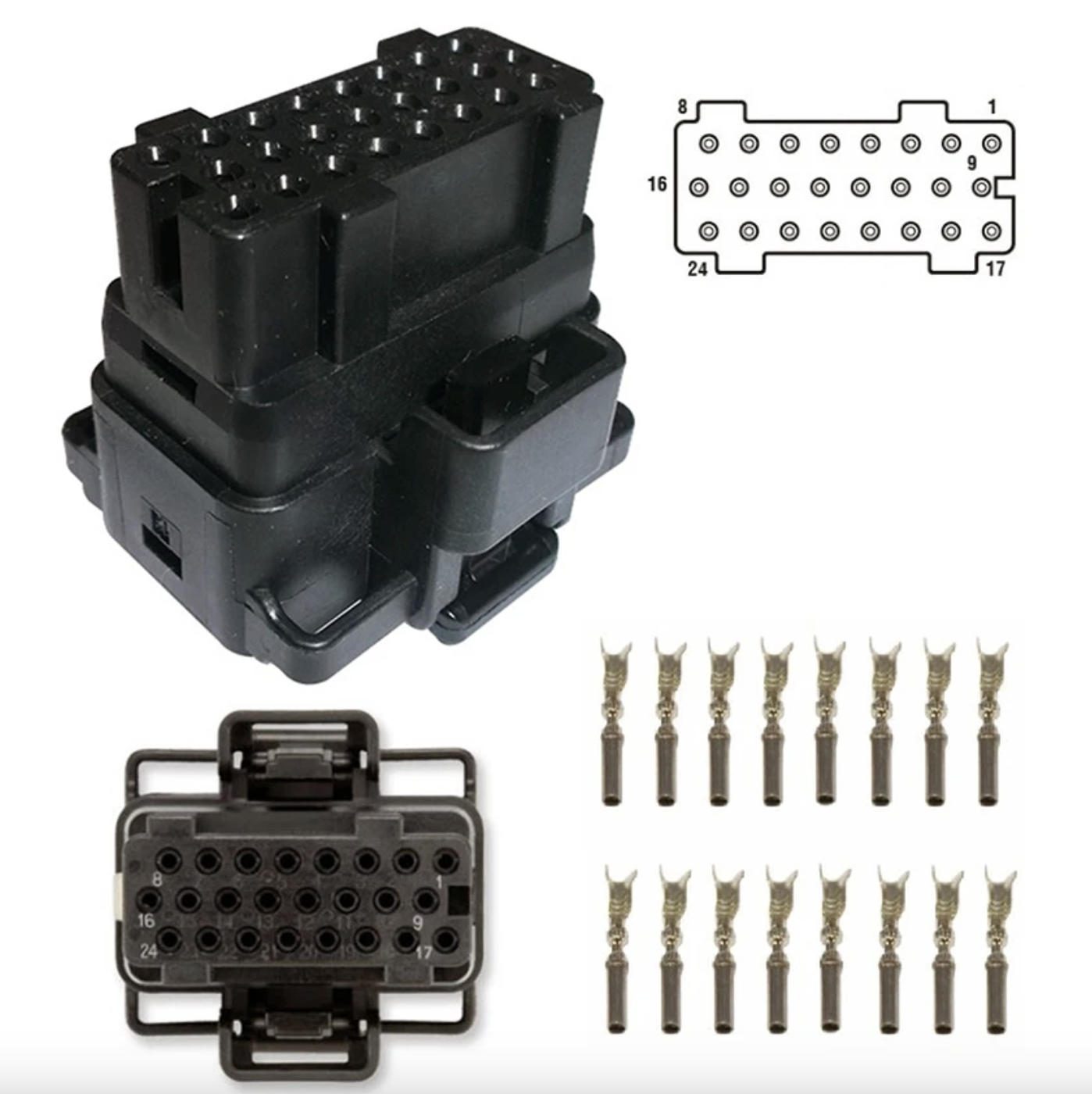
Two important factory build dates affect parts ordering. Trucks built before September 22, 2003 use the round style EGR cooler and the early high pressure oil rail. Trucks built after that date use the square style EGR cooler and a revised wavy oil rail. Late 2004 production introduced the snap to connect or STC oil fitting on the back of the high pressure oil pump. Always confirm fitment by VIN or by direct inspection.
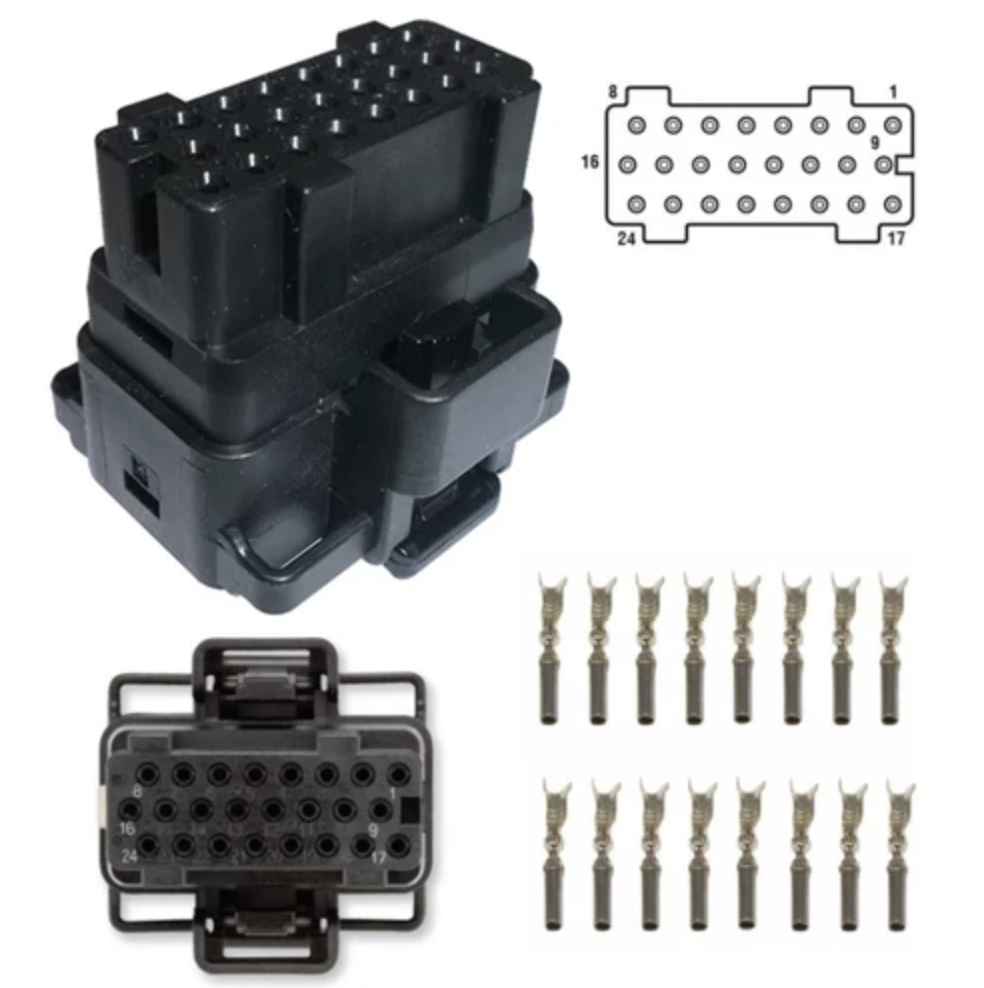
Power output stayed close to 325 horsepower and 560 to 570 pound feet of torque across the run. The engine is computer controlled by a powertrain control module that talks to a separate fuel injection control module. The injection system is hydraulically actuated and electronically controlled, meaning it uses very high pressure engine oil to fire the fuel injectors rather than a high pressure fuel pump. That single design choice drives more of the engine’s personality, and more of its failure modes, than anything else under the hood.
3. Problem 1: Oil Cooler Failure
The factory engine oil cooler sits in the lifter valley under the intake manifold and turbocharger. It is a small heat exchanger with very narrow internal passages. Engine coolant flows through the oil cooler first, then continues on to the EGR cooler. Engine oil flows through the other side and gets cooled by that coolant flow. The whole emissions and HEUI fuel injection system depends on this part working correctly.
The problem is that the coolant side passages are so small they clog. Casting sand left over from the block and head castings, plus silica drop out from the original Ford gold colored coolant breaking down, gradually pinches off the flow. Once the oil cooler is restricted, oil temperature climbs, coolant flow to the EGR cooler drops, and the engine starts cooking everything downstream. This is the most common failure on the 6.0L and the first domino in nearly every other major repair. Watch for these symptoms:
- Engine oil temperature climbs more than 15 to 20 degrees Fahrenheit above engine coolant temperature during normal highway cruising. This is the most reliable early warning sign.
- Coolant level slowly drops with no visible external leak.
- EGR cooler related faults appear, including coolant in the intake or white smoke from the tailpipe.
- Heater performance gets weak in cold weather.
- Hard hot start conditions develop because oil viscosity drops at high temperature and the high pressure oil system cannot build pressure.
Diagnosis is straightforward. With a scan tool capable of reading 6.0L PowerStroke parameters, watch the EOT and ECT readings during a highway drive at moderate load. A delta of more than 15 degrees during steady state cruise tells you the oil cooler is restricted. A delta over 20 degrees under load means the cooler is severely plugged and the EGR cooler is already at risk.
The repair has two parts. First, replace the oil cooler with a fresh unit. Bostech offers an Engine Oil Cooler Kit (part number EOC02812) that comes with the heat exchanger plus the gaskets and seals required for a complete repair. Second, address the root cause: flush the cooling system thoroughly, install a coolant filtration kit to capture casting sand and debris, and switch to a properly rated extended life coolant if the truck is still on the original gold formulation. Skipping the flush and filtration step is the single biggest reason oil coolers fail again within twenty thousand miles of replacement. Some owners choose a remote mounted air to oil cooler conversion that moves the heat exchanger out of the lifter valley entirely. These conversions are expensive but they end the oil cooler clogging problem permanently.
4. Problem 2: EGR Cooler Failure
The EGR cooler is a coolant fed heat exchanger that drops exhaust gas temperature from over 1200 degrees Fahrenheit to roughly 300 degrees before the gas reenters the intake manifold. It does that work in roughly twelve inches of length. That is a brutal job, and on the 6.0L it gets worse because the EGR cooler is the second part of the cooling loop after the oil cooler. When the oil cooler is restricted, the EGR cooler runs hotter than designed, the internal welds fatigue, and eventually the core ruptures.
Industry consensus is that roughly nine out of ten EGR cooler failures on the 6.0L are caused by an upstream oil cooler problem. The other one in ten is plain soot loading and carbon buildup, especially on the 2004 through 2007 square style coolers, which have smaller internal exhaust passages than the 2003 round style coolers. Either way, when the EGR cooler fails it announces itself dramatically. Classic symptoms include the following:
- Billowing white smoke or steam out the tailpipe, especially after the engine has warmed up. The smoke is vaporized coolant flashing to steam in the exhaust stream.
- A sweet smell from the exhaust during the white smoke event, which is the smell of glycol burning.
- Coolant loss from the degas (overflow) bottle with no external leak.
- Coolant in the intake manifold, visible after pulling the intake elbow.
- Pressurized coolant system that pushes coolant out of the degas bottle cap, sometimes confused with a head gasket failure.
- In the worst cases, hydrolocked engine that will not crank because liquid coolant has filled one or more cylinders.
A useful field test is to remove the EGR valve and look at the inside of it. If the valve and the EGR cooler outlet show only dry, sooty residue, the cooler is probably intact. If you see wet residue, moisture, or visible coolant inside the dry side of the EGR system, the cooler is leaking and needs to come out. A pressure test of the cooler with shop air, with the engine cold and the cooler isolated, will confirm it definitively.
Replacement is doable in a driveway with the right tools, though it is a long day with the turbo, intake elbow, fuel filter housing, and intake manifold all coming off. The most important rule is this: if you replace the EGR cooler without addressing the oil cooler first, you will be doing the job again. Owners who do both at the same time, plus a coolant flush and filtration kit, generally do not see repeat failures. Bostech offers a complete reman EGR Cooler Kit with Oil Cooler and Intake (part number EGR102500R-K4) that bundles the two heat exchangers together for exactly this reason.
Some owners go further and install an EGR delete kit, which blocks the EGR system entirely. Delete kits are popular off road but they are illegal for emissions inspected vehicles in many jurisdictions and they require tuning to suppress the resulting fault codes. For most owners who plan to keep the truck on the road legally, a fresh EGR cooler from a quality remanufacturer paired with a clean oil cooler and a coolant filter is the smarter long term answer.
5. Problem 3: Head Gasket Failure and Stretched Head Bolts
Head gasket failure on the 6.0L is famous, but the gaskets themselves are not really the problem. The problem is the head bolts. Ford used ten torque to yield, or TTY, head bolts per bank, with the inner row shared between cylinders. TTY bolts are designed to stretch into a controlled yield range when torqued, which gives consistent clamping force. Once they yield, however, they cannot be reused and they cannot recover their full clamping strength if combustion pressure pushes them past their elastic limit.
The 6.0L sees combustion pressure spikes that can do exactly that. Heavy towing at altitude, near gross combined weight rating, a steam explosion from a failed EGR cooler dumping coolant into a cylinder, or aftermarket tuning that adds boost and timing all qualify. The 14 millimeter bolt diameter is plenty strong on its own. The shortcoming is that there are simply not enough of them. The 7.3L PowerStroke used six bolts per cylinder rather than four, and the 6.4L PowerStroke went to 16 millimeter bolts. Symptoms of a blown head gasket include:
- Coolant residue around the heads or on the engine block, often called puking, where the system pressurizes hard enough to push coolant out of the degas bottle.
- White exhaust smoke that is hard to distinguish from an EGR cooler failure. The difference is whether coolant is being lost into the cooling system (head gasket) or pushed out through the exhaust (EGR cooler).
- Bubbles or pressure in the degas bottle when the engine is running.
- Heater output that goes cold under load because the coolant level dropped below the heater core feed.
- Misfires or rough running on a single cylinder, suggesting compression loss past the gasket.
- Oil and coolant mixing, visible as a milky deposit under the oil cap or on the dipstick.
The repair is a major job. Both heads have to come off, the block and head decks have to be inspected and machined if needed, and new gaskets installed. The critical step is replacing the TTY head bolts with proper head studs. ARP head studs are the industry standard upgrade for this engine. They thread deeper into the block, generate more clamping force, can be reused, and are not vulnerable to the stretching that takes out the factory bolts. ARP’s 250-4202 stud kit is rated at 220,000 PSI tensile strength and torques to a final 210 foot pounds in three or more graduated steps. A truck that is properly studded and torqued correctly will not lift a head again under normal use.
Doing a head gasket job without studs is widely considered a temporary fix. While the heads are off, most experienced shops also update the HPOP standpipes, dummy plugs, and STC fitting (covered in problem nine), inspect the high pressure oil pump, and replace any seal or gasket that touches oil or coolant. The labor is already paid for at that point and skipping these items invites a repeat tear down.
6. Problem 4: HEUI Injector Stiction and Failure
The 6.0L PowerStroke uses second generation HEUI fuel injectors, which stand for hydraulically actuated, electronically controlled unit injector. Instead of a high pressure fuel pump, the engine uses a high pressure oil pump (HPOP) to send 500 to 4000 PSI engine oil to the top of each injector. When the FICM commands an injector coil to open, that high pressure oil pushes a small piston inside the injector, which pressurizes fuel to roughly 25,000 PSI and sends it into the cylinder. The 6.0L injectors fire faster than the older 7.3L design and use two coils per injector for split shot injection.
The trade off is that the same engine oil that lubricates the bottom end also actuates the injectors. When that oil breaks down, varnishes, or runs hot, it leaves a sticky residue inside the injector spool valve bore. The spool valve has very tight tolerances, and even a small amount of varnish can slow it down or cause it to stick. This phenomenon is called stiction, short for static friction. It is the single most common reason 6.0L injectors get blamed for failure. The classic stiction symptom set looks like this:
- Hard cold start, often requiring extended cranking before the engine catches.
- Rough or chuggy idle for the first thirty seconds to several minutes after start, smoothing out as the engine warms up.
- White smoke or gray smoke at startup, especially in cold weather.
- Cylinder misfire codes that come and go and often clear after warm up.
- Loss of power, hesitation on acceleration, and reduced fuel economy.
- Failed cylinder contribution test on a scan tool.
Before condemning the injectors, three other things must be ruled out. First, FICM voltage: a weak FICM mimics injector failure perfectly, and replacing a $300 FICM is a lot cheaper than replacing eight injectors. Second, oil pressure on the high pressure side: watch ICP actual versus desired on a scan tool. If the system cannot build or hold pressure, the problem is upstream of the injectors. Third, fuel pressure at the filter housing: the injectors need at least 45 PSI of fuel supply pressure to fire correctly under load.
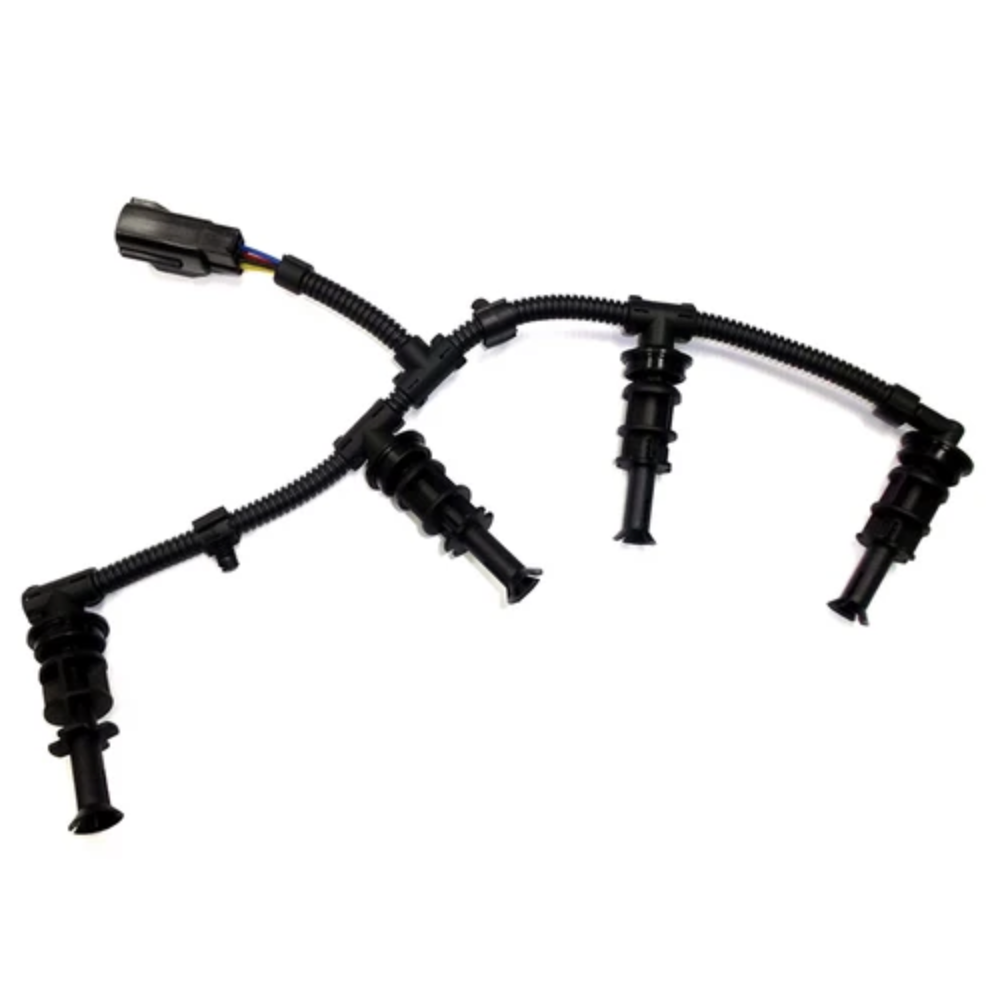
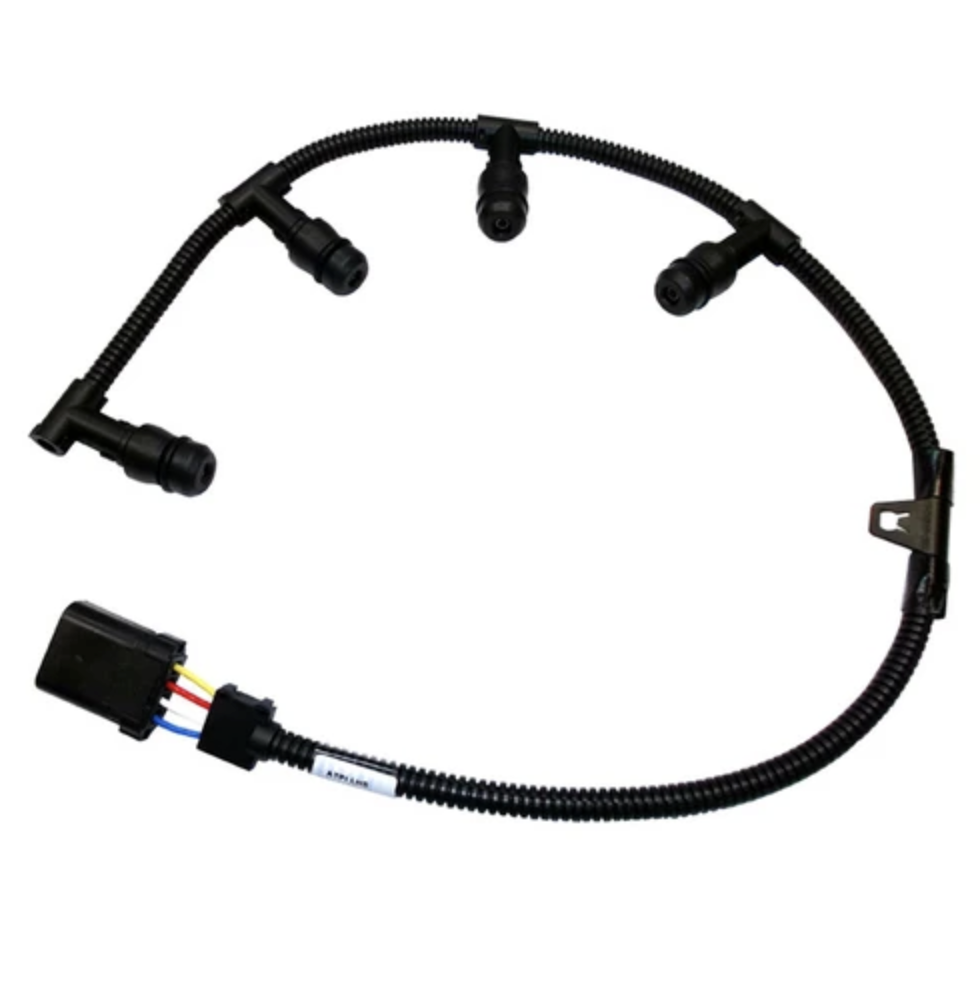
Once those three are healthy, true injector problems fall into three categories. Stiction proper, which can sometimes be reversed by switching to a high quality 5W-40 full synthetic oil and adding a stiction eliminating additive. O-ring failure, where the seals around the injector body break down and let high pressure oil bypass. And mechanical wear inside the spool valve or intensifier piston. When it is time to replace injectors, do all eight at once. Replacing one or two is a common shortcut that backfires within months as the remaining injectors fail in turn. While the valve covers are off, replace the standpipes, dummy plugs, and oil rail O-rings as a matter of course.
7. Problem 5: FICM Failure and Voltage Drop
The fuel injection control module is the brain that drives the injectors. It takes orders from the PCM and sends a 48 volt, 20 amp pulse to each injector coil at exactly the right moment. The 48 volt pulse is high enough to snap the spool valve open quickly so the high pressure oil can act on the intensifier piston and fire fuel at the exact crank angle the PCM commanded.
The FICM is fragile. It sits on top of the driver side valve cover under the degas bottle, where it sees vibration, heat, and engine bay temperature swings. The most common cause of FICM failure is not the module itself but the truck’s batteries. Weak batteries supply low voltage to the FICM during cranking, and the internal circuitry does not tolerate low voltage well. Over time the board damage accumulates. Once output drops below 45 volts, the injectors begin to misfire even though they themselves are fine. FICM failure overlaps heavily with stiction and injector problems:
- Hard start when the engine is cold, gradually getting worse over weeks or months.
- Rough idle and visible smoke at startup that may improve once the engine is warm.
- Loss of power and reduced throttle response.
- Random misfire codes across multiple cylinders.
- Eventually a no start condition once FICM output drops below roughly 30 volts.
- Diagnostic code P0611 (FICM performance) or generic injector circuit codes.
The diagnosis is simple if you have the right scan tool. Read FICM voltage in three states. Key on, engine off should read about 48 volts, with anything below 47 starting to be a concern and anything below 46 strongly suspect. While cranking should hold close to spec, with anything below 45 being a red flag. At idle should be stable around 48 with all accessories off. Voltage that fluctuates or sags under any of those conditions points to either the FICM itself, the batteries, or the alternator and charging system. Always check battery health and charging system voltage before condemning a FICM.
Repair options come in three tiers. Send the FICM out to be rebuilt, which is the cheapest option and usually returns a unit close to factory spec. Buy a new replacement FICM, which is the simplest path but the most expensive. Or upgrade to a higher voltage FICM such as a 58 volt aftermarket unit, which is popular on tuned trucks but is unnecessary on a stock engine and can shorten injector life if the wrong injectors are paired with it. Bostech’s FIC2004 Fuel Injector Control Module is a direct fit for the 2003 to 2007 6.0L and restores factory level performance. Always replace weak batteries at the same time. A new FICM in a truck with marginal batteries will damage itself the same way the old one did.
8. Problem 6: HPOP and High Pressure Oil System Issues
The high pressure oil pump is the heart of the HEUI fuel injection system. It is a swash plate style pump driven off the gear train at the front of the engine. Its job is to take low pressure engine oil from the lifter valley and pressurize it to anywhere from 500 PSI at idle to 4000 PSI at wide open throttle. That high pressure oil flows up to the standpipes on each cylinder head, into the oil rails under each valve cover, and through the rails to the top of each injector. Without enough oil pressure on the high pressure side, the injectors physically cannot fire.
A minimum of 500 PSI is required to fire the injectors at all. The PCM monitors injection control pressure (ICP) through a sensor on the high pressure oil rail and adjusts the injection pressure regulator (IPR) to control how much oil reaches the rails. When the HPOP, the IPR, or any seal in the high pressure oil system fails, ICP drops and the engine either runs poorly or refuses to start. Common high pressure oil system failures include:
- HPOP internal wear, which gradually reduces the pump’s ability to build pressure under load. Symptoms include extended cranking, low ICP at wide open throttle, and a truck that runs out of pressure first when towing.
- IPR valve sticking or failure, the most common single point failure in the high pressure oil system. A bad IPR can either fail to regulate pressure or stick closed.
- IPR O-ring failure, which lets oil bypass internally and drops ICP without any mechanical pump issue.
- STC fitting leak at the back of the HPOP, where the high pressure oil discharge tube connects to the pump.
- Standpipe O-ring leaks at the cylinder heads, which let high pressure oil bleed off into the valve covers instead of reaching the injectors.
- Dummy plug failures on the front and back of each oil rail, which serve the same role as the standpipes and fail the same way.
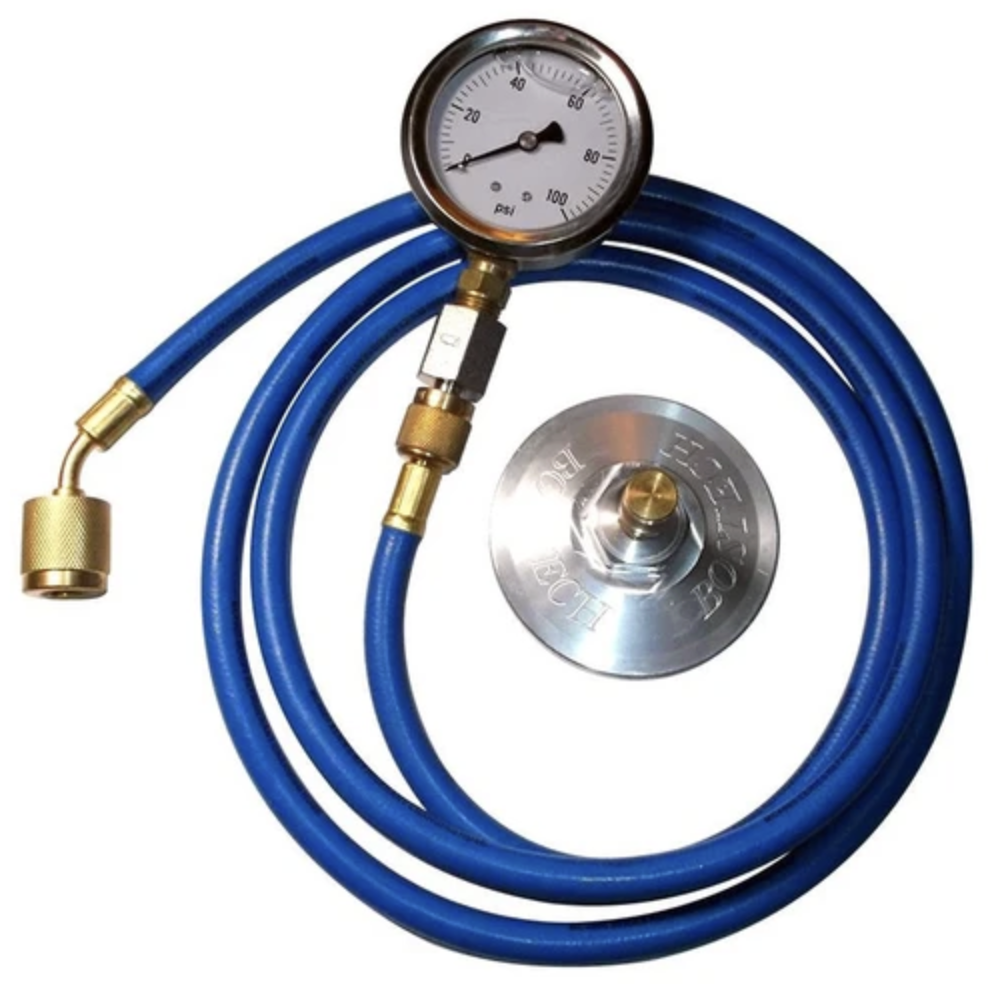
Diagnosis requires a scan tool that can read ICP and IPR duty cycle live. Crank the engine and watch ICP: the truck needs to build at least 500 PSI quickly to fire the injectors. If ICP is slow to rise or never gets there, the system has a leak or the pump is weak. A Hickok pressure tester can pressurize the high pressure oil system with shop air through the ICP sensor port to find leaks while the engine is off, revealing a bad standpipe, dummy plug, STC fitting, or failed injector O-ring within minutes. When the HPOP itself needs replacement, it is smart to do the standpipes, dummy plugs, and STC fitting at the same time. The labor to access the HPOP is significant, and the smaller parts are inexpensive relative to the pump.
9. Problem 7: VGT Turbocharger Sticking and Underboost
The 6.0L was Ford’s first PowerStroke with a variable geometry turbocharger. The Garrett GT3782VA has electronically controlled vanes inside the turbine housing that change the effective aspect ratio of the turbo on the fly. At low engine speed the vanes close down to spool the turbo quickly, and at high engine speed they open up to let exhaust flow through more freely. A unison ring rotates the vanes together, driven by an electronic actuator on the side of the turbo.
The trouble is that diesel exhaust is dirty. Soot, carbon, and oil mist all collect on the vanes, the unison ring, and the seat the unison ring rides in. Over time the buildup glues the vanes in one position. Stuck closed causes overboost and high exhaust gas temperature. More commonly the vanes stick open, which causes underboost and a loss of low end power. Trucks that are babied around town and rarely see hard throttle are especially prone, because the soot just sits and bakes onto the parts. Symptoms of a sticking VGT include:
- Diagnostic code P0299 for turbo underboost, often appearing intermittently and sometimes clearing after a hard pull.
- Diagnostic code P132B or related VGT performance codes.
- Loss of power on acceleration, sometimes resolving suddenly as the unison ring frees up.
- A whistling, squeaking, or chattering noise from the turbo at startup or at idle.
- Higher than normal exhaust gas temperature when the vanes stick closed under load.
- A turbo that does not sweep through its full range when the truck is started, observable on a scan tool reading VGT duty cycle.
A sticking VGT can often be fixed without replacing the turbo. The procedure involves removing the turbo, splitting the housing, and cleaning the unison ring, the vanes, and the seat with a brass brush, scotch brite, and a quality solvent. Inspect the unison ring closely. If the wear pattern shows a deeply grooved seat or a sloppy fit, the ring should be replaced. The OE unison ring is part number 3C3Z-6C885-A. While the turbo is off, inspect the up pipes for cracks or exhaust leaks. Pre turbo exhaust leaks rob the VGT of drive pressure and look exactly like a sticking turbo on a scan tool. Plan on periodic turbo cleaning every 60,000 to 100,000 miles, more often on a truck that idles heavily.
10. Problem 8: Fuel Pressure Regulator and the Blue Spring Story
The 6.0L runs a relatively simple low pressure fuel system. An electric lift pump in the frame rail draws fuel from the tank, sends it forward through a chassis filter, and into the engine mounted fuel filter housing on the driver side of the engine. From there the fuel passes through a second filter and continues through passages in the cylinder heads to each injector’s fuel inlet. A spring loaded pressure regulator inside the fuel filter housing maintains system pressure between 45 and 55 PSI by bleeding excess fuel back to the tank.
The factory regulator spring on early 6.0L trucks is undersized. It loses tension over time and lets fuel pressure drop below the 45 PSI minimum, especially under load. When pressure drops too low, the injectors run dry, the high pressure oil system has to work harder, and the injectors themselves are more likely to suffer cavitation damage. Ford released an updated, stiffer regulator spring with a blue paint mark to identify it. This is the famous blue spring upgrade.
The blue spring kit installs in about thirty minutes and brings fuel pressure back up to roughly 60 to 65 PSI under load, which is the design intent. Symptoms of a tired factory spring include the following:
- Fuel pressure that reads under 45 PSI on a gauge during a hard pull or under sustained load.
- Loss of power at higher RPM or under heavy throttle.
- Rough running that improves at idle but worsens under load.
- Long crank times when the truck has sat overnight, because air enters the fuel rails through the relaxed regulator.
- Premature injector failure on a truck whose other systems look healthy.
A blue spring kit typically includes the upgraded spring, new O-rings, and sometimes a billet aluminum spring housing or fuel filter cap. The factory plastic fuel filter cap is a known crack point, especially after the cap has been removed several times for filter changes. Replacing it with a billet aluminum cap at the same time is cheap insurance, makes future filter changes easier, and many billet caps include a 1/8 inch NPT port for a fuel pressure test fitting. Bostech offers a fuel filter cap and test kit (part number DEC020976) for the 6.0L. Pair it with a blue spring kit and the truck has a fully refreshed low pressure fuel system. Fuel pressure on a 6.0L should never sit below 45 PSI under any condition.
11. Problem 9: Standpipes, Dummy Plugs, and the STC Fitting
These three parts live deep under the valve covers and most owners never know they exist until the truck develops a hard hot start. They are also some of the most common reasons a 6.0L will not start when the engine is warm.
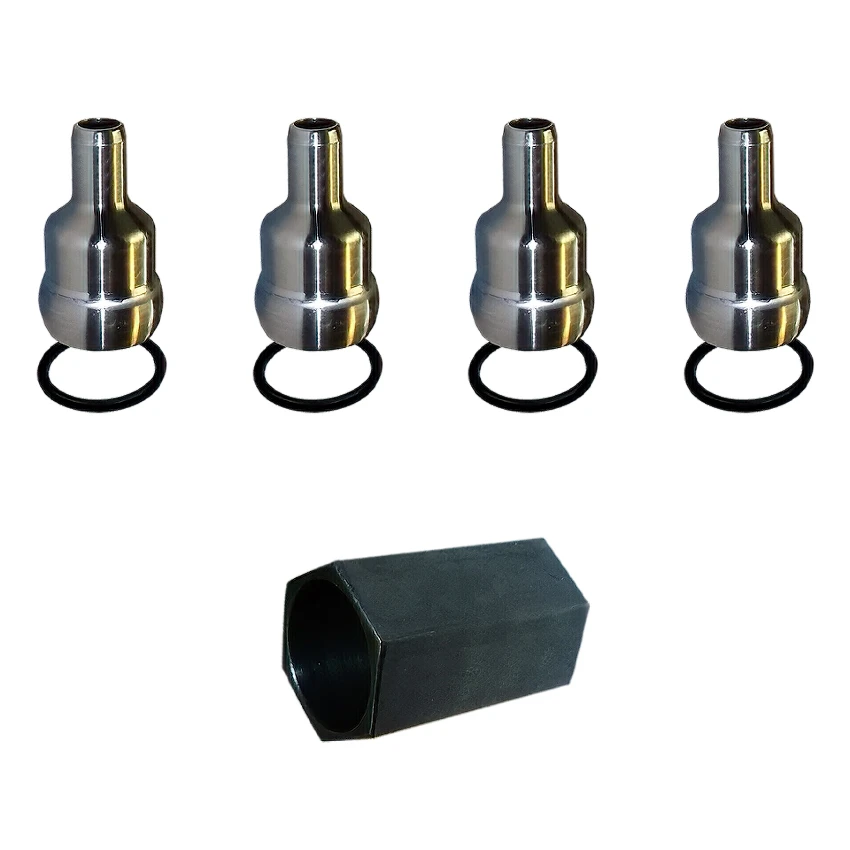
The standpipes are tall vertical tubes that connect the high pressure oil rail in each cylinder head to the inlet of each injector. They seal with O-rings at both ends. Over time those O-rings harden, crack, and start to leak high pressure oil. When the engine is hot, oil viscosity drops, and a leaking standpipe lets enough oil bleed off that the high pressure oil system cannot reach the 500 PSI minimum required to fire the injectors. The truck cranks and cranks but will not start until it cools down.
The dummy plugs cap off the unused end of each oil rail and use the same O-ring seals. The STC fitting, short for snap to connect, is the high pressure oil discharge fitting at the back of the HPOP introduced in late 2004 production. The original design uses a wire snap ring to retain the fitting, and that design is known to fatigue and let high pressure oil bypass internally. The updated STC fitting kit is the recommended replacement. Symptoms of failed standpipes, dummy plugs, or STC fitting include:
- Hard hot start, where the truck starts fine cold but takes long cranking when warm.
- Long crank times after sitting for several hours, especially in warm weather.
- No start condition when the engine is at operating temperature.
- Visible oil leak from the back of the engine near the HPOP (STC fitting).
- Oil pooling under one or both valve covers.
- ICP that fails to build above 500 PSI during cranking on a scan tool.
Diagnosis is straightforward with a Hickok or similar high pressure oil system tester. Pressurize the high pressure oil rail with shop air through the ICP sensor port and listen for hiss or watch for pressure drop. A failing standpipe will be obvious in seconds. Most experienced shops replace all four parts together, plus the oil rail O-rings, on any truck that has not had them updated. Always update these parts when the valve covers are off for another reason.
12. Problem 10: Water Pump and Cooling System Issues
The 6.0L water pump is gear driven off the front of the engine and uses a plastic impeller in the OEM design. That plastic impeller is a known weak point. Over time the impeller blades crack, break, or shed material into the cooling system. When that happens, coolant flow drops sharply, the engine starts to run hot, and any debris released into the system goes straight into the oil cooler passages and the EGR cooler. Coolant flow restriction or pump failure cascades quickly into oil cooler and EGR cooler failure, which means the water pump deserves the same attention as the heat exchangers it supports. Symptoms of water pump failure include:
- Coolant temperature that climbs higher than normal under load, especially when towing.
- Visible coolant leak from the weep hole at the bottom of the pump, signaling a failed shaft seal.
- Plastic debris in the coolant or in the degas bottle, which is the cracked impeller breaking apart.
- A grinding, growling, or whining noise from the front of the engine that changes with engine speed.
- Heater that goes intermittently cold under load, indicating reduced flow.
When replacing the water pump, choose a unit with a metal impeller. Several aftermarket and OEM updated pumps now use a stamped or cast metal impeller that does not crack like the original plastic design. Replace the thermostat at the same time, since thermostat failure is common and the labor overlap is significant. While the cooling system is open, install a coolant filtration kit if one has not already been added. A coolant filter installed in line with a heater hose costs less than $200 and is one of the highest leverage maintenance items on this platform.
13. Problem 11: EGR Valve Sticking and Failure
The EGR valve sits on top of the EGR cooler outlet and meters how much cooled exhaust gas enters the intake manifold. It is a vacuum or electrically actuated poppet valve that opens partially during cruise and light throttle and closes during heavy acceleration. The valve runs in dirty exhaust gas and accumulates carbon buildup over time. Two failure modes dominate. The valve sticks open, which dumps too much exhaust into the intake and causes rough running, hesitation, and reduced power. Or the valve sticks closed, which prevents proper EGR flow, lights an engine code, and on later trucks may trigger limp mode. Common symptoms include:
- Rough idle that improves when the EGR valve is unplugged or removed.
- Hesitation, sag, or surging on light throttle acceleration.
- Diagnostic codes for EGR flow insufficient or EGR position sensor performance.
- Increased soot output, especially at idle.
- Heavy carbon buildup visible at the back of the intake manifold and on the EGR valve itself.
- Limp mode events triggered by EGR flow faults.
A stuck EGR valve can sometimes be cleaned and reused. Remove the valve, soak it in carbon cleaner, and clean the poppet and seat carefully without damaging the position sensor. If the spring works freely, the valve can go back on. If the poppet shows scoring or the sensor is damaged, replace it. Bostech offers the EGV02601 EGR Valve as a direct replacement. The 2003 and early 2004 trucks use a slightly different valve than late 2004 through 2007 trucks, so confirm fitment. Periodic EGR valve cleaning is a worthwhile maintenance item, recommended every other oil change or annually.
14. Problem 12: Sensor Failures: ICP, IPR, MAP, and EBP
The 6.0L PowerStroke is a sensor heavy engine, and a handful of those sensors are notorious for failing. Sensor problems usually masquerade as injector, fuel system, or turbo issues, and many trucks have had thousands of dollars of unnecessary work performed because a $50 sensor was the actual cause. The four most failure prone sensors are these:
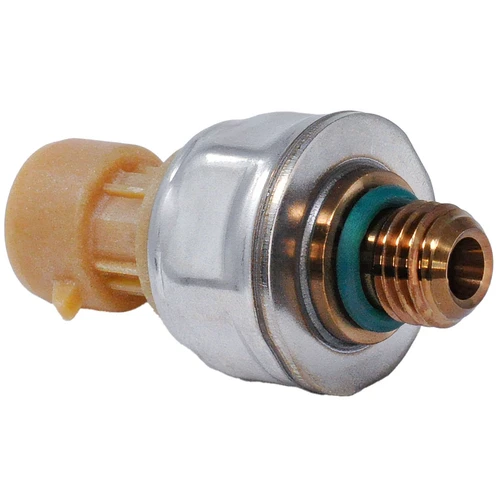
- Injection Control Pressure (ICP) sensor: mounted on the high pressure oil rail, reports actual oil pressure to the PCM. Failure causes incorrect ICP readings, IPR hunting, hard starts, rough running, and codes in the P2280 to P2290 range.
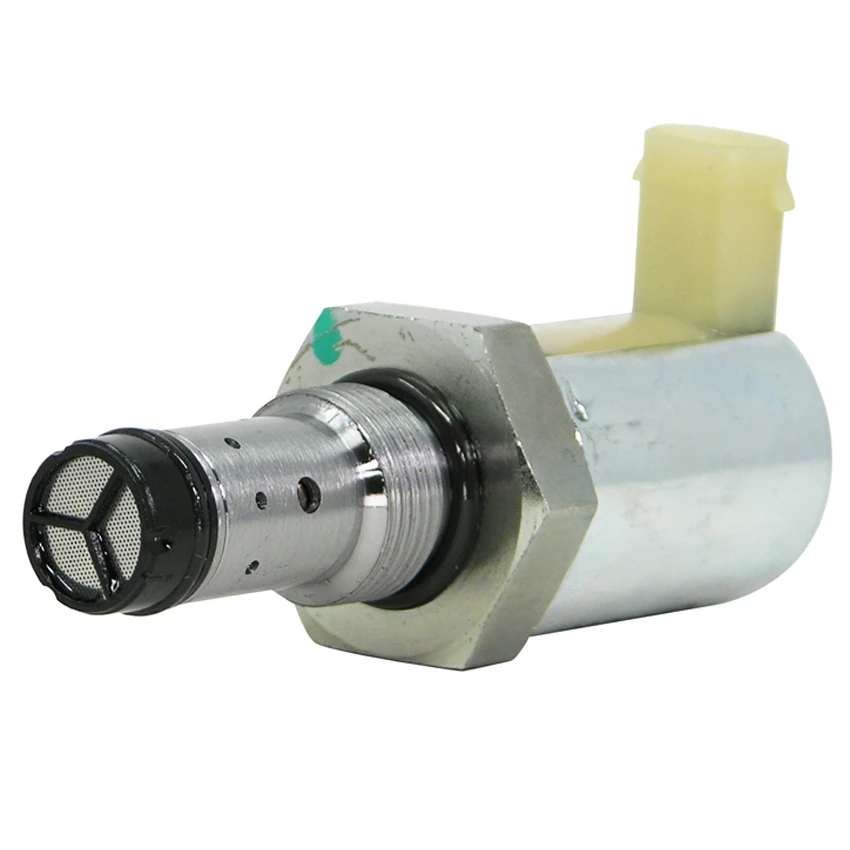
- Injection Pressure Regulator (IPR) valve: mounted on the back of the HPOP, modulates how much oil reaches the high pressure rail. Failure causes the engine to either overpressure or underpressure on the high pressure side, with classic symptoms of long crank, no start, or stalling at idle.
- Manifold Absolute Pressure (MAP) sensor: reads boost pressure in the intake manifold. Failure causes incorrect fueling at part throttle, false underboost or overboost codes, and reduced power. The MAP sensor mounts in a hose that can crack and let the sensor read atmospheric pressure all the time.
- Exhaust Back Pressure (EBP) sensor: reads exhaust pressure in the up pipe and feeds the VGT control logic. The sensor and the small steel tube that connects it to the up pipe both clog with soot, causing false low EBP readings and underboost codes.
Other sensors that fail occasionally include the camshaft position sensor, crankshaft position sensor, engine coolant temperature sensor, and engine oil temperature sensor. Bostech offers direct replacement sensors across the 6.0L PowerStroke sensor set, including the BTS021531 Engine Coolant Temperature sensor and the BTS022029 Crankshaft Position Sensor. A good practice on a high mileage 6.0L is to read sensor parameters with a scan tool and verify each one before chasing a major repair. ICP at idle should read about 600 to 700 PSI. ICP at wide open throttle under load should reach 3000 to 4000 PSI. MAP and EBP at idle should both read close to atmospheric pressure. If any of those parameters look wildly off, suspect the sensor before suspecting the underlying mechanical system.
15. The Bulletproofing Strategy: A Smart Repair Sequence
The term bulletproofing has become shorthand for the package of repairs and upgrades that turn a problematic 6.0L into a reliable long term truck. The exact list varies by shop, but the core idea is always the same: address the cascading failure chain at every link, not just the link that failed first. A bulletproofed 6.0L is genuinely a great engine. A neglected one is a parts catalog with wheels.
A complete bulletproof refresh typically follows this priority order: cooling and oil cooling first, then head bolts, then high pressure oil system, then FICM and batteries, then low pressure fuel system, and finally EGR valve and VGT. The reasoning is simple. Cooling and oil cooling failures cascade into everything else, so fixing them stops the chain at the source. Head studs prevent the most expensive single repair on the platform. The high pressure oil system controls whether the truck starts and runs reliably. FICM and fuel system issues sit downstream of those, and the EGR valve and turbo are typically intermittent rather than catastrophic.
A truck that has had each of those areas addressed is a different vehicle from a stock 6.0L. Owners regularly report 250,000 plus mile service lives on properly bulletproofed trucks. The cost of a complete refresh is almost always lower than buying a different truck, especially when the body and frame are in good condition. The 6.0L is worth keeping if it is repaired correctly the first time.
16. Maintenance Recommendations to Protect Your 6.0L
Even after a full bulletproof refresh, the 6.0L benefits from disciplined maintenance more than most diesels. The HEUI fuel injection system is sensitive to oil quality and oil temperature, and the cooling system rewards clean coolant the same way the oiling system rewards clean oil. The following intervals are conservative:
- Engine oil and filter every 5,000 miles or six months. Use a high quality 5W-40 or 15W-40 full synthetic oil meeting the CK-4 spec. Avoid extended drain intervals.
- Fuel filters (chassis and engine mounted) every 10,000 to 15,000 miles. Prime the engine filter cup with clean diesel before reinstalling the cap.
- EGR valve cleaning every 20,000 to 30,000 miles, more often on trucks that idle a lot.
- Coolant flush and refill every 30,000 to 45,000 miles. The coolant takes a beating in the EGR cooler.
- Coolant filter element change every oil change.
- Battery testing every six months. Two healthy batteries are essential for FICM longevity.
- Fuel pressure check at least once a year.
- Periodic VGT exercise by occasionally running the engine through wide open throttle pulls to keep soot from baking onto the unison ring.
- Annual visual inspection of up pipes, down pipe, exhaust manifolds, and turbo for pre turbo exhaust leaks.
A 6.0L maintained on this schedule, with a bulletproofed cooling and oil cooling system and properly studded heads, will reliably go past 200,000 miles and often well past 300,000. The engine itself is genuinely durable. Almost every catastrophic failure can be traced back to deferred maintenance somewhere upstream.
17. Choosing OEM, Remanufactured, or Aftermarket Parts
Once a 6.0L needs major repair, every owner faces the same decision on parts. OEM means a brand new Ford or Motorcraft unit. Remanufactured means a quality rebuilt unit, ideally one with updated internals that address the original failure mode. Aftermarket means a part designed and built independently, sometimes with engineering improvements over the original. Each tier has its place.
OEM parts are the safest fitment choice and they carry Ford’s warranty, but they are the most expensive option, and on the 6.0L the OEM design sometimes carries forward the original weakness. The factory oil cooler, for example, was redesigned with an eleventh row added in later production, but the updated OEM cooler is still vulnerable to the same coolant side clogging that took out the original.
Quality remanufactured parts are often the best value on the 6.0L. A reman EGR cooler, oil cooler, FICM, HPOP, or injector set from a serious remanufacturer typically includes updated internals, full bench testing, and a meaningful warranty. Cost is significantly lower than OEM and the failure rate is often lower too, because the rebuilder addresses the design weakness. The key word is quality.
Aftermarket parts cover the widest range of quality, from purpose built upgrades like ARP head studs and oil cooler relocations down to throwaway off brand sensors. The good aftermarket parts are genuinely better than OEM for specific applications. The bad ones fail and take other parts with them. Read reviews and stick with established brands when the part is critical.
18. Bostech Solutions for the 6.0L PowerStroke
Bostech specializes in remanufactured diesel engine components for the 6.0L PowerStroke. The reman process uses updated internals, full bench testing, and quality controls designed to address the original design weaknesses on the platform. The most relevant Bostech parts for 6.0L owners include:
- Bostech EOC02812 Engine Oil Cooler Kit: complete oil cooler kit with heat exchanger plus the gaskets and seals required for installation.
- Bostech EGR102500R-K4 Reman EGR Cooler Kit with Oil Cooler and Intake: a comprehensive package that bundles the two failure-prone heat exchangers together, plus the intake gaskets. This is the kit that addresses the cascading failure chain at the source.
- Bostech EGR500 Reman EGR Cooler: upgraded internal design with improvements over the OEM core, available as a standalone replacement.
- Bostech FIC2004 Fuel Injector Control Module (FICM): direct replacement for the 2003 to 2007 FICM, restoring factory voltage output.
- Bostech EGV02600 and EGV02601 EGR Valves: direct replacements for the early and late style EGR valves. Confirm the correct part by build date.
- Bostech ISK629 Oil Cooler Gasket Kit: the seal kit needed to reseal the oil cooler when servicing the system.
- Bostech DEC020976 Fuel Filter Cap and Test Kit: upgraded billet aluminum cap with a built-in pressure test port for long-term fuel pressure monitoring.
- Bostech BTS021531 Engine Coolant Temperature Sensor: direct replacement for the ECT sensor on the 6.0L and 6.4L PowerStroke.
- Bostech BTS022029 Engine Crankshaft Position Sensor: replacement crank sensor for the 6.0L and 6.4L PowerStroke.
Bostech also offers injectors, HPOPs, fuel components, and additional sensors for the 6.0L PowerStroke beyond this list. All Bostech reman parts come with a warranty. For the most current parts list, fitment guides, or to place an order, contact Bostech at 1-800-868-0057, by email at customerservice@bostechauto.com, or visit bostechauto.com.
Frequently Asked Questions
In stock factory form the 6.0L has a poor reliability reputation, mostly because of the oil cooler, EGR cooler, head bolt, and HEUI injector issues covered above. Once the truck has had a proper bulletproof refresh, the 6.0L is genuinely reliable and routinely lasts 250,000 miles or more. The bottom end is strong. The trouble is concentrated above the deck and in the supporting systems.
A complete bulletproof refresh varies widely based on which parts are already updated. A full job at a shop that includes oil cooler, EGR cooler, head studs, head gaskets, FICM, HPOP, injectors, water pump, and supporting parts can run from $8,000 to $15,000. A do it yourself owner who supplies labor can do the same work for the cost of parts, often $3,500 to $6,000. Doing the work in stages over time is also valid.
EGR delete kits remove a major failure point and improve fuel economy slightly. The downsides are that they are illegal for emissions inspected vehicles in many jurisdictions, they require tuning to suppress fault codes, and they can affect resale value. For most owners who plan to keep the truck on the road legally, a quality replacement EGR cooler paired with a clean oil cooler and proper coolant maintenance is the better long term answer.
Two situations call for head studs immediately: classic blown head gasket symptoms (coolant pushing out of the degas bottle, white smoke, bubbles in the coolant), or any plan to add aftermarket tuning. Beyond those, head studs are smart insurance any time the heads are coming off for any other major repair, because the labor is largely already paid for. A truck with stock power and intact head gaskets can run safely on factory bolts, but most experienced 6.0L owners install studs proactively for peace of mind.
A high quality 5W-40 full synthetic diesel engine oil meeting the latest CK-4 spec is the most common recommendation, especially in colder climates. Some owners prefer 15W-40 in warmer climates and for towing duty. The two non negotiable points are quality and interval (5,000 miles or six months maximum). The HEUI injection system breaks oil down on a molecular level, and extended drain intervals accelerate stiction.
Long hot start cranking almost always points to the high pressure oil system not building enough pressure to fire the injectors. The most common causes are leaking standpipes, leaking dummy plugs, a leaking STC fitting, leaking injector O-rings, a tired HPOP, or a failing IPR valve. A scan tool that reads ICP during cranking will reveal which group of parts is at fault.
A healthy FICM outputs 48 volts plus or minus 1 volt across all three operating states (key on engine off, while cranking, and at idle). Voltage below 46 indicates the FICM is starting to fail. Voltage below 45 will cause noticeable hard starts and rough running. Voltage below 30 will leave the truck unable to start. Always check the batteries first.
The oil cooler is upstream of the EGR cooler in the cooling loop, so when the oil cooler clogs the EGR cooler immediately suffers. The EGR cooler then ruptures, coolant enters the cylinders or the intake, head gaskets lift, and the cascade is in motion. Fixing the oil cooler properly, with a coolant flush and a coolant filter installed at the same time, stops the entire chain at the source.
It can be done one stud at a time, but the procedure typically requires denting the firewall slightly to clear the longer studs and is more involved than it sounds. The drawback is that the head gaskets do not get replaced, so any gasket damage from a previous head lift is not addressed. If the head gaskets are confirmed healthy, the in chassis stud install is a valid approach. If there is any question about gasket integrity, do the full job.
For 6.0L PowerStroke remanufactured EGR coolers, oil coolers, FICMs, EGR valves, sensors, and related parts, Bostech offers updated reman internals and full testing with a warranty. Contact Bostech directly at 1-800-868-0057, by email at customerservice@bostechauto.com, or visit bostechauto.com to browse the full 6.0L catalog and confirm fitment by year and build date.
20. Disclaimer
The information in this guide is provided for educational and reference purposes only. Diesel engine repair involves working with high pressure fuel and oil systems, hot exhaust components, and heavy parts that can cause serious injury or property damage if handled incorrectly. Always follow factory service procedures, consult a qualified technician for any repair beyond your skill level, and observe all applicable safety precautions. Specifications, part numbers, and procedures in this article reflect general best practice for the 2003 to 2007 Ford 6.0L PowerStroke at the time of writing and may vary by build date, region, or aftermarket configuration. Always verify part fitment by VIN or by direct inspection before purchasing parts. Bostech and its affiliates are not responsible for repairs performed using this information, and emissions equipment modifications may be illegal in some jurisdictions.