
Duramax Turbo Problems: Complete LLY, LBZ, LMM & L5P Troubleshooting Guide
Mar 31st 2026
Table of Contents
- Duramax Turbocharger Evolution: LB7 Through L5P
- LB7 Duramax Turbo Problems (2001 to 2004)
- LLY Duramax Turbo Problems (2004.5 to 2005)
- LBZ Duramax Turbo Problems (2006 to 2007)
- LMM Duramax Turbo Problems (2007.5 to 2010)
- LML Duramax Turbo Problems (2011 to 2016)
- L5P Duramax Turbo Problems (2017 to Present)
- Common Duramax Turbo Diagnostic Trouble Codes
- Duramax VGT Diagnostic and Testing Procedures
- Duramax Turbo Replacement: Options, Costs, and Considerations
- Preventive Maintenance for Duramax Turbochargers
- Bostech Duramax Turbocharger Products
- Frequently Asked Questions
Duramax Turbocharger Evolution: LB7 Through L5P
Since the 6.6L Duramax diesel debuted in 2001, General Motors has used three fundamentally different turbocharger designs across six engine generations. Each brought improvements in power, efficiency, and emissions compliance, but each also introduced its own set of failure patterns and maintenance requirements. Understanding which turbo system your truck uses is the first step toward diagnosing problems correctly and choosing the right repair approach.
The original LB7 Duramax (2001 to 2004) used an IHI fixed geometry turbocharger with a mechanical wastegate. This straightforward design offered reliable performance with minimal electronic complexity. Boost pressure was controlled entirely by the wastegate, a simple valve that allowed excess exhaust energy to bypass the turbine wheel once the desired boost level was reached. The ECM had no direct control over boost output on the LB7, making the turbo system one of the simplest in modern diesel truck history.
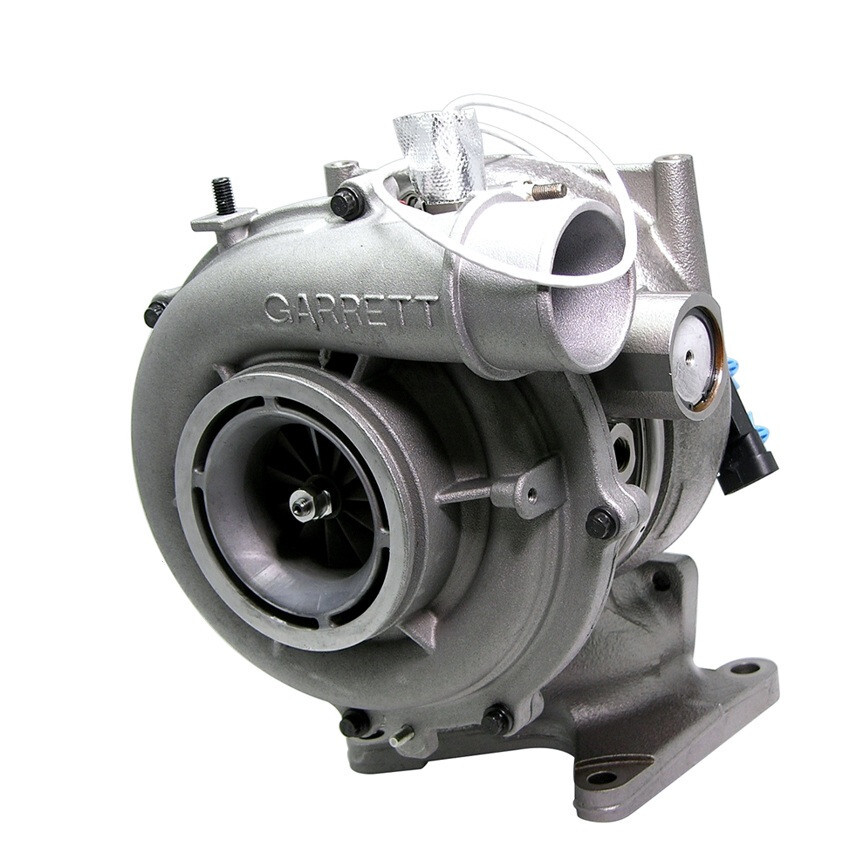
When GM introduced the LLY Duramax in 2004.5, it marked the transition to Variable Geometry Turbocharger (VGT) technology using the Garrett GT3788VA. This same basic turbo design carried through the LBZ (2006 to 2007), LMM (2007.5 to 2010), and LML (2011 to 2016) generations, with incremental refinements along the way. The GT3788VA uses individual pivoting vanes inside the turbine housing, connected by a unison ring that moves all vanes simultaneously. An oil pressure controlled solenoid valve, commanded by the ECM, manages vane position by metering engine oil into and out of the VGT armature piston cavity.
The L5P Duramax (2017 to present) brought a complete turbocharger redesign, replacing the Garrett unit with a BorgWarner variable geometry turbo. The most significant change was the shift from oil pressure controlled vane actuation to a fully electronic actuator motor. This electronic control system offers more precise vane positioning and faster response times. The L5P turbo also features a billet compressor wheel, updated vane geometry, and journal bearings with improved thrust control. A further turbo revision arrived for the 2024 model year with updated vane sizing and a redesigned actuator mounting system.
LB7 Duramax Turbo Problems (2001 to 2004)
The LB7's IHI fixed geometry turbocharger is one of the most reliable turbo designs ever fitted to a diesel pickup. Without variable geometry vanes, there are fewer components to fail and no VGT specific failure modes. Most LB7 turbos deliver 200,000 miles or more without issues when properly maintained. However, the LB7 is not entirely immune to turbo problems.
Wastegate Actuator Failure
The most common turbo related issue on the LB7 is wastegate actuator failure. The wastegate uses a spring loaded diaphragm actuator connected to a valve in the exhaust housing. When boost pressure reaches the calibrated limit (approximately 22 PSI on a stock LB7), the actuator opens the wastegate valve to bypass excess exhaust energy around the turbine wheel. Over time, the diaphragm can develop leaks or tears that prevent it from holding proper pressure, and the wastegate linkage can corrode or seize from heat cycling.
Symptoms of wastegate problems on the LB7 include:
- Overboost conditions where boost pressure exceeds the normal 22 PSI limit, which can damage head gaskets and stress engine internals
- Underboost conditions if the wastegate is stuck open, resulting in sluggish performance and poor acceleration
- A rattling or fluttering sound from the turbo area caused by a loose or worn wastegate linkage
- Inconsistent boost levels where the truck alternates between feeling strong and feeling sluggish
Testing the wastegate is straightforward. Disconnect the boost pressure hose from the actuator and apply regulated air pressure. The wastegate rod should begin to move at approximately 10 to 12 PSI and be fully open by 22 PSI. If the actuator does not respond or holds pressure inconsistently, the diaphragm is compromised and the actuator needs replacement.
Turbo Failure from Injector Problems
The LB7 is well known for injector failures, and while injector problems are not a turbo issue per se, they can lead directly to turbo damage. When LB7 injectors fail internally and begin leaking fuel into the crankcase (fuel dilution), oil viscosity drops and lubricating properties degrade. Since the turbocharger depends on engine oil for both lubrication and cooling, contaminated or thinned oil can accelerate turbo bearing wear. Additionally, a catastrophic injector failure that sends hard debris into the exhaust stream can damage the turbine wheel.
If you are diagnosing turbo problems on an LB7, always check injector health first. Oil diluted with fuel will have a distinct diesel smell on the dipstick, and oil level may be rising between changes. Addressing injector issues before they destroy the turbo is always less expensive than replacing both systems simultaneously. Bostech offers remanufactured LB7 fuel injectors tested to OE specifications that can restore proper fuel system operation and protect downstream components including the turbocharger.
Boost Leaks
Boost leaks are common on the LB7 and frequently misdiagnosed as turbo failure. The charge air piping that routes pressurized air from the turbo to the intercooler and back to the engine uses silicone boots and clamps that deteriorate over time. One particularly common leak point is the driver side intercooler pipe, where the power steering lines can rub against the charge air pipe and eventually wear a hole through the aluminum. This creates a boost leak that causes power loss, black smoke, and poor acceleration that mimics turbo failure.
Before condemning the turbo on any LB7, perform a boost leak test by pressurizing the intake system to 25 to 30 PSI with shop air and checking every connection, boot, clamp, and pipe surface for leaks. A boost leak test takes 15 minutes and costs essentially nothing, while a turbo replacement involves significant time and expense.
LLY Duramax Turbo Problems (2004.5 to 2005)
The LLY was the first Duramax to receive a Variable Geometry Turbocharger, and with that technology came an entirely new set of potential problems. The Garrett GT3788VA turbocharger replaced the LB7's fixed geometry IHI unit and introduced ECM controlled vane positioning for improved boost response across the entire RPM range. While the VGT technology was a significant performance improvement, the LLY had some unique issues beyond the typical VGT failure modes.
Restrictive Turbo Inlet (Mouthpiece)
The single most discussed LLY turbo related problem is not actually a turbo failure at all but rather a design limitation in the turbo inlet, commonly called the mouthpiece. The stock LLY turbo mouthpiece features a restrictive bell mouth design that limits the volume of air the compressor can ingest. Under heavy load conditions, particularly while towing in warm ambient temperatures, the restrictive inlet contributes to elevated intake air temperatures and ultimately engine overheating.
The overheating problem is the LLY's most notorious weakness. When intake temperatures climb excessively, the ECM reduces fueling to protect the engine, causing a noticeable and frustrating loss of power at the worst possible time, typically while towing up a grade. The stock LLY air intake system compounds the problem with a somewhat restrictive airbox design. Many LLY owners address this by installing an aftermarket turbo mouthpiece or swapping to a stock LBZ mouthpiece, which flows significantly better. Pairing the improved mouthpiece with a cold air intake can dramatically reduce intake temperatures and eliminate the power derate issue.
VGT Vane Sticking
As the first Duramax application for VGT technology, the LLY was where many owners first encountered the carbon buildup and vane sticking issues that would become a recurring theme across all VGT equipped Duramax engines. The pivoting vanes inside the GT3788VA turbine housing operate in extremely hot, soot laden exhaust gas. Over time, carbon deposits accumulate on the vane surfaces, pivot points, and the unison ring that coordinates vane movement.
The unison ring is the most critical component in the VGT system. It is a slotted steel ring that connects to all the vanes and rotates to change their angle simultaneously. When carbon buildup accumulates between the unison ring and the turbine housing, the ring's movement becomes restricted. This progressive restriction eventually leads to partially stuck or fully seized vanes.
Trucks that accumulate a disproportionate amount of idle time, spend long periods at steady highway speeds without load variation, or sit parked for extended periods are the most susceptible to vane sticking. These driving patterns fail to cycle the vanes through their full range of motion, allowing carbon to accumulate undisturbed.
VGT Solenoid Failure
The VGT solenoid on the LLY (and all GT3788VA equipped Duramax engines) controls vane position by metering engine oil flow to the VGT armature piston. When the solenoid fails electrically, the ECM loses the ability to control vane position, and the vanes default to a fixed position. Symptoms of VGT solenoid failure include excessive turbo lag, low boost under load, black smoke during acceleration, and poor overall engine performance. The solenoid is externally mounted on the passenger side of the turbocharger bearing housing and is one of the more accessible turbo components for diagnosis and replacement.
A quick electrical test can differentiate between solenoid failure and stuck vanes. Measure the resistance across the solenoid coil at approximately 73 degrees Fahrenheit. A reading between 3.4 and 4.2 ohms indicates the solenoid is electrically sound. If the resistance is within specification but the vanes are not responding to ECM commands, the problem is likely mechanical (stuck vanes or worn unison ring) rather than electrical.
LBZ Duramax Turbo Problems (2006 to 2007)
The LBZ Duramax is widely regarded as the best Duramax engine ever produced, and the turbocharger system is a significant reason why. The LBZ uses the same Garrett GT3788VA turbocharger as the LLY, but GM addressed several issues that plagued the earlier engine. The turbo mouthpiece was redesigned for improved airflow, effectively eliminating the intake restriction and overheating problem that defined the LLY experience.
The LBZ also benefited from the GT3788VA's stainless steel unison ring, which resists corrosion significantly better than the carbon steel unison rings used in the Ford 6.0L PowerStroke's GT3782VA turbo. This material advantage gives the Duramax VGT a natural edge in long term durability against one of the most common causes of VGT failure: corrosion related ring seizure.
VGT Vane Sticking
Despite its improved design, the LBZ is still subject to VGT vane sticking from carbon accumulation. The failure mode is identical to the LLY: soot and carbon deposits build up on the vane surfaces and unison ring contact areas until the ring's rotation is restricted. However, the LBZ turbo tends to develop this problem later in its service life compared to the LLY, largely because the improved intake design results in lower exhaust gas temperatures and less soot production under normal driving conditions.
Many LBZ owners report their original turbo lasting well past 200,000 miles before VGT vane sticking becomes noticeable. Regular driving that includes periodic moderate to heavy acceleration helps exercise the vanes and prevent carbon from accumulating in one position.
Vane Position Sensor Issues
The vane position sensor continuously monitors the angular position of the unison ring and reports this data to the ECM for closed loop VGT control. A faulty vane position sensor can cause poor throttle response, excessive turbo lag, and reduced power. These symptoms often mimic stuck vanes or a bad VGT solenoid, making accurate diagnosis important.
After replacing the vane position sensor, the ECM must recalibrate to the new sensor signal. This remapping process generally occurs automatically through normal driving, though it may take up to several hundred miles to complete. If DTCs P003A or P2563 set after sensor replacement, a scan tool can be used to force the recalibration process by commanding the TC vane position sensor learn function.
Up Pipe Exhaust Leaks
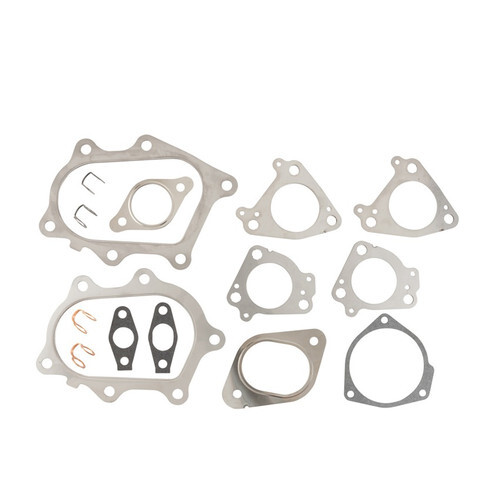
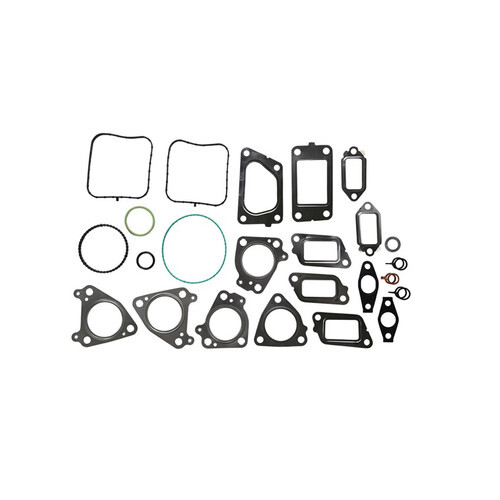
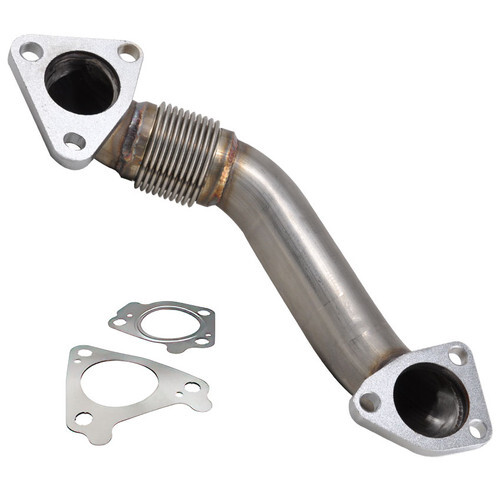
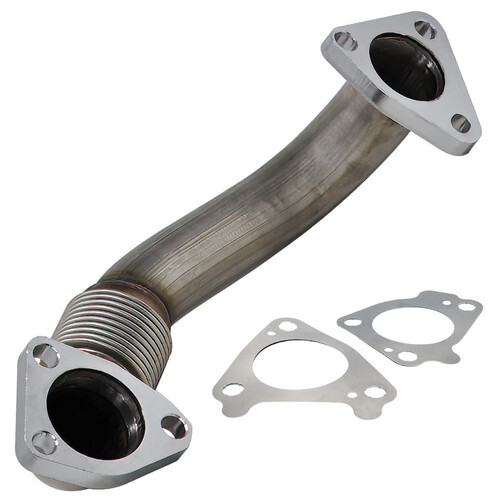
While not a turbo component failure, up pipe exhaust leaks are common on the LBZ (and all Duramax generations through 2016) and directly affect turbocharger performance. The up pipes route exhaust from the manifolds to the turbocharger, and the gaskets at these connections are prone to failure from repeated heat cycling. A leaking up pipe allows exhaust energy to escape before reaching the turbine wheel, reducing the energy available to spin the turbo. Symptoms include reduced boost, longer spool times, and a ticking or hissing exhaust sound that is most audible at idle and under light acceleration. Inspect and replace up pipe gaskets whenever the turbo is removed for service.
LMM Duramax Turbo Problems (2007.5 to 2010)
The LMM Duramax is mechanically very similar to the LBZ and uses the same Garrett GT3788VA turbocharger. The primary difference between the two engines is the addition of emissions aftertreatment equipment, including a Diesel Particulate Filter (DPF) and Diesel Oxidation Catalyst (DOC), to meet 2007 EPA emissions standards. While the turbo hardware itself is essentially unchanged, the addition of the DPF has meaningful implications for turbocharger health and failure patterns.
DPF Related Backpressure Effects
The DPF sits downstream of the turbocharger and traps soot particles from the exhaust stream. As the DPF collects soot, it creates increasing exhaust backpressure that the turbocharger must push against. While the DPF is designed to periodically regenerate (burn off accumulated soot), the regeneration process is not always reliable, and partially loaded DPFs can create enough backpressure to affect turbo operation.
Elevated exhaust backpressure from a loaded DPF has several negative effects on the turbocharger:
- Increased exhaust gas temperatures in the turbine housing accelerate carbon deposit formation on VGT vanes
- Higher backpressure can force exhaust soot past the turbo shaft seals, contaminating the compressor side with carbon
- The turbo must work harder to achieve the same boost levels, increasing thermal stress on the turbine wheel and bearings
- A DPF that fails to regenerate properly can trigger P0299 underboost codes that appear to originate from the turbo but are actually caused by exhaust restriction
Maintaining a healthy DPF through proper regeneration cycles, avoiding excessive idle time that prevents regeneration, and addressing any DPF related codes promptly helps protect the turbocharger from backpressure related issues.
VGT Vane Sticking (Accelerated by Emissions Equipment)
The LMM shares the same VGT vane sticking potential as the LLY and LBZ, but the addition of the EGR system and DPF tends to accelerate the problem. EGR operation recirculates soot laden exhaust back into the intake, increasing the overall soot load in the engine's exhaust stream. This higher soot concentration means more carbon is available to deposit on the VGT vanes and unison ring. LMM owners commonly report VGT sticking earlier in the turbo's service life compared to the pre emissions LBZ.
The diagnostic and repair approach for stuck vanes on the LMM is identical to earlier VGT equipped Duramax engines. In many cases, removing the turbo, disassembling the turbine side, and cleaning the vanes, pivot points, and unison ring can restore proper operation. However, inspect the unison ring carefully for cracked or worn vane slots before reassembling. If the unison ring is damaged, replacement is recommended. Applying high temperature anti seize to all contact surfaces during reassembly helps prevent future sticking.
Piston Cracking and Secondary Turbo Damage
The LMM Duramax uses a six hole injector pattern that creates concentrated fuel spray hitting the piston at two opposing points over the wrist pin. Under high load or with aggressive tuning, this spray pattern can cause hot spots and eventual piston cracking. A cracked piston creates multiple problems for the turbocharger: combustion gases can pressurize the crankcase (increasing oil contamination), debris from the failing piston can enter the exhaust stream and damage the turbine wheel, and the resulting combustion irregularity disrupts exhaust energy delivery to the turbo.
If you experience sudden turbo failure on an LMM, particularly one accompanied by metallic debris in the turbine housing, a compression test and thorough examination of the pistons should be part of the root cause analysis before installing a replacement turbo.
LML Duramax Turbo Problems (2011 to 2016)
The LML represented a comprehensive redesign of the Duramax engine, bringing nearly 400 horsepower, 765 pound feet of torque, and more advanced emissions controls. The turbocharger remained a Garrett VGT design using the same oil pressure controlled solenoid actuation as the LLY through LMM, though GM made refinements to the overall turbo calibration and exhaust system integration. The LML's turbo problems largely mirror those of the LMM, with VGT vane sticking and solenoid failure remaining the primary concerns.
CP4 Injection Pump Failure and Turbo Consequences
The LML's most notorious problem is not turbo related but has significant implications for turbocharger health. The Bosch CP4.2 injection pump replaced the CP3 used in earlier Duramax engines and is prone to catastrophic failure that sends fine metal shavings throughout the entire fuel system. While the metal contamination primarily destroys injectors, fuel rails, and fuel lines, the downstream effects can impact the turbocharger in several ways.
When CP4 failure causes multiple injectors to malfunction, combustion irregularities produce uneven exhaust pulses that stress the turbine wheel. If injectors fail in a way that causes fuel dilution of the engine oil, turbo bearing lubrication is compromised just as with LB7 injector failures. And if the engine is run in a degraded state after CP4 failure, the incomplete combustion and excessive soot production accelerate VGT vane carbon buildup. Always evaluate turbocharger condition after a CP4 failure event to determine whether the turbo sustained collateral damage.
VGT Vane and Solenoid Issues
The LML shares the same VGT architecture as the LLY through LMM and experiences the same carbon buildup and vane sticking patterns. The LML's more aggressive EGR calibration, designed to meet tighter emissions standards, increases the soot load passing through the turbocharger and can accelerate vane deposits compared to the lighter EGR calibration on pre 2007 engines.
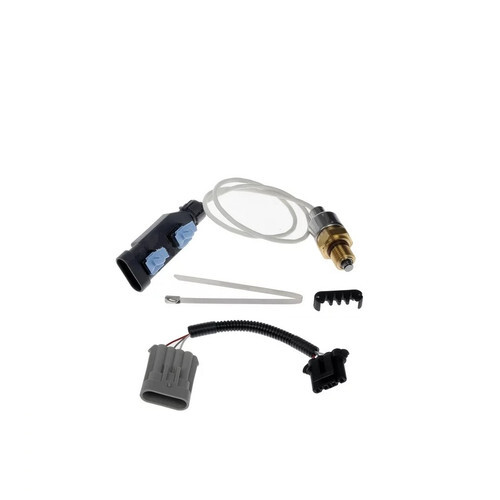
VGT solenoid testing on the LML follows the same procedure as earlier Garrett equipped Duramax engines. Measure coil resistance at the solenoid connector (3.4 to 4.2 ohms at 73 degrees F is within specification). A solenoid reading outside this range indicates electrical failure and requires replacement. If resistance is within spec but the vanes are not responding, proceed to mechanical inspection of the VGT mechanism. The Bostech TBC0166710 turbocharger vane position solenoid is a direct fit replacement manufactured to OE specifications for 2006 to 2019 Duramax applications.
L5P Duramax Turbo Problems (2017 to Present)
The L5P Duramax brought an entirely new turbocharger platform. The Garrett GT3788VA that served across four Duramax generations was replaced with a BorgWarner variable geometry turbo featuring several important design changes. The most significant difference is the move from oil pressure controlled vane actuation to a fully electronic actuator motor. This electronic system eliminates the VGT solenoid and the hydraulic actuation mechanism, replacing them with a direct drive electric motor that positions the vanes with greater precision and speed.
The L5P turbo also features a billet compressor wheel (61.1mm inducer on original models, slightly revised for 2024), updated vane geometry with improved flow characteristics, and journal bearings with a fixed 360 degree thrust bearing design. These improvements make the L5P turbo one of the most capable factory diesel turbochargers available, with the stock turbo supporting up to approximately 600 wheel horsepower before becoming a restriction.
Electronic Actuator Failure
The most commonly reported turbo related problem on the L5P is electronic actuator failure. The BorgWarner actuator uses an internal circuit board and electric motor to position the turbo vanes. Like any electronic component operating in the extreme heat environment near the turbocharger, the actuator circuit board can fail over time. Reports of actuator failures have appeared on trucks with as few as 100,000 to 130,000 miles, though many L5P turbos operate well beyond this without issues.
Symptoms of L5P turbo actuator failure include:
- Reduced engine power warning on the dashboard
- Rough turbo spool up or turbo not spooling at all
- Limp mode activation with significant power reduction
- Turbo related DTCs including P0046 and P0299
- The actuator visibly cycling or activating on its own when the vehicle is parked and the ignition is triggered (this is actually normal behavior for most L5P trucks, as the ECM sweeps the actuator during wake up)
Replacing the L5P actuator requires calibration after installation. The ECM must learn the new actuator's position range through a VATS (Variable Actuator Trim System) relearn procedure. This typically requires a GM MDI2 diagnostic tool and an ACDelco Techline account. Without proper calibration, the replacement actuator will not function correctly and additional codes may set. The actuator design differs between the 2017 to 2019, 2020 to 2023, and 2024 and newer model years, so always verify the correct part number for your specific truck.
Boost Leak Concerns
Boost leaks are a frequently reported concern on the L5P, particularly on higher mileage trucks. The pressurized charge air system uses silicone couplers and T bolt clamps to connect the turbo outlet to the intercooler and intake manifold. Heat cycling, vibration, and age cause these connections to loosen or the boots to deteriorate. Because the L5P makes significant boost pressure (up to approximately 36 PSI in some conditions), even small leaks result in noticeable power loss and can trigger turbo related DTCs.
As with all Duramax trucks, a boost leak test should be the first diagnostic step before considering turbo replacement on an L5P. Pressurize the intake system with shop air and inspect every coupler, clamp, and connection point for escaping air. Tightening clamps or replacing a deteriorated boot is an inexpensive fix compared to unnecessary turbo work.
MAP Sensor Fouling and Turbo Misdiagnosis
The L5P's MAP (Manifold Absolute Pressure) sensor is the most commonly reported problem on the platform overall, and it directly relates to turbo system diagnosis because a fouled MAP sensor sends incorrect pressure data to the ECM. When the MAP sensor becomes clogged with soot (a frequent occurrence due to the EGR system), it can report inaccurate boost readings that cause the ECM to trigger turbo related codes or adjust fueling in ways that mimic turbo malfunction. Before diagnosing any L5P turbo problem, clean or inspect the MAP sensor. A MAP sensor spacer that positions the sensor further from the EGR stream can reduce recurring soot contamination.
Common Duramax Turbo Diagnostic Trouble Codes
Understanding the diagnostic trouble codes associated with Duramax turbo problems helps focus your troubleshooting efforts. Here are the codes most commonly encountered across Duramax generations:
- P0299: Turbocharger Underboost Condition. The most common Duramax turbo code across all generations. Indicates actual boost pressure is below the ECM's expected target. Can be caused by stuck VGT vanes, VGT solenoid failure, boost leaks, restricted air filter, exhaust restrictions from a loaded DPF, or EGR system problems
- P0234: Turbocharger Overboost Condition. Signals that boost pressure is exceeding the safe limit. On VGT equipped trucks (LLY through L5P), this typically indicates vanes stuck in the closed position or an actuator failing to open the vanes at higher RPM. On the LB7, this points to wastegate malfunction
- P003A: Turbo Boost Control Position Exceeded. Common on LMM through L5P trucks. Indicates the VGT actuator cannot achieve the commanded vane position. Causes include mechanical vane binding, actuator failure, or wiring issues
- P0046: Turbo Boost Control Circuit Range/Performance. Seen primarily on L5P trucks. Indicates the turbo control circuit is operating outside expected parameters, often pointing to actuator or wiring problems
- P2563: Turbocharger Boost Control Position Sensor Circuit. Indicates a problem with the vane position sensor signal. Can be caused by a faulty sensor, damaged wiring, or ECM connection issues
- P2262: Turbocharger Boost Pressure Not Detected (Mechanical). Signals a mechanical VGT failure where the ECM detects no boost response from vane position changes
- P2263: Turbo Boost System Performance. A broad code indicating overall turbo system underperformance. Requires systematic diagnosis to isolate the specific cause
Always capture freeze frame data when these codes are present. The freeze frame records engine operating conditions at the moment the code set, including engine RPM, coolant temperature, boost pressure, and barometric pressure. This data narrows the diagnostic focus and can reveal whether the problem occurs at specific operating points.
Duramax VGT Diagnostic and Testing Procedures
A systematic approach to Duramax turbo diagnosis prevents unnecessary parts replacement and identifies the true root cause of the problem. Follow these steps in order for the most efficient diagnostic path.
Scan for Codes and Freeze Frame Data
Begin by scanning the ECM for all stored and pending diagnostic codes. On LLY through LML trucks, a quality OBD-II scanner with enhanced GM coverage provides access to VGT specific parameters including vane position commanded versus actual, boost target versus actual, and VGT solenoid duty cycle. On L5P trucks, GM's proprietary diagnostic software (or equivalent aftermarket tools) provides the deepest access to turbo actuator data including position error counts and actuator calibration status.
Perform a Boost Leak Test
Before any turbo component testing, pressurize the charge air system to approximately 25 to 30 PSI and inspect every connection for leaks. On Duramax trucks, pay particular attention to the intercooler boots, the turbo outlet connection, the charge pipe to intake manifold connection, and the EGR system connections. On LB7 trucks, check the driver side intercooler pipe for wear from power steering line contact. A boost leak test eliminates the most common non turbo cause of underboost symptoms.
Test the VGT Solenoid (LLY through LML)
For Garrett GT3788VA equipped trucks, the VGT solenoid can be tested electrically without removing the turbo. Locate the solenoid on the passenger side of the turbocharger bearing housing. Disconnect the electrical connector and measure resistance across the two solenoid pins. A reading of 3.4 to 4.2 ohms at approximately 73 degrees F indicates the solenoid coil is intact. If resistance is outside this range, the solenoid has failed electrically and needs replacement. If resistance is within specification, the problem is likely mechanical (stuck vanes or worn unison ring) and the turbo may need to be removed for inspection and cleaning.
Test the Electronic Actuator (L5P)
On L5P trucks, the electronic actuator requires scan tool based testing. Using a compatible diagnostic tool, command the actuator through its full range of motion while observing the commanded versus actual position values. A healthy actuator should track the commanded position closely with minimal delay. A significant gap between commanded and actual position, failure to reach certain positions, or sluggish response indicates actuator problems. Also verify that the actuator electrical connector is clean and free of corrosion, as wiring issues can mimic actuator failure.
Visual Turbo Inspection
Remove the intake tube from the turbo compressor inlet and inspect the compressor wheel. Look for blade damage, oil accumulation beyond a light film, and evidence of the wheel contacting the housing. Check for excessive shaft play by gently moving the shaft radially (side to side) and axially (in and out). A small amount of shaft play is normal, but visible movement of the compressor wheel toward the housing indicates worn bearings that require turbo replacement or rebuild.
Duramax Turbo Replacement: Options, Costs, and Considerations
Considerations
When a Duramax turbocharger needs replacement, the options and costs vary based on the specific engine generation and the extent of the failure.
VGT Solenoid or Actuator Replacement
In many cases, the turbo internals are still serviceable and only the VGT actuation component has failed. On LLY through LML trucks, replacing the VGT solenoid is one of the least expensive and most accessible turbo repairs. The Bostech TBC0166268 VGT control solenoid is a direct replacement for Ford 6.0L PowerStroke and GM 6.6L Duramax applications. For 2006 to 2019 Duramax trucks, the Bostech TBC0166710 turbocharger vane position solenoid provides an OE specification replacement at a fraction of dealer cost. Both Bostech solenoids are new (not remanufactured) components backed by a 24 month unlimited mileage warranty. Solenoid replacement does not require turbo removal and can typically be completed in under an hour.
On L5P trucks, electronic actuator replacement is more involved. Replacement actuators for 2017 to 2019 models typically range from $800 to $1,200 for the part, with 2020 and newer models requiring a different actuator at similar pricing. The VATS relearn procedure required after installation adds complexity and typically requires dealer level diagnostic tools.
Complete Turbo Replacement
When the turbocharger has sustained internal damage such as worn bearings, damaged compressor or turbine wheels, or a seized VGT mechanism that cannot be cleaned, complete turbo replacement is necessary. New Garrett GT3788VA turbochargers for LLY through LML applications typically cost $1,500 to $2,500. Remanufactured units range from $1,000 to $1,800. L5P turbo assemblies are more expensive due to the electronic actuator, with new OEM units ranging from $2,500 to $4,500.
Labor for Duramax turbo replacement varies but typically falls between $500 and $1,200 depending on the shop and the specific truck. The turbo on all Duramax trucks is located in the engine valley between the cylinder heads, which provides good access from above without requiring cab removal. However, the tight working quarters and the number of connections (oil feed, oil drain, coolant lines on some models, exhaust connections, charge air piping, and electrical connectors) make the job time consuming even for experienced technicians.
VGT Cleaning as an Alternative to Replacement
For Duramax turbos where VGT vane sticking is the only issue and no internal mechanical damage is present, turbo removal and a thorough cleaning of the VGT mechanism can restore proper function. This involves disassembling the turbine side, cleaning each vane individually with a conditioning disc or fine abrasive, deburring the unison ring contact surfaces, inspecting the unison ring for cracks or worn slots, and reassembling with high temperature anti seize on all contact surfaces. This approach costs significantly less than turbo replacement but requires mechanical skill and careful attention to assembly procedures.
Preventive Maintenance for Duramax Turbochargers
Proactive maintenance significantly extends Duramax turbocharger life and reduces the likelihood of unexpected failures. These practices apply across all Duramax generations:
- Maintain strict oil change intervals using oil that meets the Dexos2 specification required for Duramax engines. Diesel engine oil degrades faster than gasoline engine oil due to higher soot loading, and the turbocharger bearings are among the first components to suffer from degraded oil. Shorten intervals for severe duty use including frequent towing, extended idling, and dusty environments
- Exercise the VGT vanes regularly by driving with periodic moderate to heavy acceleration. Trucks that spend excessive time at idle or steady highway cruise fail to cycle the vanes through their full range, allowing carbon to accumulate. A few spirited accelerations during each drive help keep the vanes moving freely
- Allow the engine to idle for 60 to 90 seconds before shutdown after towing or driving under load. This cool down period allows oil to carry heat away from the turbocharger center section and prevents oil coking
- Replace the air filter at recommended intervals and inspect it more frequently in dusty conditions. A restricted filter forces the turbo to work harder and increases the pressure differential across the compressor
- Inspect charge air piping, intercooler boots, and T bolt clamps at each service interval. Heat cycling loosens clamps over time, and silicone boots deteriorate with age. Catching a loose clamp before it becomes a full boost leak prevents unnecessary strain on the turbo
- Monitor boost performance through a gauge or scan tool. A gradual decline in peak boost or an increase in time to reach full boost often indicates developing VGT issues that are easier and less expensive to address early
- Keep the DPF (LMM and later) functioning properly by avoiding excessive idle time that prevents regeneration cycles. A healthy DPF maintains low exhaust backpressure that benefits turbo longevity
- Inspect up pipe gaskets during any exhaust system service. Leaking up pipe gaskets waste exhaust energy and reduce turbo efficiency
Bostech Duramax Turbocharger Products
Bostech Auto offers a comprehensive lineup of turbo system components specifically designed for Duramax applications. Each product is engineered to meet or exceed OEM specifications and undergoes rigorous testing for reliable performance in demanding diesel operating conditions.
- Bostech TBC0166268 VGT Control Solenoid: A new (not remanufactured) direct replacement VGT solenoid for GM 6.6L Duramax and Ford 6.0L PowerStroke applications. Restores precise oil flow control to the turbo vane actuation system. Installs with original hardware and requires no electronic calibration. Backed by a 24 month unlimited mileage warranty
- Bostech TBC0166710 Turbocharger Vane Position Solenoid: Manufactured to OE specifications for 2006 to 2019 Duramax applications. Provides a cost effective alternative to dealer pricing while maintaining the precise fit and function required for proper VGT operation. 24 month unlimited mileage warranty
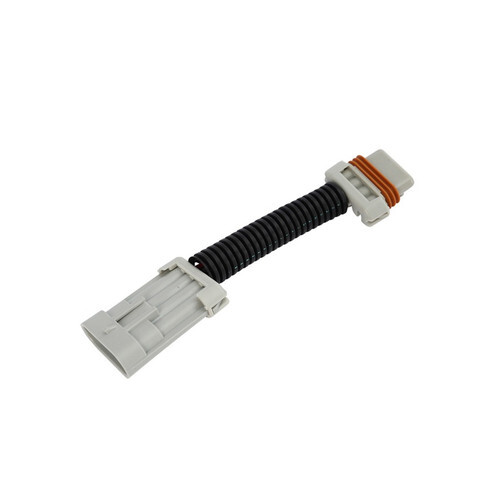
- Bostech WH02618 VGT Solenoid Connector Pigtail: For Ford and GM applications. Corroded or damaged wiring connectors are a common contributing cause of VGT solenoid failures. Replacing the pigtail during solenoid service ensures a clean electrical connection and helps prevent repeat failures
- Bostech Remanufactured LB7 Fuel Injectors: While not a turbo component, healthy injectors protect the turbo by preventing fuel dilution of the engine oil. Bostech LB7 injectors are remanufactured and tested to OE specifications
- Bostech Remanufactured CP3 High Pressure Fuel Pumps: Available for LB7 applications. A properly functioning fuel system reduces the downstream problems that lead to turbo damage
- Bostech EGR Coolers and Sensors: Maintaining the EGR system directly supports turbocharger health by keeping soot levels manageable and preventing excessive exhaust backpressure
- PurePower Technologies Turbocharger Assemblies: Complete turbocharger assemblies are available through Bostech's partner brand PurePower Technologies for various diesel applications
All Bostech turbocharger solenoids and actuators are backed by a 24 month unlimited mileage warranty. Technical support is available by contacting Bostech Customer Service at 1 800 868 0057 or by email at customerservice@bostechauto.com. Browse the complete selection of Bostech Duramax products by vehicle application at bostechauto.com.
Frequently Asked Questions
The LLY Duramax (2004.5 to 2005) tends to experience turbo related issues more frequently than other generations, primarily due to the restrictive turbo mouthpiece that causes overheating under load and the introduction of VGT technology with its associated vane sticking potential. However, the most common VGT related failure (vane sticking from carbon buildup) affects all Duramax engines from the LLY forward. The LBZ generally has the fewest turbo problems due to its improved intake design and the absence of emissions aftertreatment equipment that accelerates carbon accumulation.
With proper maintenance, most Duramax turbochargers last 150,000 to 250,000 miles. The LB7's fixed geometry IHI turbo is known for exceptional longevity, with many reaching 300,000 miles on original turbo bearings. The Garrett GT3788VA on LLY through LML trucks commonly needs VGT attention between 100,000 and 200,000 miles, though the turbo bearings and wheels often outlast the VGT mechanism. The L5P's BorgWarner turbo is still relatively new to the market, but early indications suggest strong mechanical durability with electronic actuator replacement being the most likely service item at higher mileage.
Some owners have reported temporary success using intake cleaning products sprayed through the turbo inlet while the engine idles. However, this approach only works for light carbon deposits and rarely provides a lasting fix. For meaningful VGT restoration, the turbo typically needs to be removed so the turbine housing can be disassembled and each vane, pivot point, and the unison ring can be cleaned thoroughly with conditioning discs and fine abrasives. The unison ring surfaces should also be deburred and coated with high temperature anti seize during reassembly. This thorough cleaning is the only reliable way to restore full VGT function on a heavily carboned turbo.
The unison ring is a slotted steel ring inside the Garrett GT3788VA turbine housing that connects to all the individual VGT vanes and rotates to change their angle simultaneously. When the VGT solenoid actuates the armature, the armature moves the unison ring, which in turn repositions all the vanes in uniform fashion. The unison ring fails because it operates in an extremely hot, soot laden environment. Carbon and soot deposits accumulate between the ring and the turbine housing, progressively restricting the ring's ability to rotate. Additionally, the slots where the vanes connect to the ring can wear over time, and the ring itself can crack from thermal stress. The Duramax GT3788VA uses a stainless steel unison ring that resists corrosion better than the carbon steel version found in some Ford applications, but it is still susceptible to carbon related binding.
On LLY through LML Duramax trucks with the Garrett GT3788VA turbo, the VGT solenoid can be tested with a simple resistance measurement. Locate the solenoid on the passenger side of the turbocharger bearing housing. Disconnect the electrical connector and use a multimeter to measure resistance across the two solenoid pins. A healthy solenoid reads between 3.4 and 4.2 ohms at approximately 73 degrees F (room temperature). If the reading is significantly outside this range (open circuit or very low resistance), the solenoid has failed electrically and needs replacement. If the solenoid tests within specification but the vanes are not responding, the issue is mechanical rather than electrical, indicating stuck vanes or a worn unison ring.
No. The L5P's BorgWarner turbocharger is not a direct swap for any earlier Duramax engine. The L5P turbo uses a completely different mounting configuration, different exhaust and intake connections, electronic actuator control (versus oil pressure control), and requires L5P specific ECM programming for proper operation. Additionally, the 2024 and newer L5P turbo is not directly compatible with 2017 to 2023 L5P trucks due to changes in the actuator mounting, vane sizing, and compressor cover design. Always match the turbo to your specific model year.
Multi layer steel (MLS) up pipe gaskets are recommended over single layer gaskets for Duramax applications. MLS gaskets handle the extreme heat cycling at the exhaust manifold to up pipe connection better than single layer alternatives and provide a more durable seal. Replace up pipe gaskets any time the turbo is removed or the exhaust connections are disturbed. Reusing old up pipe gaskets almost always results in exhaust leaks that reduce turbo performance.
Yes, replacing the restrictive LLY turbo mouthpiece with either a stock LBZ mouthpiece or an aftermarket high flow inlet is one of the most impactful upgrades available for the LLY Duramax. The stock LLY mouthpiece restricts airflow into the compressor, which increases intake air temperatures and contributes to the power derating and overheating that LLY trucks are known for when towing. The LBZ mouthpiece flows significantly more air with minimal modification, and pairing it with a cold air intake further reduces intake temperatures. Many LLY owners report that the mouthpiece upgrade alone eliminates the overheating issues they previously experienced during sustained towing.
Repair costs vary widely depending on the specific problem and the engine generation. A VGT solenoid replacement on an LLY through LML is one of the least expensive turbo repairs, with quality replacement solenoids like the Bostech TBC0166268 or TBC0166710 priced well below dealer cost. A complete VGT cleaning with turbo removal typically runs $500 to $1,000 in labor at an independent shop. Complete turbo replacement including parts and labor ranges from approximately $2,000 to $3,500 for Garrett equipped trucks (LLY through LML) and $3,500 to $6,000 for L5P trucks with the BorgWarner turbo and electronic actuator. L5P actuator only replacement typically costs $1,000 to $2,000 including the calibration procedure.
Yes. A malfunctioning EGR system directly impacts turbocharger health in several ways. A stuck open EGR valve recirculates an excessive volume of hot, soot laden exhaust gas back through the intake system, increasing the soot load on VGT vanes and accelerating carbon buildup. A leaking EGR cooler can introduce coolant into the exhaust stream, where it contacts turbo bearings and seals at high temperature. And excessive EGR flow increases exhaust backpressure that the turbo must overcome. Maintaining the EGR system in proper working condition, including timely EGR cooler replacement with a quality unit like the Bostech remanufactured EGR coolers, protects both the turbocharger and the broader engine system.